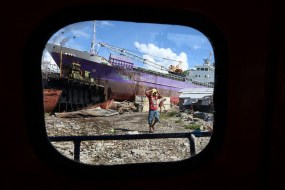
Building Urban Resilience by Empowering Communities

STORY HIGHLIGHTStyphoon_haiyan
  • In a rapidly urbanizing world, cities are increasingly prone to natural hazards and climate shocks.
  • The Habitat III conference is an opportunity for national and city leaders to discuss ways to make cities and communities more resilient to these hazards and shocks.
  • One way that the World Bank has helped is through community-driven development (CDD), an approach that gives control over planning decisions and investment resources to community groups and local governments.

Continue reading

Ahead of the next Habitat conference, the urban world we want

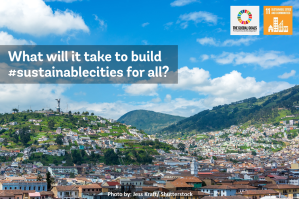
tweet-postcard-1.png

There is no better way to mark this year’s World Cities Day than reflecting on the adoption of the New Urban Agenda at the recent Habitat III conference in Quito. The agenda reaffirms the political commitment to sustainable urbanization and provides a framework to guide global urban development over the next 20 years, based on a shared vision of cities that are inclusive, safe, resilient and sustainable.

Continue reading

Korea: a model for development of the water and sanitation sector

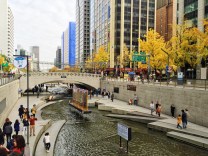
Can a sustainable water sector be developed simultaneously with a country’s growth? Can the water sector continue to expand and achieve cheonggyecheon_stream-seoul-south_korea.jpgcomprehensive coverage and financial sustainability goals to become a recognized global model for water sector management and performance? Can a country without a single sewer line in 1958 have 90 percent of its wastewater treated by 2012?
The answer is yes! The example is Korea.

Continue reading

Taking Disaster Risk Management to New Heights

STORY HIGHLIGHTSScreen Shot 2016-10-20 at 10.10.05 AM.png

  • As urbanization rates skyrocket worldwide, cities large and small are grappling with increased disaster risk as infrastructure buckles underneath the weight of rapidly growing populations.
  • In flood-prone Dar es Salaam, Tanzania, public safety officials are working to better protect residents from recurrent flooding, which disproportionately impacts the city’s many makazi holela – unmapped, resource-poor informal settlements.
  • GFDRR is supporting Dar es Salaam’s efforts to secure vulnerable neighborhoods through the Ramani Huria initiative, a community-mapping project that trains university students and local community members on platforms that create open-source maps of the most flood-prone areas of their city. Using novel technologies, including Unmanned Aerial Vehicles (UAV), commonly known as drones, volunteers better understand vulnerabilities in their community, and put crucial information in the hands of those who need it most.

Continue reading

Climate-Smart Poultry Farming Brings Prosperity to Kenya’s Smallholders

STORY HIGHLIGHTSKenya

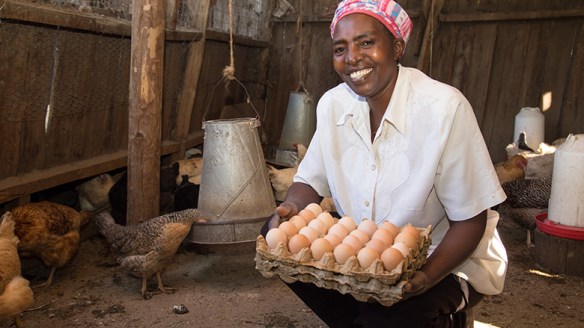
  • The Kenya Agricultural Productivity and Agribusiness Project supports smallholder farmers through new technologies, improved market access and climate-smart agriculture approaches.
  • More than 75% of Kenyans make a living in agriculture.
  • Poultry is recognized for being among the “greenest” meats, using up less resources and emitting less greenhouse gases than larger livestock.

Continue reading

OUT NOW! Flagship Report: Doing Business

Doing Business 2017: Equal Opportunity for All, db17-reporta World Bank Group flagship publication, is the 14th in a series of annual reports measuring the regulations that enhance business activity and those that constrain it. Doing Business presents quantitative indicators on business regulations and the protection of property rights that can be compared across 190 economies—from Afghanistan to Zimbabwe—and over time.

Continue reading

Published by RVO “In the Loop” Newsletter

Today an article was published about the NL-4-WorldBank website in theuntitled Netherlands Enterprise Agency newsletter, which is geared towards dutch embassies World Wide.

Below an excerpt of the article, to read the rest click here.click here.

Stay up-to-date! NL-4-WorldBank Website

Are you working with the World Bank? Do you want more information on tenders, developments or the procurement framework? The website NL4Worldbank can be useful to you!


World Bank’s Poverty Commission Releases Report on How to Better Measure and Monitor Global Poverty

Press releaseUntitled.png

WASHINGTON, October 18, 2016 – The World Bank’s Commission on Global Poverty has submitted recommendations on how to more comprehensively measure and monitor global poverty in support of the Bank Group’s goals of ending extreme poverty by 2030 and boosting shared prosperity.

“The aim of our Report was to improve the way the World Bank monitors poverty. By focusing on changes over time, we can learn, taking account of the potential margins of error, about the evolution of global poverty. The confidence to be placed in these conclusions can be increased by improvements in the methods of analysis and in the underlying data. Outside the World Bank, it is hoped that this report will be of value to everyone engaged in poverty measurement across the world, and be a highly positive force in encouraging partnerships,” said Sir Anthony Atkinson, Lead Author & Chair of the Commission on Global Poverty.

Continue reading

New directions in the economics of agricultural water conservation

­

A challenging area in agricultural water management is the assessment of policy and investment options in irrigated agriculture for conserving water and adapting to increasing water scarcity, in particular when the linkages to groundwater resources and their management are to be considered and incorporated.

Continue reading

Habitat III—That Once Every 20 Years Global Urban Event

  • Next week the UN Conference on Housing and Sustainable Urban DevelopmentPanel--Quito-Financing.jpg—Habitat III—will reinvigorate international commitment to sustainable urbanization.
  • 54 percent of the global population lives in urban areas. Cities can be the drivers of sustainable development, but many are growing so fast they can’t keep up with citizens’ demands for services.
  • The World Bank Group delegation will lead and participate in a number of sessions at Habitat III. GFDRR will present a report about the human and financial cost of disasters and climate change.

Continue reading