Modest Growth Amidst Growing Polarization in Europe and Central Asia

Article published on http://www.worldbank.org

BUCHAREST, November 22, 2016 – There will be a modest increase in GDP growth in 2016 Imagefor countries in the Europe and Central Asia (ECA) region. Low oil and other commodity prices in the eastern half of the region, a decline in investment rates in the European Union, and ongoing structural challenges in all countries are hampering growth in the region and contributing to an increase in populism and polarization, says the latest World Bank ECA Economic Update.

According to the report, launched today in Bucharest, Romania, the region is expected to grow a modest 1.6 percent in 2016 – up slightly from 1.4 percent in 2015 – but declines in both incomes and consumption will likely mitigate this modest growth. This trend is projected to continue into 2017 and 2018, with growth forecast at 1.5 percent and 1.8 percent, respectively. Continue reading
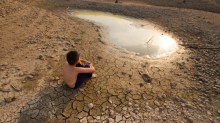
A New Plan to Support Action on Climate Change in the Arab World

STORY HIGHLIGHTSMena_water_crisis.jpg
  • The Middle East and North Africa region is already suffering the consequences of climate change, and will be hit especially hard by the ongoing rise in global temperatures.
  • Countries in the region are aware of their vulnerabilities and have begun taking action to confront the impacts of climate change, but the challenges are enormous.
  • The World Bank Group has launched a new plan for the region that will increase the portion of financing dedicated to climate action, provide more support for adaptation and focus on protecting the poorest that are most vulnerable to the impacts of climate change.

Enhancing the Climate Resilience of Africa’s Infrastructure: The Roads and Bridges Sector

Africa’s future depends on its roads:Image

  • An adequate and reliable road network will be key to Africa’s economic and social development. Good-quality road connections can greatly expand access to jobs, markets, schools, and hospitals. For rural communities, in particular, a road is often an essential lifeline that links isolated villages to economic opportunities and services.
  • The low density and poor condition of the existing road infrastructure are a serious impediment to the region’s growth. Currently, only 1/3 of rural inhabitants live within two kilometers of an all-season road–the lowest accessibility in the developing world. Moreover, insufficient funding of routine maintenance accelerates the deterioration of the network, leaving many roads in poor condition.
  • As part of a broader effort to expand and upgrade its transport network, Africa will see substantial investment in road infrastructure over the next decades. When combining both regional initiatives and country-level masterplans, capital investment in the road sector will average about $4.6 billion a year, for a total of $78 billion through 2030.

Continue reading

Breaking the Link Between Extreme Weather and Extreme Poverty

STORY HIGHLIGHTS
  • Because natural disasters tighten poverty’s grip on communities worldwide, disaster risk reduction goes hand in hand with poverty reduction, and vice versa
  • A new World Bank report finds the impact of extreme weather on poverty is more devastating than previously understood, responsible for annual consumption losses of $520 billion and pushing 26 million people into poverty every year
  • Targeted resilience-building interventions protect poor people from adverse weather events and can help countries and communities save $100 billion a year

Continue reading

5 reasons why big data innovation is critical to address climate resilience

In today’s world of mobile technology, social networks, pervasive satellite and sensor information and machine-to-machine transactions, data is becoming the lifeblood of many economies. Data-informed decision making is more important than ever before. However, the ability to use data in development and decision-making processes has not seen the screen_shot_2016-11-01_at_2_03_44_pmsame progress. Relying on data to inform decisions requires that the appropriate tools and analytical methodologies exist in order to use it effectively.

Continue reading

Forests: Stabilizing Climate and Supporting Development

STORY HIGHLIGHTSmozambique_cad-productions_-j_capela_resizednew

  • Over 100 countries included actions related to land-use change and forests in their nationally determined contributions to fight climate change
  • Investing in forests has the potential to reduce poverty, drive sustainable development and provide vital local and global environmental services
  • The World Bank Group supports forest initiatives in Ethiopia, Democratic Republic of Congo and Mozambique that can help these countries meet their climate and development goals

Continue reading

Africa Climate Business Plan: Delivering on Climate Plan Promises

STORY HIGHLIGHTSoriginal

  • A new progress report shows Cote d’Ivoire, Nigeria and several other African countries are successfully implementing climate resilience and low-carbon development recommendations outlined in the World Bank’s Africa Climate Business Plan
  • The plan, unveiled during the COP21 climate change conference in Paris, provides concrete actions to help African countries adapt to climate change and build up resilience to climate shocks
  • As of Nov 7, 2016, 19 countries in Sub-Saharan Africa have ratified the Paris Agreement for carbon offsetting, and $3.6 billion from the International Development Association has been mobilized to help further the plan’s implementation

Continue reading

2016: World Bank Group Moves Fast to Support Stepped Up Global Climate Ambition

STORY HIGHLIGHTScop22-scene-setter

  • Since the Paris Agreement was adopted at COP21 in December 2015, the world has seen increased ambition on climate change. Almost every country in the world has now set national climate targets, and the Agreement has gone into force much earlier than expected. However, global climate action is still not happening at the scale or speed needed to meet the Paris goal of keeping global temperature rise to below 2 degrees Celsius.
  • The World Bank Group has been moving quickly over the past year to build on the momentum and lay the groundwork for greater ambition, helping countries reduce emissions and increase resilience to climate shocks through action in high-impact areas, such as clean energy, climate-smart agriculture, disaster preparedness, and natural resource management
  • As COP22 starts in Morocco, the Bank Group is aligning its efforts around key focus areas, committing billions to help countries meet their climate goals while leading on critical global issues such as green financing and carbon pricing

Continue reading

Agricultural Activities Allow Refugees to Return to a Normal Life in Southern Chad

STORY HIGHLIGHTS

  • A massive influx of refugees triggered by the crisis in the Central African Republic is straining the limited resources of Goré’s already vulnerable local population.
  • The WFP and the FAO have implemented a World Bank-financed emergency operation to tackle the food crisis and allow refugees be self-reliant.
  • Some 70,000 refugees and returnees are rebuilding their lives and livelihoods through income-generating agricultural activities.

Continue reading

Making Power Affordable for Africa and Viable for Its Utilities

STORY HIGHLIGHTSafrica-subsidies-780-439
  • It is possible for Sub-Saharan Africa’s poor to get access to affordable electricity and for the utilities that supply power to be profitable at the same time.
  • For Africa’s power sector to work for utilities, steps have to be taken to minimize losses related to transmission and distribution of electricity, ensure customers pay their electricity bills, and raise tariffs appropriately.
  • Accurate metering of individual households and sharply targeted cross-subsidies are essential to expand household access to electricity.

Continue reading