India – Andhra Pradesh Disaster Recovery Project

Original article posted on June 17, 2015 on the World Bank website.

The project is expected to benefit over 13 million people.The total value of the project is $370 million. Please find the Project Appraisal Document on the Project Website.

WASHINGTON, June 17, 2015 ─ The World Bank today approved a US $250 million credit for the Andhra Pradesh Disaster Recovery Project to restore, improve and enhance the resilience of public services and livelihoods of communities affected by cyclone Hudhud in Andhra Pradesh. The project will also increase the capacity of the state to respond promptly and effectively to an emergency.

The project will specifically benefit over 13 million people in the four severely affected districts of Srikakulam, Vizianagaram, Visakhapatnam and East Godavari.
Continue reading

Urban Logistics in the Moroccan traditional sector

Full article in Dutch, only excerpt in English.

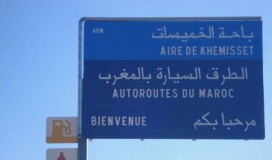
In developing countries the traditional marokko-272x160channel plays a very large rol, with often 50% of all commercial trade being conducted through these channels. To develop a city sustainably, city logistics is an important topic in policy and rules. However, policy also needs to be evaluated in the context of the city in question, with proper data as the basis.

Below a case-study in Casablanca, Morocco, by Alain Broft.

Continue reading

Netherlands, Bangladesh and World Bank agree to protect Bangladesh delta

Original article posted on Netherlands Government website (in Dutch) on June 16.

Ministers Lilianne Ploumen (Foreign Trade and Development Cooperation) and Melanie Schultz van Haegen (Infrastructure and Environment) have signed an agreement with the Government of Bangladesh and the World Bank Group to protect the Bangladesh delta against flooding and to ensure sufficient clean drinking water and sanitation. The Netherlands and Bangladesh will also collaborate in the field of land reclamation and port development. The Bangladesh lowlands form the largest delta of Asia and the world’s most densely populated area that faces serious water challenges (remainder in Dutch).

Learn more about the plan at http://www.bandudeltas.org/.

Bangladesh Delta Plan 2100

De samenwerking moet resulteren in het Bangladesh partnershipBangladesh Delta Plan 2100, een langetermijnvisie met niet alleen technische oplossingen maar ook een investeringsplan, inclusief private participatie, en een goede bestuurlijke inbedding. Op die manier kan het, met behoud van de unieke biodiversiteit en  fysische eigenschappen van de delta, bijdragen aan het doel van Bangladesh om in 2021 een midden-inkomensland te zijn.

Continue reading

Public procurement in the context of natural disasters

Original blog published by Felipe Goya on the World Bank website.

Nepal is coping with the consequences of a disastrous earthquake. During the next months the government will be under a lot of pressure to respond quickly to the needs of the population.

Public procurement units across the Volunteers unload relief materials in Nepalcountry will also feel this pressure. They will be deciding over the purchase of goods and services with taxpayer money. On the one hand, the purchases are urgently needed. On the other, there is a risk that taxpayer money can be wasted if decisions are taken too hastily.

One instrument that can be helpful in this kind of situation is a framework agreement. This should be part of any country’s Disaster Risk Management plan. Its aim is to have a procurement system ready that responds quickly to an emergency. But this quick response should not increase risks beyond what policymakers have defined as acceptable. Special procurement procedures for emergencies should be part of disaster management systems and should especially include tailored framework agreements.

Specific considerations:

  • Delivery capacity
  • Price speculation

Read the full article at http://blogs.worldbank.org/endpovertyinsouthasia/shaping-procurement-plan-emergencies?CID=EXT_TWBN_D_EXT.


Renewed support for infrastructure in developing countries

The Netherlands has renewed its system of financial support for major infrastructure projects in developing countries. “The building and construction of, for example, ports, irrigation systems and coastal protection are crucial to economic development and improve the lives of the population. The new DRIVE program plays an important and innovative way in this,” says Minister Ploumen for Foreign Trade and Development.

It is expected that over the coming years investments in infrastructure will increase enormously in Africa. Reports speak of a ‘boom’ more than $ 100 billion in investments annually over a long period. DRIVE stands for Development and Related Infrastructure Investment Vehicle, and is the successor of the Program for Development-related Infrastructure in Developing Countries (ORIO).

Continue reading the press release (in Dutch).

More information in English at the RVO Website.

Go on a mission to the World Bank ; The future

missionMissions are an integral part to working with the World Bank and understanding how it functions. They give companies the opportunity to meet decision makers, ask questions and attend seminars such as a “procurement” seminar which could provide you with the information to help to win future World Bank Projects.

Continue reading

Tesla’s low-cost renewable battery could revolutionise Africa’s energy supply

Makhtar Diop (  @Diop_WB  ) World Bank Vice President  Africa recently posted this article on his twitter feed and we enjoyed it so much we wanted to share it as well!

Batteries that can store renewable energy for longer and at half the current cost have been hailed as an energy revolution that could transform Africa’s power supply.

ESMAP Newsletter

Interested in working with the World Bank on energy projects ?

The Energy Sector Management Assistance Program (ESMAP) is a global knowledge and technical assistance program administered by the World Bank.  It provides analytical and advisory services to low- and middle-income countries to increase their know-how and institutional capacity to achieve environmentally sustainable energy solutions for poverty reduction and economic growth. Supporting over a hundred activities in countries around the world at any given time, ESMAP is an integral part of the Energy and Extractives Global Practice of the World Bank.

Sign up to the newsletter here


WB Procurement APP update!

From reading our previous posts you will know that we are interested in tools that increase the transparency and accessibility of information concerning projects. This is why today we are introducing you to the Word Bank procurement APP which is only accessible on the iPad.

The World Bank Procurement App for IPads offers the most recent procurement data covering major contracts awarded under Bank-funded projects. Through the App, users can easily explore large amounts of complex data in a short time. Ratios, trends, supplier rankings, pie charts and bar graphs are just some of its core features. Information can be organized and sorted through a variety of filters and functions.

Read more here