Netherlands for the World Bank

Your guide to the World Bank Group

Netherlands for the World Bank

eC2: Development of self-paced training courses for online adult learning IFC Advisory Services – Manufacturing, Agribusiness & Services

Deadline: 17-Feb-2020 at 11:59:59 PM (Eastern Time – Washington D.C.) index

The firm is expected to provide the following outputs:
– One-minute video trailer per course to introduce the topic (learning outcomes) and incentivize the target audience.
– Five self-paced individual training courses (including sub-modules) to be offered online, on the following topics:
1) Becoming an expert freelancer
2) Positioning your services and branding:
3) Online Customer Relationship Management
4) How to master Computer Assisted Translation (CAT) tools
5) How to master content writing for businesses (press releases, blog writing, technical writing etc)

Continue reading

eC2: End-of-Term Review of IFC Agribusiness Program Indonesia

Deadline: 13-Feb-2020 at 11:59:59 PM (Eastern Time – Washington D.C.) agriculture-youth

The IFC Indonesia Agribusiness Program (the program) aims to promote inclusive and sustainable rural growth in Indonesia. It does this through the following three objectives: (i) Increase the income of smallholder farmers from sustainable agricultural production; (ii) Increase gender-responsive investments in agriculture and rural communities; and (iii) Increase demand for sustainably produced agricultural commodities.

Continue reading

Africa needs to seize this growth opportunity

This week’s UK-Africa Investment Summit will provide a welcome business-focused 20170516-kenya-farhat-8120forum for leaders to assess the challenges and opportunities for African countries.  Throughout the summit, I will stress the importance – and difficulty – of transformational improvements in economic programs. Faster, more sustained and broad-based growth is the only path to creating the jobs and stability needed for the millions of young people reaching working age and is vital to the World Bank’s mission of alleviating poverty and raising living standards.

Continue reading

How the World Bank is using data to better detect fraud and corruption

Last month, we marked International Anti-Corruption Day with a nod to the ways in bid_analysiswhich data tools are helping the World Bank and its partners detect and prevent fraud and corruption. I thought some elements of that discussion were worth sharing here.

The core mandate of the Integrity Vice Presidency (INT) is to investigate fraud and corruption in contracts financed by the World Bank. Where allegations of misconduct are substantiated through our Sanctions System process, companies may be banned from participating in future Bank-funded projects. This system is in place to protect scarce development resources from graft and duplicity; put simply, money that is supposed to help build schools and hospitals should not end up in the pockets of corrupt individuals.

Continue reading

World Bank Job Fair

Join us on Monday, February 3, 2020 for this special job fair to learn about over 100 FCV_image_lastexciting positions that the World Bank is looking to fill by June this year.

As part of a recruitment drive to increase its support for countries dealing with fragility, conflict and violence (FCV), the World Bank Group invites applications from qualified candidates interested in international development. The majority of positions will be located in Sub-Saharan Africa, Middle East and North Africa, South Asia, and East Asia.

Continue reading

eC2: Evaluation of the 2030 Water Resources Group Model & Lessons Learned for Achieving the SDGs

Deadline: 02-Mar-2020 at 11:59:59 PM (Eastern Time – Washington D.C.) water

Launched in 2008, the 2030 Water Resources Group (2030 WRG) (http://www.2030wrg.org) aims to help countries facilitate collective action among government, the private sector, and civil society to improve water resources management. 2030 WRG does so by: (a) creating the wider political economy conditions and momentum for change in water sector reform; (b) facilitating collaboration and awareness building within the water resources community, including the private sector; and, (c) improving the design and implementation of a comprehensive and innovative set of policies, programs and projects in selected countries or regions in order to increase their water security.

Continue reading

TechEmerge Health Apply NOW!

WHY APPLY? tech

  • Innovators will have access to a robust network of East Africa health systems and potential users/buyers of technology.  Over 20 private healthcare providers in East Africa have signed on to the program (multi-specialty hospitals, primary care clinics, labs, pharma retailers, insurers), predominantly in Kenya, but with select providers from Ethiopia and Uganda.
  • TechEmerge offers a pool of up to $1 million in grant funding to support matched pairs. Pilot partners will receive ongoing support and advice during pilot implementation – mitigating financial and operational risks associated with market entry for innovators and reducing adoption risks for local healthcare providers.
  • As the East Africa pilots advance, IFC will evaluate future investment opportunities to help scale the solutions.


eC2: Mpatamanga Hydropower Environmental and Social Specialist Advisor

Deadline: 10-Feb-2020 at 11:59:59 PM (Eastern Time – Washington D.C.) HYDRO

The Government of Malawi (GoM), acting through its Ministry of Natural Resources, Energy, and Mining (MoNREM) requires the technical services of an Environmental and Social Consultant firm or consortium of firms / experts (Consultant) to complete the Environmental and Social Impact assessment process, and deliver a Final ESIA report, including the Resettlement Action Plan (RAP) and Biodiversity Action Plan (BAP) for the 350 megawatt (MW) hydropower project (HPP) at Mpatamanga Gorge on the Shire River in southern Malawi.

Continue reading

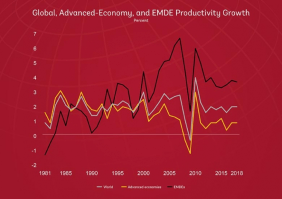
How to rekindle productivity growth, in five charts

There has been a broad-based slowdown in productivity growth since the global untitledfinancial crisis, affecting the majority of advanced economies and emerging market and developing economies (EMDEs).  Productivity growth is the primary source of lasting income growth, which in turn is the main driver of poverty reduction. Whereas the one-quarter of emerging market and developing economies (EMDEs) with the fastest productivity growth have reduced their extreme poverty rates by an average of more than 1 percentage point per year since 1981, poverty rates rose in EMDEs with productivity growth in the lowest quartile. The broad-based slowdown in labor productivity growth over the past decade has raised concerns about progress in achieving development goals.

Continue reading