A good job is the safest way out of poverty. The Regional Labor Outlook report summarizes the main trends related to labor markets in Latin America and the Caribbean. Download it here.
“Credit: World Bank Group. All rights reserved”

A good job is the safest way out of poverty. The Regional Labor Outlook report summarizes the main trends related to labor markets in Latin America and the Caribbean. Download it here.
“Credit: World Bank Group. All rights reserved”
Energy efficiency is a transformative, low-cost solution that can fast-track access to affordable and secure energy and boost economic growth. Amid soaring power demand, driven in part by air conditioners, heavy industry, and, increasingly, data centers needed to power artificial intelligence, energy efficiency can help countries avoid overspending on new energy infrastructure, importing fuels, and taking on more debt for their energy sectors.

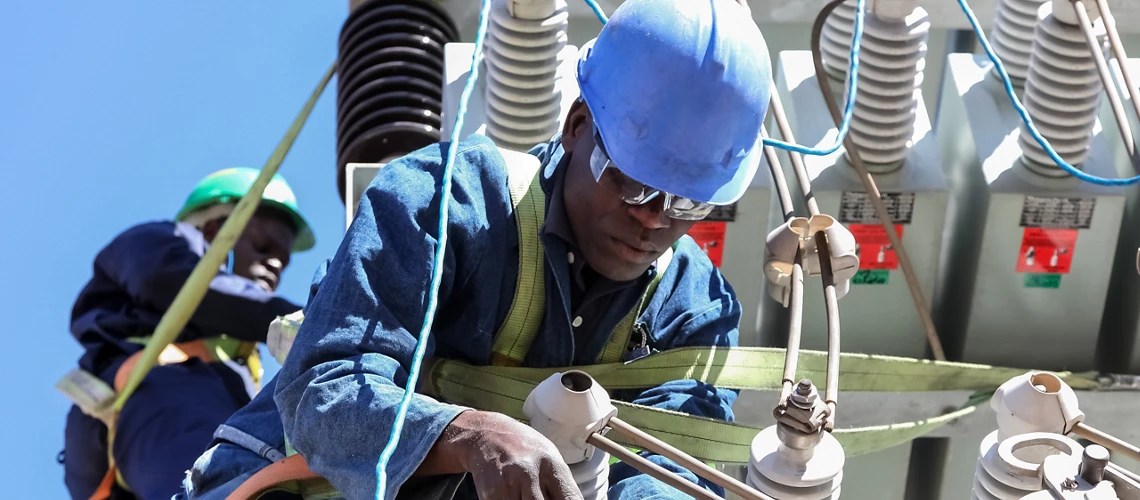
Africa is home to the largest share of the world’s unelectrified population—an estimated half a billion people, mostly in rural areas. In recognition of the significant role of electricity in economic development, the region is poised to erase this unwelcome statistic by achieving universal access by 2030 through several national and multilateral initiatives.
Continue reading
As leaders from across African governments, the private sector, civil society, and international development partners gather this week in Japan for the ninth Tokyo International Conference on African Development (TICAD), it’s encouraging to see health taking a prominent place on the agenda.
Continue reading“Credit: World Bank Group. All rights reserved”
WASHINGTON, D.C., August 19, 2025 – The World Bank (International Bank for Reconstruction and Development, IBRD, Aaa/AAA) today priced a USD 5 billion benchmark bond that matures in August 2035. The World Bank’s successful USD bond attracted its largest ever 10-year order book with investors around the world.
With more than 180 investor orders, the transaction attracted over USD 13 billion high-quality investor orders, primarily driven by bank treasuries, central banks/official institutions, and asset managers.
Continue reading
LIVESTREAM
Q&A with Frederico Gil Sander
and Henriette Kolb
August 27, 2025 @10-10:30 AM EDT (UTC-4)
Sign Up: Event | The Future of Jobs: You Ask, We Answer | World Bank Live

Over the past year, I’ve seen a growing interest in, and a stronger demand for, better tools to prepare for and respond to crises. Our partners in government, the private sector, civil society, foundations, and other development organizations send us the same message time and time again: In the face of crisis, we need greater preparation and faster access to financing.
Continue reading
The production and use of development data have undergone significant transformation over the past two decades. The shift from paper-based records to digital formats has made data more accessible and easier to share. The open data movement has dramatically increased the availability of government and institutional datasets, which in turn catalyzed greater opportunities for analysis, transparency, and innovation. And major advances in big data and data science have further expanded both the volume and diversity of information guiding development policy.
Amid rapid advances in artificial intelligence (AI), development data has now reached another pivotal juncture: the evolution to AI-ready development data—data that is readily discoverable, comprehensible, accessible, and usable by both humans and AI applications.
Continue readingThe latest Global Gas Flaring Tracker, an independent report of gas flaring worldwide, reveals that global gas flaring volumes rose to 151 bcm in 2024 from 148 bcm in 2023. This is the highest level since 2007. Flaring Intensity, the amount of flaring per barrel of oil produced, has remained largely unchanged in the last fifteen years.
The top nine flaring countries continue to account for three-quarters of all flaring, but less than half of global oil production. If captured and used, the gas flared could have helped provide energy for some of the world’s most energy-deprived people.
The increase in gas flaring in 2024 highlights the need for oil producers to rapidly accelerate efforts to end routine flaring and minimize pollution from oil and gas operations. The World Bank’s Global Flaring and Methane Reduction (GFMR) Partnership estimates that in 2024 flaring released 389 million tonnes of CO2e, with a significant portion in the form of unburnt methane.
The report highlights that countries committed to the Zero Routine Flaring by 2030 (ZRF) initiative performed significantly better than countries that have not made the commitment. However, while some countries have made progress reducing flaring, the overall increase in 2024 underscored the need for governments and operators to prioritize flaring reduction projects.
The report calls on governments and operators to act now to end routine gas flaring and reduce methane emissions from oil and gas production.
The World Bank’s annual Global Gas Flaring Tracker is a tool for monitoring and understanding the state of flaring worldwide and the progress made towards achieving Zero Routine Flaring by 2030. GFMR, together with the Payne Institute at the Colorado School of Mines, has developed global gas flaring estimates based upon observations from a satellite launched in 2012 and operated by the U.S. National Oceanic and Atmospheric Administration. The advanced sensors of this satellite detect the heat emitted by gas flares as infrared emissions.
About GFMR
GFMR is a multi-donor trust fund supported by governments, companies, and multilateral organizations committed to ending routine gas flaring and reducing methane emissions from the oil and gas sector. GFMR provides catalytic grant funding, technical assistance, policy and regulatory reform advisory services, capacity building and institutional strengthening for methane and flaring reduction projects. For example, GFMR mobilized $11 million to detect and repair methane leaks in Uzbekistan’s gas distribution network. The project has already eliminated 9,000 tones of methane emissions per year, with further reductions of 100 thousand tonnes of methane emissions expected each year.
 Netherlands for the World Bank
You must be logged in to post a comment.