
Following decades of violent conflicts in Burundi, Rwanda, South Sudan and the  Democratic Republic of Congo (DRC), Tanzania became home to thousands of refugees seeking shelter. , making it one of the top four refugee-receiving countries in Sub Saharan Africa. The majority of these refugees settled in 13 main camps in the northwestern districts of Karagwe, Ngara, Kasulu, Kigoma and Kibondo. In some of these districts, refugees outnumbered Tanzanians five to one— making it perhaps the most pronounced forced displacement crisis. By the end of May 1994, the Benaco refugee camp in Ngara district had become the largest in the world.
Monthly Archives: January 2020
eC2: Gender-disaggregated Impacts of Street Lighting in Brazil
Deadline: 30-Jan-2020 at 11:59:59 PM (Eastern Time – Washington D.C.) 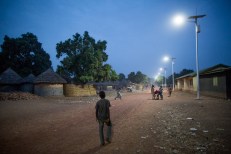
The objective of this activity is to carry out a qualitative baseline assessment of the effects of street lighting (or the lack of it) on mens and womens perceptions of safety and on mobility, economic activity, and educational and professional opportunities. The analysis will also include a comprehensive qualitative assessment of the current level of street lighting (pole presence, energy source, technology, brightness, availability, reliability, etc.), and a review of the literature on the impacts of street lighting on crime and violence.
eC2: Regional Program for Digital Innovation to Support Public Transport and Sector Growth
Deadline: 27-Jan-2020 at 11:59:59 PM (Eastern Time – Washington D.C.) 
The project objective is to apply best global practice and develop shared knowledge and tools to understand, regulate and improve paratransit transportation in developing countries by using new digital technologies through a regional programmatic approach for countries in Southern Africa. This will require a deeper understanding of the informal paratransit operations and business efficiency (or inefficiency) and contribute toward moving the informal sector toward formalization in the SSA region and globally.
Specific objectives
This project intends to address the following specific objectives:
(i) understand the quality and efficiency of paratransit operations and users mobility patterns, (ii) share such information with paratransit operators and engage them in the discussion of potential operations and business improvements, and (iii) contribute to the development of regulation and policies that will yield service improvements in the informal transit sector.
eC2: Evaluation of the 2030 Water Resources Group Model & Lessons Learned for Achieving the SDGs
Deadline: 13-Feb-2020 at 11:59:59 PM (Eastern Time – Washington D.C.) 
Launched in 2008, the 2030 Water Resources Group (2030 WRG) (http://www.2030wrg.org) aims to help countries facilitate collective action among government, the private sector, and civil society to improve water resources management. 2030 WRG does so by: (a) creating the wider political economy conditions and momentum for change in water sector reform; (b) facilitating collaboration and awareness building within the water resources community, including the private sector; and, (c) improving the design and implementation of a comprehensive and innovative set of policies, programs and projects in selected countries or regions in order to increase their water security.
January 2020 Global Economic Prospects: Slow growth, policy challenges
STORY HIGHLIGHTS
- The world economy is poised for a modest rebound this year, but outlook is fragile.
- Emerging, developing economy growth to accelerate in 2020 as some emerging economies recover from periods of stress.
- Rise in debt, slowdown in productivity pose challenges for policymakers.
eC2: Public Expenditure Reviews of the Water Sector in select countries in Africa (Kenya, Mozambique, Nigeria and Sierra Leone)
Deadline: 23-Jan-2020 at 11:59:59 PM (Eastern Time – Washington D.C.) 
In each country, the main objectives of the planned PER are:
1. To identify strategic programs and activities in the water sector, consistent with its other objectives particularly those related to macroeconomic stability and public financial management
2. To make assessment of the funding gaps and efficiency gaps (both allocative efficiency and technical efficiency) in the water sector and develop appropriate polices for improving efficiency and effective channelization of financial resources to reach agreed sector goals.
3. To support the design and delivery of effective water services.
World Development Report 2021 – Data for Development
As the new year begins, I am pleased to announce that the World Bank Group’s next  World Development Report (WDR) for 2021 will be on Data for Development.
WDR 2021 will be the first WDR report on the role of Data for Development
Doing more—and better—for Africa’s food system in the face of climate change
From devastating droughts in Southern Africa and West Africa to cyclones and flooding in East Africa, extreme weather is threatening crops and livestock and putting millions of Africans at risk for food insecurity. 237 million people suffer from chronic undernutrition in Sub-Saharan Africa, a number that rose in 2017, derailing gains that were made in previous years. The message from the headlines is loud and clear:
eC2: Public Expenditure Reviews of the Water Sector in select countries in Africa (Kenya, Mozambique, Nigeria and Sierra Leone)
Deadline: 23-Jan-2020 at 11:59:59 PM (Eastern Time – Washington D.C.)
In each country, the main objectives of the planned PER are:
1. To identify strategic programs and activities in the water sector, consistent with its other objectives particularly those related to macroeconomic stability and public financial management
2. To make assessment of the funding gaps and efficiency gaps (both allocative efficiency and technical efficiency) in the water sector and develop appropriate polices for improving efficiency and effective channelization of financial resources to reach agreed sector goals.
3. To support the design and delivery of effective water services.
eC2: Wastewater treatment/ Re-cycling PPP in India
Deadline: 14-Jan-2020 at 11:59:59 PM (Eastern Time – Washington D.C.) 
IFC has been approached by an urban local body ( Municipal Corporation) in India to structure a wastewater treatment & recycling project under Public Private Partnership (PPP). The scope of the Project includes i) development of a tertiary treatment plant (TTP) of output capacity of about 125 MLD along with rehabilitation of two existing sewage treatment plants (STPs); ii) development of distribution network for supply to an industrial cluster; and iii) operation & maintenance (O&M) of the rehabilitated STPs, proposed TTP and the distribution network.
 Netherlands for the World Bank
You must be logged in to post a comment.