
Deadline: 27-May-2019 at 11:59:59 PM (Eastern Time – Washington D.C.) 
The World Bank is seeking to engage the professional services of a firm specialized in the modeling of hydro-meteorological natural disaster risk in an international environment.
The AP seeks to continue evaluating risk transfer instruments, particularly for hydro-meteorological risk, as highlighted in the APs joint declarations in April 2018 and, to that effect, has mandated the International Bank for Reconstruction and Development (World Bank Group) to provide technical assistance for identifying the most relevant hydro-meteorological risks, clearly defining them for the purposes of risk transfer, and evaluating potential financial instruments to provide coverage against such risks. The World Bank Group may act as an advisor to the Client Countries for assessing and developing potential risk transfer instrument, and might be the sponsor of a CAT Bond, should all or some of the Client Countries decide to issue one, via the World Bank.
 “
“ football in a playground with his friends every afternoon in the AlTawahi District of Aden. Cristiano Ronaldo and Lionel Messi were his sporting heroes. He would run across the playground kicking the ball, imitating his heroes. Undoubtedly, it used to be the best part of his day. To play for Yemen’s national football team one day was his dream.

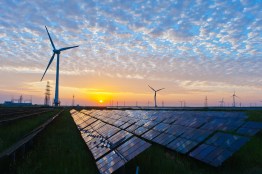 within the Ministry of Finance, formally initiated its Scaling Solar Round 2 tender by issuing a Request for Pre-Qualification (RFQ) for up to 500 MW of solar photovoltaic energy projects. Following this announcement, the PPP-DG
  productive environments to attract investments, increase economic efficiency, and create livable environments that prevent urban costs from rising with increased population densification. What are the central obstacles that prevent African cities and towns from becoming sustainable engines of economic growth and prosperity? Among the most critical factors that limit the growth and livability of urban areas are land markets, investments in public infrastructure and assets, and the institutions to enable both. To unleash the potential of African cities and towns for delivering services and employment in a livable and environmentally friendly environment, a sequenced approach is needed to reform institutions and policies and to target infrastructure investments. This book lays out three foundations that need fixing to guide cities and towns throughout Sub-Saharan Africa on their way to productivity and livability.
 as digital transaction accounts and payment services, which serve as the gateway to financial inclusion. Providers are now diversifying their products offerings to newer DFS, such as credit, insurance, and savings. A recent World Bank Group report examines DFS products geared toward longer-term savings.
 torrents of heavy rain and flooding major rivers. Records from a young monk who witnessed the floods describe a muddy wave destroying levees and sweeping through villages. As levees and rivers collapsed, floodwaters rose in Edo, Japan’s largest c
 Netherlands for the World Bank
You must be logged in to post a comment.