
Nearly 1.1 billion people escaped extreme poverty between 1990 and 2015, thanks to 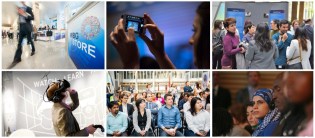 broad-based economic growth and inclusive approaches to development. But progress is stalling, and we face an urgent challenge; today, one in 10 people still live in extreme poverty.
Yearly Archives: 2019
eC2: Kosovo Solar Technical, Environmental and Social Consultant
Deadline: 28-Oct-2019 at 11:59:59 PM (Eastern Time – Washington D.C.)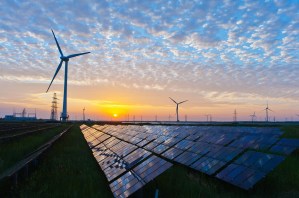
IFC has been retained as lead transaction advisor by the Government of Kosovo to procure the development, construction and operation and maintenance of 50 MW of utility-scale solar PV power on a PPP basis (the Project). As such, IFC is procuring a technical, environmental and social consulting firm (or consortium) to advise on the Project. The assignment will be split in to several phases and is expected to include: initial assessment of the potential site; review of grid code and development of the PPA technical limits schedule; detailed site studies, including ground investigations, grid integration studies and E&S scoping; and support to the tender process (e.g. tailoring of technical specs, prequalification evaluation, bid evaluation). The Project may also include an element of battery storage. Engineering firms should consider partnering with E&S firms to strengthen their E&S offering. Use of local partners for ground investigations and local E&S expertise is also recommended.
eC2: Development of Combined Energy Efficiency and Productivity Assessment Tool for Garment Factories
Deadline: 24-Oct-2019 at 11:59:59 PM (Eastern Time – Washington D.C.)
The objective of this assignment is to develop a Combined Energy Efficiency and Productivity Assessment Tool for garment factories in emerging markets to help companies identify where they are positioned on all key dimensions of overall productivity, as compared vis- vis-à-vis best in class and define progression milestones from the starting position to best in class.
World Development Report 2020

World Bank Live
If you can’t be at the Meetings in person, we’ve got you covered with World Bank Live, the World Bank’s digital platform for live-streaming and engaging with global audiences. Block out time now to watch our events live, and in case you miss it, you can still catch up with your favorite events on our events recap page or watch a replay. Don’t forget to tune in to our Global Voices interviews with top-notch global development influencers, as well as our short 30-second challenge videos with experts sharing their knowledge on all things global development.

Building strong, inclusive economies and achieving successful country outcomes together at the 2019 Annual Meeting
Nearly 1.1 billion people escaped extreme poverty between 1990 and 2015, thanks to  broad-based economic growth and inclusive approaches to development. But progress is stalling, and we face an urgent challenge; today, one in 10 people still live in extreme poverty.
To boost action and accelerate progress towards tackling development challenges and reducing extreme poverty, delegates from our member countries, observer organizations, civil society, private sector, and media will convene at the 2019 Annual Meetings of the World Bank Group and the International Monetary Fund (IMF).
This year’s events will take place in Washington, D.C. from October 14-20, 2019.
eC2: IMPROVING FOOD SAFETY MANAGEMENT SYSTEMS AT RICE MILLS MANUFACTURING, AGRIBUSINESS AND SERVICES (MAS) ADVISORY
Deadline: 21-Oct-2019 at 11:59:59 PM (Eastern Time – Washington D.C.) 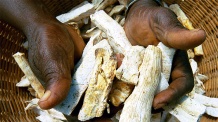
Interested consulting firms (or consortium of firms) are expected to have:
Deeply understanding HACCP, GMP, GHPand international food safety management standards such as ISO22000, BRC, other relevant standards and relevant government regulations. Team Leader should have experience working in international food safety management standards (particularly for BRC Global Standards), food science, food technology/engineering, and food industry. At least one of team member is BRCs certified trainer and other one has excellent spoken and written proficiency in both English and Khmer languages. Proven experience on conducting food safety gap assessments/audits
Previous working experience with the World Bank Group is a benefit.
eC2: Agricultural Technologies and Supply Chain Innovations (AgTech) Project- Case 3: Precision Agriculture (Digitizing Livestock Farm in Ethiopia)
Deadline: 22-Oct-2019 at 11:59:59 PM (Eastern Time – Washington D.C.) 
IFC intends to contract a Consulting Firm (the Consultant) who will design decision support systems for maximizing productivity and resource optimization, and set up dashboards that allow users to make intelligent decisions guided by the advanced technologies. The proposed technology solution should gather specific data (including, possibly, satellite data) on various factors that influence fodder production and livestock rearing: information on input application, farm management, meteorology, soil moisture, disease detection/prediction, crop monitoring and yield forecast/estimation. For livestock, the technology should include features (such as electronic IDs and machine vision) that monitor animals unique characteristics like age, growth, health, reproduction and pedigree.
International Debt Statistics 2020: External Debt Stock of Low- and Middle-Income Countries Rose, but Pace of Increase Slowed
External debt stock of low- and middle-income countries rose 5.2% in 2018 to $7.8  trillion, a slower pace of accumulation than in 2017, according to the World Bank’s International Debt Statistics 2020. Excluding the top ten borrowers (Argentina, Brazil, China, India, Indonesia, Mexico, Russia, South Africa, Thailand, Turkey) external debt stocks for low- and middle-income countries rose 4%.
Net debt inflows (gross disbursements minus principal payments) to low- and middle-income countries fell 28% in 2018 to $529 billion. At the same time, net financial flows (including both debt and equity) to low- and middle-income countries fell 19% in 2018, down 29% excluding China.
The private sector—an engine for growth and stability in fragile countries
Fragility, conflict and violence (FCV) threaten to derail significant progress that has been made in improving living standards and reducing poverty over the past decades. While extreme poverty is going down around the globe, it is increasing in countries impacted by fragility and conflict. The World Bank estimates that by 2030, almost half of the world’s poor will live in countries facing FCV challenges.
Inclusive and sustainable economic growth can also help heal grievances stemming from economic exclusion. These countries likely already face high levels of public sector debt, so private sector investment can bring an infusion of capital without increasing the debt burden. But these volatile environments struggle greatly to attract and sustain the long-term private sector investment that is needed to help them break the “fragility trap.”
 Netherlands for the World Bank
You must be logged in to post a comment.