
When you think of a city, what comes to your mind? Skyscrapers? Subways? Crowds of  people jostling each other as they head to work? And what comes to mind when you think of an Eastern Caribbean island? Sun, sand, beaches paradise? Yet, Eastern Caribbean countries also have cities of thousands of people. In 2017, 35% of the Eastern Caribbean* population was urban: 221,000 out of 628,000 people lived in cities.
Continue reading
Yearly Archives: 2018
eC2:GAFSP PrSW Kenya Impact Evaluation – Baseline
Deadline: 04-Nov-2018 at 11:59:59 PM (Eastern Time – Washington D.C.) 
Description: IFC is looking for an experienced evaluation firm to help conduct the baseline study of an impact evaluation of a project both IFC and the Private Sector Window of the Global Agriculture and Food Security Program (GAFSP) are investing in. The operations are in Kenya and is in the agribusiness sector.
The objective of the evaluation is to assess impact on beneficiary income, yields, and food security. The intended methodology is quasi experimental design.
IFC invites firms with strong background in impact evaluations to submit expression of interest. Experience with evaluations in the agribusiness sector in Africa required.
eC2: Smart Traffic Lights in Sao Paulo
Deadline: 06-Nov-2018 at 11:59:59 PM (Eastern Time – Washington D.C.)
São Paulo has approximately 6,500 signaled crossings a system which was first

established in the 70s. Since then, it underwent through two major attempts of technological renewal, without success. The public perception is of a system prone to failure, especially during rainy season. Last year, more than 35k incidents were reported. 70% of failures are due to wear and tear on equipment. The system is vulnerable to Brazilian inconstant power grid. Finally, most lights operate without central communication.
The WB is selecting a firm to provide technical advice to the City of Sao Paulo on their smart traffic lights program, with resources from the UK Prosperity Fund for Mobility. Considering the current infrastructure and traffic in São Paulo as well as the maturity of available solutions, the TA will compare technologies and develop an economic analysis to propose a strategy of gradual investments in the system to obtain increasing levels of service and sustainability.
eC2: Understanding urban flood risk in Jujuy, Argentina
Deadline: 31-Oct-2018 at 11:59:59 PM (Eastern Time – Washington D.C.)
The World Bank is seeking consultant services to analyze urban flood risk in the city of San Salvador de Jujuy, Argentina, as part of the World Bank’s City Resilience Program. Specifically, the consultancy will focus in the Chijra River. The expected tasks include:
1. Diagnosis of current situation including compiling, preparing, complementing and / or updating existing information.
2. Develop a Digital Terrain Model for the whole basin using the existing information.
3. Analysis of hydrological aspects; mainly the review of the studies available within the basin and close to it, considering the historical values and the climatic tendencies indicated in the recent history.
4. Construction of a 1D hydrodynamic model for the area based on the MDT.
5. Evaluate the possibility of calibration of the models with background information.
6. Prepare the base cartography of the area based on the available information.
7. Define the design events for the exploitation of the hydrodynamic model.
8. Draw the flood lines for the different scenarios.
9. Analyze sediment transport at basin level.
10. Identify erosion / sedimentation zones.
11. Identify existing infrastructures that affect natural runoff.
12. Identify population and infrastructure exposed to risk.
13. Identify mitigation works for both floods and erosion / sedimentation phenomena.
The assignment and all deliverables will be in Spanish.
eC2: Design Agency to Create a Brand Identity for the Energy Efficiency Fund (EEF) and Development of the Marketing Materials for Pre-Launch Awareness Raising Activities
Deadline: 01-Nov-2018 at 11:59:59 PM (Eastern Time – Washington D.C.)
The purpose of the assignment for the design firm is (a) to develop brand book for the EEF umbrella branding; (b) to develop pre-launch awareness materials in print and digital spaces; and (c) to develop EEF website with its brand identity.
Ending hunger to end poverty, ending poverty to end hunger
Last week we had World Food Day on October 16 and World Poverty Day on October 17. The good news from World Poverty Day is that there is global progress on reducing extreme poverty. Based on the latest available data, it is estimated that in 2015 there were 736 million people living on less than US$1.90/day, which compares very favorably to the 1,895 million people living in extreme poverty in 1990. And while the world’s population grew from 5.3 billion in 1990 to 7.4 billion in 2015, the poverty rate fell from 36 percent to 10 percent or 1 percentage point per year on average over this period.
At the same time, progress in reducing extreme poverty has been uneven. There have been sharp reductions in absolute numbers in East Asia and the Pacific and in South Asia, but the number of people living in extreme poverty in Sub-Saharan Africa has increased significantly.
WBG Internship: apply before October 31st!
Applications for the Winter World Bank Internship are being accepted from October 1st through October 31st, 2018. Please click here to apply.
The World Bank Internship Program offers highly motivated individuals an opportunity to be exposed to the mission and work of the World Bank Group in international development. The internship allows individuals to bring new perspectives, innovative ideas and latest research experience into the Bank’s work and improve their skills while working in a diverse environment. An internship at the World Bank is an opportunity to learn while gaining practical experience. Interns generally find the experience to be rewarding and interesting. In addition, it is a way to enhance their CVs with practical work experience.
Going Above And Beyond To End Poverty: New Ways Of Measuring Poverty Shed New Light On The Challenges Ahead
The fight to end extreme poverty is revealing a developing dichotomy. On the one hand,  extreme poverty continues to be stubborn in certain parts of the world, while in others it has become minuscule or non-existent. In about half of the world’s countries, less than 3 percent of the population is living on less than $1.90 a day—but that doesn’t mean the fight to eradicate poverty is over in these countries.
Recognizing this divergence, a new World Bank report—Poverty and Shared Prosperity 2018: Piecing Together the Poverty Puzzle—broadens our understanding of poverty. It introduces new tools and measures that will help countries better identify the poor and implement appropriate policies to build human capital and improve living standards.
Accelerating progress towards human capital and financial inclusion
Last week, more than 11,000 delegates from the World Bank Group’s member countries  –public and private sector attendees–gathered at our Annual Meetings in Indonesia to discuss how we can accelerate progress toward our twin goals: to end extreme poverty by 2030 and boost shared prosperity among the poorest 40 percent around the world.
Disruptive technologies create opportunities for development but they also put those goals at risk. Our discussion this past week focused on the changing the nature of work – the topic of our World Development Report this year. While technology and automation are doing away with some jobs, innovation is also creating new occupations, and launching career fields that didn’t exist a few years ago. Those who are prepared for this future will have many opportunities to achieve their aspirations. Those who are not will be left behind.
Why the World Bank is adding new ways to measure poverty
The 2018 Poverty and Shared Prosperity Report shows how poverty is changing and 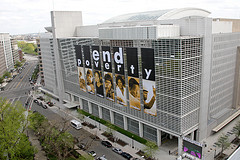 introduces improved ways to monitor our progress toward ending it.
The landscape of extreme poverty is now split in two. While most of the world has seen extreme poverty fall to below 3 percent of the population, Sub-Saharan Africa is experiencing extreme poverty rates affecting more than 40 percent of people. The lamentable distinction of being home to the most people living in extreme poverty has shifted, or will soon shift, from India to Nigeria, symbolizing the increased concentration of poverty in Africa.
 Netherlands for the World Bank
You must be logged in to post a comment.