Unrealized Potential: The High Cost of Gender Inequality in Earnings

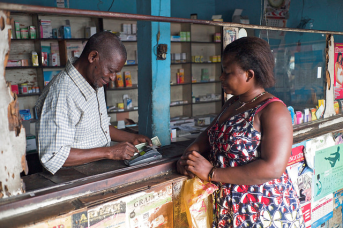
gender-embargo-report_530Unrealized Potential: The High Cost of Gender Inequality in Earnings is the first in a series of reports that aim to measure the global economic costs of gender inequality. This first report measures these losses in lifetime earnings.

In many countries, girls’ average educational attainment remains lower than boys and adult women are less literate than men. Apart from these gender gaps in educational attainment, discrimination and social norms shape the terms of female labor force participation. Women are less likely than men to join the labor force and to work for pay. When they do, they are more likely to work part-time, in the informal sector, or in occupations that have lower pay. These disadvantages translate into substantial gender gaps in earnings, which in turn decrease women’s bargaining power and voice.

Continue reading

eC2: Project Officer: Empowering Women in the Private Sector

Deadline:  20-Jun-2018 at 11:59:59 PM (Eastern Time – Washington D.C.) Senegal-Woman-at-Well-800

The objective of this assignment is to provide on-the-ground coordination and implementation support for IFCs gender team to ensure Project activities are delivered in a timely manner and objectives are achieved. The appointment is for an initial probationary period of 60 working days. It is expected that upon satisfactory completion of the probation period the contract will be extended up to 150 days per year upon agreement between IFC and the Project Officer. The position can be filled on a part-time (3 days per week or shorter work hours 5 days per week) basis.

Continue reading

The 2018 Atlas of Sustainable Development Goals: an all-new visual guide to data and development

sdg-atlas-2018-cover-400px“The World Bank is one of the world’s largest producers of development data and research. But our responsibility does not stop with making these global public goods available; we need to make them understandable to a general audience.
When both the public and policy makers share an evidence-based view of the world, real advances in social and economic development, such as achieving the Sustainable Development Goals (SDGs), become possible.” – Shanta Devarajan

We’re pleased to release the 2018 Atlas of Sustainable Development Goals. With over 180 maps and charts, the new publication shows the progress societies are making towards the 17 SDGs.

Continue reading

eC2: Sustainable Lowland Agriculture in Indonesia

Deadline:  11-Jun-2018 at 11:59:59 PM (Eastern Time – Washington D.C.) indonesia

This study forms an important part of the World Bank’s Indonesia Landscapes Program. With many of the peatlands drained and in a state of degradation, rural livelihoods need to adapt to new threats and opportunities within the landscape. Given the government’s plans to restore currently drained and occupied lowland areas, an assessment is needed to identify potential alternative crops and sustainable production systems that are appropriate for smallholders in the affected lowlands. The outcomes of the analysis would inform an important policy discussion among the various government institutions, including the Ministries of Agriculture and Public Works and the Peatland Restoration Agency, to shape the business case for improved management of natural resources in Indonesia’s lowlands.

Continue reading

eC2: Remote sensing of Agricultural Land Use in Kyiv, Mykolaiv and Lviv Oblasts, Ukraine

Deadline:  04-Jun-2018 at 11:59:59 PM (Eastern Time – Washington D.C.) agriculture-youth

  1. Identification of preliminary classification of land cover, development of list of spectral characteristics and a rout for field data collection for typical representatives of each class, in order to develop training data. Assess the learning and validation sample and data collection report for Kyiv oblast for Summer 2017. Preprocessing of available satellite imagery (radiometric calibration and correction, noise filtering, etc.) for the territory of Kyiv oblast for summer 2017 and 2018.
  2. Collection of training data and validation sample; establish spectral library for the categories of land cover in Kyiv oblast.
  3. Processing of satellite imagery (Sentinel-1, Sentinel-2, Landsat-8) for recognition of information on actual land use, development of descriptive statistics for the categories of land cover in Kyiv oblast, estimation of NDVI, identification of irrigated land.

Continue reading

eC2: Analysis of Ethiopias Human Development (education and health) and safety net delivery systems in the lowlands

Deadline:  12-Jun-2018 at 11:59:59 PM (Eastern Time – Washington D.C.) untitled

There exist horizontal (inter-regional, intra-regional and inter-woreda) and vertical (income distribution) disparities in human development outcomes. Ethiopia is impacted by droughts which have the potential to undermine the development gains the country has made if not anticipated and responded to. Furthermore, Ethiopia is deeply affected by forced displacement and the country is hosting the second-largest refugee population in Africa with most refugees hosted along Ethiopia’s borders with the majority of the refugee camps situated in the lowlands where the implications of long-term refugee hosting have been felt most acutely. The increasing number and extent of droughts, coupled with the remaining challenges to ensure access to services for the most vulnerable, highlights the need to examine Ethiopia’s service delivery modalities and financing systems with a view to plan and prepare for chronic crisis adapting delivery to maximize investments in human development and to improve systems to respond to crises and ensure hard won development gains are not lost.

Continue reading

The gender gap in financial inclusion won’t budge. Here are three ways to shrink it

financial-inclusion-genderby Kristalina Georgieva On Wed, 05/23/2018

I opened my first bank account as a new student at the London School of Economics in 1987. This seemingly small act meant that I could manage my own finances, spend my own money, and make my own financial decisions. It meant freedom to decide for myself.

Continue reading

Illicit trafficking and conflict: A chicken-and-egg situation?

scanner_780Transnational organized crime (TOC) is a widespread phenomenon that leaves no region untouched. Illegal trafficking—TOC’s most lucrative manifestation—has taken multiple forms, ranging from the most traditional trade in narcotics and weapons to smuggling counterfeited medicines and endangered wildlife. As these illicit flows cut across multiple national borders, they become interconnected with local security, political, social, and economic dynamics. At times, they are so embedded that the line between licit and illicit is significantly blurred. The same applies when TOC intersects with conflict situations.

Continue reading

Is the world on track to deliver energy access for all?

ene-780x439-solar-powered-metro-station-brazil-paulo-barrosSTORY HIGHLIGHTS

  • Countries need to accelerate progress on access to electrification, clean cooking, renewables and energy efficiency to meet Sustainable Development Goal #7, according to a new report
  • 674 million people, or 8% of the world’s population, will still be in the dark in 2030 if current trends of electrification continue
  • An estimated 2.3 billion people will continue to cook by burning wood and coal in 2030, which poses major health risks


Continue reading

eC2: Support to the Government of Benin, Burkina Faso and Togo for the Evaluation of Urban Transport and Mobility Management and the Development of a Strategy for Sustainable Urban Mobility

general-transport-mosaic-mainDeadline:  11-Jun-2018 at 11:59:59 PM (Eastern Time – Washington D.C.)

The purpose of the study is to develop comprehensive, coherent and applicable policy recommendations, a relevant strategy, shared by all stakeholders and a priority action plan for the sustainable management of urban transport and mobility in the countries, through a swift assessment of the legislative and regulatory framework of the institutions in charge of the transport sector, a diagnosis of the functioning of the urban transport sub-sector. The study also aims to propose a guide for urban transport improvement and establish a strategic plan for sustainable mobility for the main secondary cities, based on the findings of a comprehensive assessment of one pilot city to be chosen in agreement with the respective Governments.

Continue reading