eC2: CGAP Digital pension plan for Ghanaian cocoa farmers

Deadline: 12-Jul-2017 at 11:59:59 PM (Eastern Time – Washington D.C.) rwandan farmers

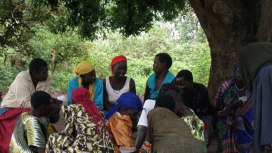
There are few financial solutions that address the need for long-term savings for low income people in Sub-Saharan Africa and that could provide a stable pension when they reach retirement age. In Ghana for instance, saving is largely done in savings groups such as the susu collection system, which offers little interest (and therefore does not protect from inflation) and requires payment of a typically expensive fee to the collector. Even more daunting are voluntary pension saving products, which require convincing and encouraging participants to save over a long period for a payout that is far in the future. CGAP wants to test pension plans tailored to cocoa farmers in Ghana that leverage the advantages of digital technologies to provide customers greater flexibility and incentives to create pension savings for themselves. CGAP is seeking technical services to structure and test a solution and identify relevant lessons to be shared widely in an open access format.

Continue reading

eC2: CGAP Digital ROSCA in Senegal

Deadline: 12-Jul-2017 at 11:59:59 PM (Eastern Time – Washington D.C.) rw_gender_ag_blog

Financial inclusion in Senegal is low, with only 12 percent of adults having a formal financial account. Women are especially excluded from accessing formal financial services. This has led low income people to adopt informal systems of saving, such as the tontinea type of rotating savings and credit association (ROSCA) that combines features of a lottery to determine the sequence of disbursing group funds among members. CGAP intends to procure technical services to structure and test a solution that digitizes the tontine process and works as a marketplace for financial services. The objective of the project is to identify relevant lessons and share them widely in an open access format. We expect this pilot to produce lessons on digitization of tontines and on the value proposition of bundling other financial services such as credit or insurance along with it.

Continue reading

eC2:CGAP Digital credit for inputs farmers in Kenya

Deadline: 11-Jul-2017 at 11:59:59 PM (Eastern Time – Washington D.C.)

Farmers in Africa have limited access to afforgil-improving-social-networks-for-ugandan-farmers-dable finance, especially before the planting season when cash flow is low but need for farming inputs is high. In Kenya, agriculture is one of the most underfinanced sectors of the economy. CGAP aims to lower the risk and cost for financial institutions and input suppliers to meet this unmet demand. We wish to test a digital financial solution that links smallholder farmers to inputs and credit in Kenya. The solution should help smallholder farmers save as well as securely borrow toward the purchase of agricultural inputs such as fertilizers, seeds.
CGAP will procure technical services to structure and test this digital financial solution and identify relevant lessons to be shared widely in an open access format. We expect this pilot to give us key learnings on creating mobile wallets that help farmers access credit for inputs and assists them in reaching their goals, thereby creating a high value proposition solution for Kenyan farmers.

Continue reading

eC2: PUBLIC HEALTH CAPACITY BUILDING IN AFRICA – CCDC

Deadline: 13-Jul-2017 at 11:59:59 PM (Eastern Time – Washington D.C.)medical-appointment-doctor-healthcare-clinic-health-hospital-medicine[7]

The Government of China intends to further strengthen its support to Sierra Leone in the near future in order to uplift the Countrys public health system, as exemplified by establishing a Western African Center for Tropical Disease Research in the Country. The disease surveillance system assessment and capacity building is one of the key activities, which will make a brand-new start.

Continue reading

eC2:Design of digital finance solution for clean energy

Deadline: 26-Jul-2017 at 11:59:59 PM (Eastern Time – Washington D.C.)

index

Interested firm should be experienced with the design and implementation of financial (IT) solutions, preferably focusing on SMEs and retail consumers. The firm/consortium is required to demonstrate (i) proven expertise (with concrete examples) in designing, developing and implementing financial IT solutions (ii) proficient in Arabic and building multi-language applications; (iii) local presence in Middle-East region, preferable in Jordan with management staff and ICT experts; (iv) experience working with government agencies and multi-lateral and international institutions. Assessment of proposals will be based on the qualification criteria.

Continue reading

eC2: Development of Climate Change Mitigation pathways in Energy and Urban sectors

Deadline: 25-Jul-2017 at 11:59:59 PM (Eastern Time – Washington D.C.)

PSLO Energy Mission to Washington

Interested firm/consortium should have experience and expertise in climate change mitigation, particularly in the energy and urban sectors. The firm/consortium is required to demonstrate (i) proven international experience (with concrete examples) in assessment and development of mitigation options, scenarios, modelling techniques, baselines and emission factors development, required for the energy sector and desirable for the urban sector; (ii) technical experience and expertise in energy and urban sectors; (iii) local presence in Middle-East region, preferably in Jordan with management staff and local technical experts with Arabic language skills; (iv) experience working with government agencies and multi-lateral and international institutions.

Continue reading

eC2: Madagascar: Off-Grid Solar Market Assessment and Design Options

Deadline: 12-Jul-2017 at 11:59:59 PM (Eastern Time – Washington D.C.) scaling+solar+main+banner

(i) Projecting likely grid access rates over the medium-term (by leveraging information on current and expected electric grid coverage), and subsequently mapping out areas that will need to be served by off-grid solutions; (ii) Estimating the size of the potential commercial off-grid market through countrywide household and SME surveying focused on ability and willingness to pay for electricity service and/or off-grid solar products; (iii) Stocktaking on institutional electricity access, including the number, variety, and location of institutions that are off the grid and their likely electricity needs going forward; and (iv) Identification of barriers/risks across the local off-grid solar value chain, and a review of the regulatory structure as it pertains to the products and range of distribution models.

Continue reading

eC2:PNG Mobile Banking Assessment: Customer Level Qualitative Research

Deadline: 13-Jul-2017 at 11:59:59 PM (Eastern Time – Washington D.C.) Survey

Through qualitative research, IFC aims to gain a rich understanding of the change brought forth by the introduction of mobile banking services in Papua New Guinea. The consultant will conduct a number of focus group discussions with various customer segments, and analyze the information collected to assess how this new technology might have succeeded, or failed, to expand access and usage of financial services across key segments of the population. The goal of this analysis is to complement the parallel sector wide analysis, as part of a comprehensive assessment of IFCs Mobile Banking effort in Papua New Guinea.

Continue reading

eC2:CGAP Digital Finance Frontiers Pilots Mobile education

Deadline: 03-Jul-2017 at 11:59:59 PM (Eastern Time – Washington D.C.)

Mobile in Africa

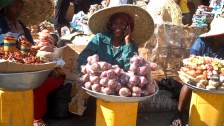
Vendor at Makola Market, Accra, Ghana.

The selected Firm will carry out a pilot, in partnership with a financial service provider, to test the predictability of a credit score based on performance and engagement with mobile learning content. The selected Firm shall be ready to test a product or service in Sub-Saharan Africa within six months. The project should be fully digital, or have a significant digital component and lessons learned will be shared.

Continue reading

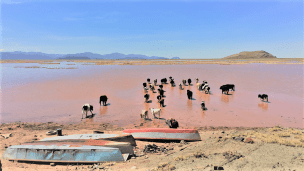
World Desertification Day: Concerted Effort in Global Resilience to Turn Back Drought and Desertification

STORY HIGHLIGHTSDried-lake-Bolivia
  • Climate and disaster risks, including drought and desertification, threaten economic growth and development gains globally.
  • In response, the World Bank, governments, international agencies, and communities are working to develop operational and technical assistance in the most vulnerable regions.
  • With consistent, systematic, and collective effort, global achievements have and can be preserved and enhanced, however, critical intervention is required.

Continue reading