Netherlands for the World Bank

Your guide to the World Bank Group

Netherlands for the World Bank

eC2:Technical Assistance to the Ministry of Water and Sanitation (Senegal) to improve sanitation services delivery in small towns

Deadline: 21-Feb-2017 at 11:59:59 PM (Eastern Time – Washington D.C.)

waste water treament

Pour être éligible, le candidat doit disposer de compétences avérées en matière détudes de définition de stratégie dassainissement dans les gros centres ruraux ou les petites villes, incluant lélaboration des schémas directeurs jusquà la réalisation des études techniques détaillées et la production des dossiers dappels doffres en vue de la réalisation des travaux. Les membres de léquipe de consultants choisie devront justifier chacun au moins de deux expériences concluantes en matière de projets similaires, particulièrement appliquées aux populations sénégalaises ou ouest-africaines. La gestion détudes sur des populations rurales de grande taille est aussi essentielle.
Continue reading

eC2:Assess the Feasibility of Creating a Regional Energy Hub in Egypt

Deadline:21-Feb-2017 at 11:59:59 PM (Eastern Time – Washington D.C.)India Energy

The World Bank, on behalf of the MoP, intends to hire a consulting firm to define the shape of the desired regional energy hub in Egypt, based on a comprehensive feasibility study of costs and benefits as well as non-financial considerations; develop a strategy to achieve the establishment of that hub, the timeline in which to achieve it as well as a high-level implementation plan for it.

Continue reading

IFC: Rwanda to export fortified foods

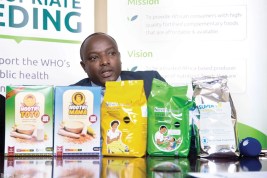
Rwanda will start exporting fortified foods, next month, thanks to a new modern factory1486073163prosper-ndayiragije-the-country-director-of-aif-rwanda-speaks-to-a-journalist launched yesterday. The Africa Improved Foods – Rwanda, based at Kigali Special Economic Zone Nyandungu, started production of fortified porridge flour yesterday. Workers at Africa Improved Foods factory in Kigali assemble packages for fortified foods. Faustin Niyigena. The $45-million (about Rwf36 billion) factory is expected to produce 45,000 tonnes of fortified food annually, enough to help boost exports and prevent child malnutrition across country. Up to 60 per cent of its output is expected to be exported to regional and global markets.

eC2:Water Utility Prefeasibility Study for Private and Public Debt Financing to Enhance the WSS Service Delivery in the Urban Area of Tegucigalpa

*Updated

Deadline: 15-Feb-2017 at 11:59:59 PM (Eastern Time – Washington D.C.)water

Design a business plan (BP) based on existing information on the SANAA, which will need to be validated to build an interactive financial model (FM) that will guide UMAPS in decision making with respect to the operation, maintenance and investments that will improve the quality of water and sanitation services as well as achieve financial and environmental sustainability.

Continue reading

Grantee Interview: Making Energy Subsidy Reforms Work for Women and Men

Sophia Georgieva, Social Development Specialist in the Europe and Central Asia region, was the ufge-interviewee-3lead author of the UFGE-funded study Toward Gender-Informed Energy Subsidy Reforms: Findings from Qualitative Studies in Europe and Central Asia. The report presents findings from eight countries on women’s coping strategies and challenges in interacting with public institutions in the face of rising energy costs. The study’s methodology has also been translated into a toolkit to provide a step-by-step guide to conducting qualitative assessments and stakeholder analyses to look more deeply into households’, individuals’, and group’s specific circumstances to better understand impacts on their lives and factors that drive their attitudes and decisions affected by energy policy decisions. Building on this work, Ms. Georgieva is contributing to the global Energy Subsidy Reform Assessment Framework, leading its component on qualitative research tools.  

Other interesting reports:

Voices of Europe and Central Asia: New Insights on Shared Prosperity and Jobs

Gender innovation lab: EMPOWERING GIRLS TRIGGERS THEIR BROTHERS TO COMPETE

Continue reading

Improving Governance Is Key to Ensuring Equitable Growth in Developing Countries

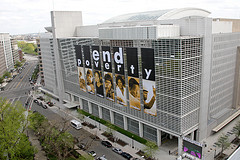
WASHINGTON, January 30, 2017 – A new World Bank policy report urges developing World Bank buildingcountries and international development agencies to rethink their approach to governance, as a key to overcoming challenges related to security, growth, and equity.
The 2017 World Development Report: Governance and the Law explores how unequal distribution of power in a society interferes with policies’ effectiveness. Power asymmetries help explain, for example, why model anti-corruption laws and agencies often fail to curb corruption, why decentralization does not always improve municipal services; or why well-crafted fiscal policies may not reduce volatility and generate long-term savings.

Continue reading

Listening to Africa: A New Way to Gather Data Using Mobile Phones


The proliferation of mobile phones has opened up new opportunities for conducting surveys in developing countries. Data about people’s lives can now be gathered much cheaper and faster. The World Bank’s Listening to Africa initiative is now collecting household data through mobile phone surveys in African countries.

Water, the economy, and development: New insights on a complex challenge

­

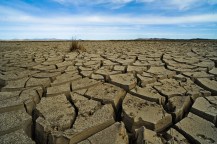
In the World Bank Water Practice, we often talk about how issues like flooding and drought_creative_commons.jpgdroughts threaten our mission to end poverty and boost shared prosperity. But how much do we actually know about how these floods and droughts – “water shocks” – impact farmers, firms, and communities? Perhaps adaptation in the economy has limited such impacts. Or maybe policies have led to economies being more vulnerable to such shocks.

Continue reading

eC2: Risk Communication Research for the Open Data for Resilience Initiative

Deadline: 08-Feb-2017 at 11:59:59 PM (Eastern Time – Washington D.C.)

index
This project seeks to document the third pillar of the work program, Using Data, similar to how OpenDRI has documented its first two pillars through the above publications. This pillar brings together ideas and efforts from the fields of risk communication, user-centered design, and civic technology to ensure that investments in generating, collecting and sharing data contribute to evidence-based and risk-informed policies, ideally causing change in policy and behavior. Further, the third pillar seeks to inform the ways in which OpenDRI designs projects falling under the first two pillars.

Continue reading