
Deadline: 23-May-2016 at 11:59:59 PM (Eastern Time – Washington D.C.)
The objective of this activity is to assist the government of Costa Rica in assessing  alternative pathways to achieve the emission reduction commitments made in its Intended Nationally Determined Contribution (INDC) and developing analytical tools and data necessary to explore existing, proposed and complementary mitigation policies and actions. To this end, this activity will develop an appropriate country-specific modeling framework and a capacity building program that allows continuous integration and update of better data on existing/new options.
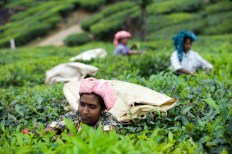 development, Project design, implementation and delivery. Establish client-specific agribusiness credit policies in conjunction with clients Credit Risk Management division and the Business Lines (MSME and Corporate/Wholesale Banking).
 Ghana.This project aims to assess the jobs and GDP impact of IFC projects in oil and gas sector in Ghana. The project is funded by Lets Works funding window that aims to generate new methods and approaches to measure, understand, and strengthen the creation of more, better, and more inclusive jobs.
 This is an assignment to conduct a post program evaluation for the investment climate reform projects financed by SECO in Africa.
  and Rural Development for the identification of preparedness and risk reduction measures for coastal hazards. This assignment can be seen as a first step in establishing an overview. Later on, activities to come to design guidelines, feasibility studies and possibilities for Public Private Partnerships are foreseen
 piped sewerage system and treatment plant of Monrovia (Liberia), in particular carry out a customer enumeration, compile a map of the existing system as well as estimate the demand and willingness to pay for piped sewerage; (b) Assess the technical options and associated costs for a rehabilitation of Monrovias piped sewerage system, and its phased extension to priority areas, recommending a technical solution;(c) For the recommended approach, prepare a detailed design and costing, including draft safeguard and tender documents, for Phase 1 i.e. the rehabilitation of the existing system and important minor extensions up to a budget of US$ 20m.
 who are already active in the health and/or RMNCAH space in developing countries, and identify possible opportunities to leverage GFF and partner resources and financing instruments to encourage more pro-poor, bottom of the pyramid investments to maximize health impact. Private sector for the purposes of this analysis will include investments into both for-profit and not-for profits (including NGOs).


You must be logged in to post a comment.