Thank you, Prime Minister Madbouly, Dr. Shoukry for hosting this event on climate finance.
Developing countries are facing an economic crisis, heavy debt burdens, high inflation, and climate change. It is a crisis facing development itself.

Thank you, Prime Minister Madbouly, Dr. Shoukry for hosting this event on climate finance.
Developing countries are facing an economic crisis, heavy debt burdens, high inflation, and climate change. It is a crisis facing development itself.
Low- and middle-income countries can transition to low-carbon, resilient growth pathways if key conditions are met with international support
WASHINGTON, Nov. 3, 2022—Investing an average of 1.4% of GDP annually could reduce emissions in developing countries by as much as 70% by 2050 and boost resilience, according to a new report from the World Bank Group.
Climate stressors have pervasive impacts, among which the impact on the health 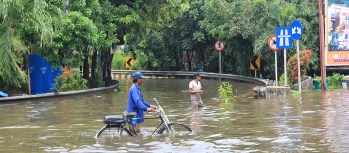 populations across the world continues to expand. This has recently come into even sharper focus with COVID-19.
Extreme heat and water scarcity together, for instance, are already creating havoc in cities like Cape Town and Chennai, while vector-borne, and water-borne diseases like dengue, malaria, gastroenteritis and typhoid continue to affect thousands of cities globally. Apart from their obvious impacts on the physical health of the population, with the oldest, youngest, and other vulnerable groups facing the greatest threats, such climate stressors also have serious mental health ramifications.
By David Malpass, President, The World Bank Group
Climate change – caused by greenhouse gas (GHG) emissions from human activities – poses a major threat to people and development. Poverty, development and climate change need to be tackled together, acknowledging the interconnections between people, planet, and the economy. Climate action is a key global public good, requiring major new financing from the global community and mechanisms for inflows. Mitigation activities are needed to reduce GHG emissions in our shared atmosphere. Adaptation activities need to redouble to reduce the added hunger, migration, conflict, and trade protectionism generated by climate change.
The world will come together in Sharm El Sheikh, Egypt, for COP27, amid growing urgency to tackle the climate crisis. The United Nations Climate Change Conference is expected to focus on the need to implement climate pledges, scale up climate finance, and address the adaptation needs of developing countries. COP27 will bring together leaders and national delegations, representatives from businesses, multilateral institutions, civil society and youth. The World Bank Group will be there taking part in discussions and live events over two weeks.
Watch this space for a listing of events and set reminders to join us live.
Follow the conversation with: #ClimateActionWBG.
The COVID-19 pandemic has revealed structural weaknesses in health systems worldwide and  negatively impacted individuals, societies, and economies. In the pandemic’s wake, political leaders and everyday people alike recognize the importance of resilient health systems that can prevent, prepare for, respond to, and learn from infectious outbreaks and other shocks while continuing to deliver quality essential health services. But urgent questions remain. Which features of a health system are most important for achieving resilience? How can countries—especially poor ones—build resilient health systems? Which investments should countries prioritize to make their systems resilient to future challenges?
Thursday, November 3rd- 8-9AM EDT
This new World Bank report, “Change Cannot Wait: Building Resilient Health Systems in the Shadow of COVID-19,” builds on previous work, leverages new research, and considers countries’ frontline experiences during the pandemic. It presents a new framework for making health systems resilient, shows how countries can build them, and where countries and partners can target investments to improve health outcomes.
Food price inflation exceeds  overall inflation in most countries, and at least 123 million people in Sub-Saharan Africa (SSA) will be in food crisis by the end of the year. This is partly due to lack of investments in domestic food production, exacerbated by climatic shocks, the COVID-19 crisis, and impacts of the war in Ukraine.
Elevated commodity prices could prolong inflationary pressures
WASHINGTON, October 26, 2022—The shrinking value of the currencies of most developing economies is driving up food and fuel prices in ways that could deepen the food and energy crises that many of them already face, according to the World Bank’s latest Commodity Markets Outlook report.
 year since 2000. Recent diseases such as SARS, avian influenza, Ebola – and the enormous health, economic, and societal impacts of COVID-19 – have not yet solicited global unity on the importance of preventing pandemics rather than responding to outbreaks as they emerge. What will it take for world leaders, countries, organizations, and communities to understand that prevention is better than cure? The World Bank’s latest flagship report, “Putting Pandemics Behind Us: Investing in One Health to Reduce Risks of Emerging Infectious Diseases,” is a clarion call for the universal adoption of an integrated approach to sustainably balance and optimize the health of people, animals, and ecosystems.
East Asia prides itself on rapid economic progress over the past few decades with millions lifted out of poverty. Between 2008 and 2018, real per capita GDP in the region grew at an average rate of 6.7 percent per year, significantly above the global average of 1.5 percent. Yet the extent of progress on poverty is exaggerated by the fact that poverty thresholds are set too low compared to other countries at similar income levels. This leads to policies which do not do justice to the scale of the problem. New numbers released by the World Bank using global benchmarks underscore this point.


You must be logged in to post a comment.