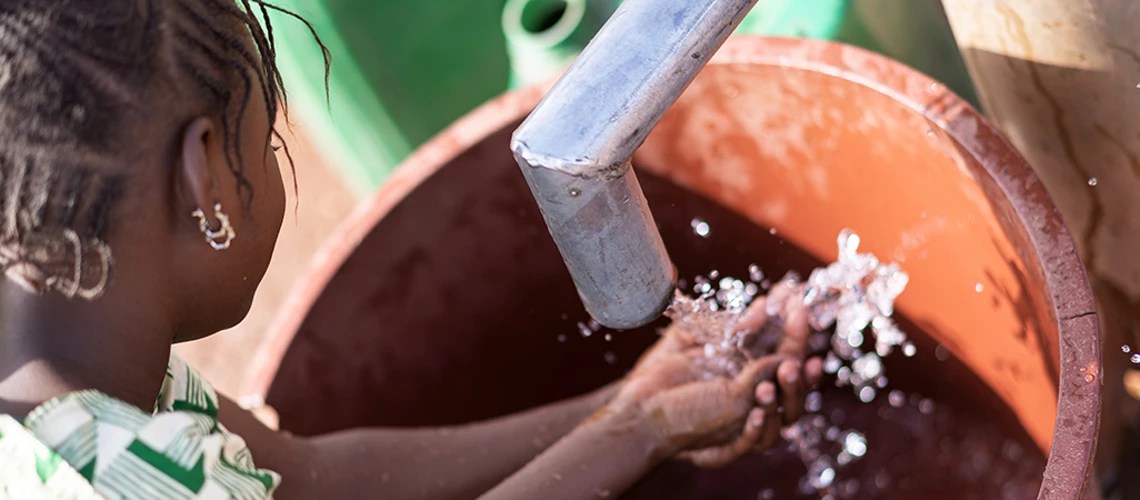
Africa does not have a water problem. Africa has a water opportunity; what is missing is not the water, but the infrastructure, institutions, and financing needed to transform water into jobs, growth, food security, and resilience.
Continue reading
Africa does not have a water problem. Africa has a water opportunity; what is missing is not the water, but the infrastructure, institutions, and financing needed to transform water into jobs, growth, food security, and resilience.
Continue reading“Credit: World Bank Group. All rights reserved”
Latest data show uneven progress, highlighting the critical need to focus on affordability and vulnerable communities
Washington, New York, Paris, Geneva, Abu Dhabi, 24 June 2026 – At a time when energy security and affordability have risen to the top of the development agenda, 655 million people globally still lack access to electricity, and two billion use polluting fuels and technologies for cooking putting their health and well-being at risk. Sub-Saharan Africa bears a disproportionate share of these gaps, with over 560 million living without electricity and 970 million lacking access to clean cooking.
Continue reading
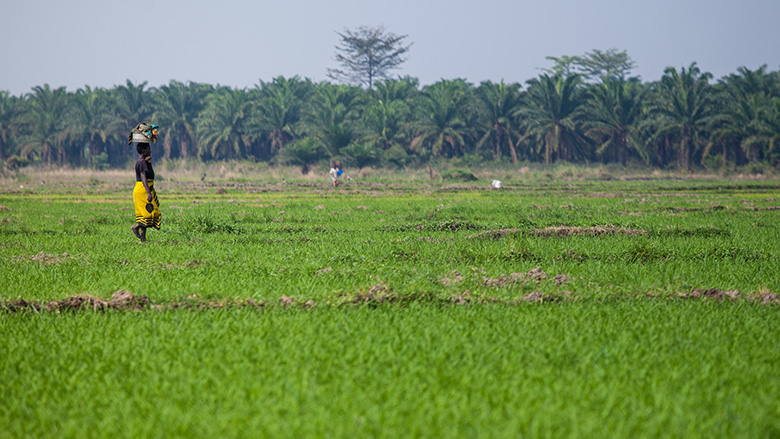
Every year, West Africa sends more than $3.5 billion abroad to buy rice — a staple food that millions of people across the region consume every day. Yet, this is a crop that grows and thrives in the region.
The latest Global Gas Flaring Tracker, an independent report of gas flaring worldwide, reveals that global gas flaring rose for the third consecutive year in 2025, reaching 167 billion cubic meters (bcm), the highest recorded level since 2019. The gas wastefully burned could have powered homes and industries, created jobs, reduced import bills, and extended electricity access and clean cooking fuels for communities that still lack it.

Published annually by the World Bank’s Global Flaring and Methane Reduction (GFMR) Partnership, in collaboration with the Payne Institute at the Colorado School of Mines, the report provides a comprehensive independent assessment of global gas flaring volumes, intensity, and trends.
Continue readingWARSAW, June 22, 2026—Artificial intelligence could increase Poland’s real GDP by between 1.3% and 12.1% by 2035, according to a new World Bank Group report. The scale of the gains will depend on how quickly firms invest, how rapidly workers adapt, and whether policies enable the transition.
Continue reading
WASHINGTON, June 18, 2026—The World Bank’s Board of Executive Directors today approved $1.5 billion in financing to support India’s structural reforms to boost private sector-led job creation and economic growth under the Boosting Job Creation in the Private Sector Development Policy Financing (DPF) Operation.
Continue readingWASHINGTON, D.C., June 15, 2026—The World Bank Group, through the International Finance Corporation (IFC), has closed its second securitization transaction under the Emerging Markets Securitization Program (EMSP), marking continued progress in mobilizing private capital to support private sector growth and build a scalable market for institutional investment in emerging markets.
Continue reading


You must be logged in to post a comment.