eC2: Lighting Africa, Nigeria – Consumer Education: Above the Line Phase 4

Deadline: 30-May-2019 at 11:59:59 PM (Eastern Time – Washington D.C.)Solar-street-lights-in-Guinea1

Lighting Africa is a joint World Bank/IFC program aimed at helping 250 million people in Sub-Saharan Africa, especially rural, urban, and sub-urban consumers without electricity access to high-quality, safe and reliable lighting.
Launched in March 2015 and scheduled to end in June 2020, the Lighting Africa (Nigeria) Program has committed significant resources and worked closely with a range of key stakeholders to develop an off-grid energy market in Nigeria. The market is now in its early growth stage. As the program enters its final year, consumer education is focused on addressing the perception, knowledge and purchase barriers encountered by consumers. Accordingly, IFC is soliciting proposals from marketing communications firms to develop and implement an above-the-line consumer education program that builds on previous efforts to drive rapid consumer uptake of quality verified solar lighting products to at least 500,000 additional households in Nigeria by June 2020.
Continue reading →

eC2: Support to harmonization of Azerbaijan seed certification regulations and procedures with international standards

Deadline: 27-May-2019 at 11:59:59 PM (Eastern Time – Washington D.C.)ml-can-a-nation-build-its-future-if-it-cannot-feed-its-children-five-policy-actions-to-transform-crop-and-livestock-farming-in-mali-780x439

The objective of the IFC Azerbaijan Investment Climate and Agribusiness Competitiveness Project, is to support the Government of Azerbaijan [GoAz] to diversify and increase the competitiveness of the economy in line with its strategic objectives. The agribusiness component of the project aims at enhancing the market competitiveness of the agribusiness sector as a first priority in diversifying the economy by: (i) enhancing access to quality seeds, and (ii) streamlining regulatory frameworks along agribusiness value chains.
The objectives of the current assignment are to support the Government of Azerbaijan in: (i) harmonizing domestic seed certification rules, regulations and procedures with international OECD seed schemes; and (ii) carrying out capacity building activities on the new seed certification procedures for the National Designated Authority (NDA).
Continue reading →

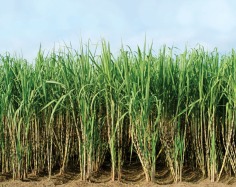
eC2: ETHIOPIAN SUGAR SECTOR/ENTERPRISE ASSESSMENT & VALUATION

Deadline: 29-May-2019 at 11:59:59 PM (Eastern Time – Washington D.C.)sugarcane

The objectives of the assignment are as follows:

i. Assessment of the sugar sector and companies (existing and greenfield companies) to serve as a basis to help the Government develop a strategy for the sector (including sector policy and privatization options).
ii. Identify the key value drivers and financial performance of the companies and carry-out an Independent valuation of the companies based on generally accepted valuation methodologies.
Continue reading →

eC2: Air Quality Management in Vietnam, Air Emission Sectoral Data Verification

Deadline: 27-May-2019 at 11:59:59 PM (Eastern Time – Washington D.C.) index

The scope of work described here focuses on the verification of the modelling data that has been used and subsequently additional collection and validation of activity data and characteristics for key emission sources at the regional level of larger Hanoi region. This work shall be done mostly in close cooperation with Hanoi and secondly in cooperation with MONRE and Bac Ninh and Hung Yen. The objective of the assignment under this Terms of Reference is to assess and collect the data gaps and propose the best set of regionally attributed activity data for the key sources of air pollution in the different sectors. The final datasets shall be suitable for incorporation in the Vietnam GAINS model and discussed and consulted with IIASA, CEMM, MONRE, Hanoi, Bac Ninh and Hung Yen and their respective Department of Natural Resources and Environment (DONRE) as well as World Bank. The World Bank will support and facilitate the consultations with MONRE, Hanoi, Bac Ninh and Hung Yen.

Continue reading →

eC2: Catastrophe Risk Assessment and Modeling for the Pacific Alliance (Chile, Colombia, Peru, Mexico)

Deadline: 27-May-2019 at 11:59:59 PM (Eastern Time – Washington D.C.) vn-communitybased-disasterrisk-780x439

The World Bank is seeking to engage the professional services of a firm specialized in the modeling of hydro-meteorological natural disaster risk in an international environment.
The AP seeks to continue evaluating risk transfer instruments, particularly for hydro-meteorological risk, as highlighted in the APs joint declarations in April 2018 and, to that effect, has mandated the International Bank for Reconstruction and Development (World Bank Group) to provide technical assistance for identifying the most relevant hydro-meteorological risks, clearly defining them for the purposes of risk transfer, and evaluating potential financial instruments to provide coverage against such risks. The World Bank Group may act as an advisor to the Client Countries for assessing and developing potential risk transfer instrument, and might be the sponsor of a CAT Bond, should all or some of the Client Countries decide to issue one, via the World Bank.

Continue reading →

Stand with us to help make land rights a reality for millions of women around the world

In March 2019, the World Bank and several other development organizations launched s4hl_image_4_0“Stand For Her Land,” a global advocacy campaign that aims to realize women’s equal access to land and properties worldwide. Let me share with you why this is important.

For more than 25 years, the World Bank supported over 50 countries in reforming land and property registration systems through modernizing laws and regulations, strengthening institutions, and issuing titles for all properties to lawful land owners. They often use land titles to access credit to improve their land and dwellings – and expand businesses or open new ones, generating jobs, boosting productivity, and increasing incomes. Furthermore, research has shown that secure land and property rights provide incentives for people to invest in agricultural land.

Continue reading →

Small Investment, Big Difference: Managing Accumulated Waste in Yemen

Before the conflict began in Yemen in 2015, 10-year-old Raheeb Al Kamali used to play yemenfootball in a playground with his friends every afternoon in the AlTawahi District of Aden. Cristiano Ronaldo and Lionel Messi were his sporting heroes. He would run across the playground kicking the ball, imitating his heroes. Undoubtedly, it used to be the best part of his day. To play for Yemen’s national football team one day was his dream.

Continue reading →

eC2: Support for the improvement of daily balancing system in Gas Distribution Operators and further synchronization with the Transmission System Operator

Deadline: 03-Jun-2019 at 11:59:59 PM (Eastern Time – Washington D.C.)gas

The objective of this assignment is to provide support to the national energy regulator of Ukraine, in the assessment of existing daily balancing system for gas distribution system operators (DSOs) and its further synchronization with the transmission system operator (TSO) including, among other things, adequate metering, aggregation, reporting and reconciliation of daily volumes along the gas supply chain from the TSO to DSOs and final users of gas. The assignment will support the implementation of agreed reform actions and as needed, provide just-in-time advice to the Regulator on matters related to the improvement of the daily balancing system for transmission and distribution. Continue reading →

eC2: Renewable Energy and Storage Development in Zanzibar

Deadline: 27-May-2019 at 11:59:59 PM (Eastern Time – Washington D.C.)

U.S. Electricity Output Rose 6.2% From A Year Earlier

The objective of this work is to enable the integration of variable renewable energy (VRE) and battery storage into the Zanzibar electricity grid, thereby contributing to the Revolutionary Government of Zanzibars (RGOZ) efforts in energy security, diversification of supply options and financial and operational sustainability. The study will provide guidance to Zanzibar on the techno-economic underpinnings for developing and integrating variable renewable energy technologies into the power system, and the possible implications on structuring of the ownership of storage and solar as a PPP.
Continue reading →

Financial Inclusion Beyond Payments: Policy Considerations for Digital Savings

Across the developing world, financial institutions have leveraged digital technologies and innovative business models to expand access to digital financial services (DFS), such index.jpgas digital transaction accounts and payment services, which serve as the gateway to financial inclusion. Providers are now diversifying their products offerings to newer DFS, such as credit, insurance, and savings. A recent World Bank Group report examines DFS products geared toward longer-term savings. Financial Inclusion Beyond Payments: Policy Considerations for Digital Savings, looks at how these digital savings products—though not yet mature–have the potential to advance an important element of digital financial inclusion.

Continue reading →