
Every year at the end of spring as the summer is about to be upon us the Netherlands  Embassy World Bank Group and Inter-American Development Bank Liaisons organize the annual networking event “Klompen Cup”. It is a street soccer 4-on-4 tournament, 10 minute games played right outside the embassy. We assemble teams with (Dutch) colleagues from the respective institutions; World Bank Group (WBG), International Finance Corporation (IFC), Inter American Development Bank (IADB), and International Monetary Fund (IMF) to compete for the coveted “Klompen Cup”.
Tag Archives: World Bank Group
Launching global consultations on the World Bank Group’s upcoming Strategy for Fragility, Conflict and Violence
April marked the official launch of global consultations to inform the World Bank  Group’s first-ever Strategy for Fragility, Conflict and Violence (FCV). , building on the comparative advantage of the Bank Group in fragile settings. As we embark on this process, the most relevant question for us is how to build on progress made and optimize our interventions to be our most effective on the ground, with special focus on making a lasting difference for the most vulnerable populations. Furthermore, in FCV settings, we know that no single organization can act alone – as the World Bank Group, this strategy is about positioning our analytical, operational, and convening power to contribute to broader international efforts in support of peace and prosperity.
Is inclusive growth an oxymoron?
After participating in two events on inequality at the Spring Meetings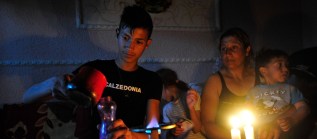 – Making Growth Work for the Poor and Income Inequality Matters: How to Ensure Economic Growth Benefits the Many and Not the Few, I received a surprising number of emails asking whether my remarks on the importance of addressing rising inequality meant I had abandoned growth as the main priority for developing countries. One thing I certainly took away from this correspondence: Inequality is too complex a phenomenon to address in a brief session at the Spring Meetings.
Elsevier: Supporting Higher Education, Science, Technology and Global Competitiveness Globally by Partnering with the World Bank
For over 140 years, Elsevier has supported more than 1,000,000 global scientific and  academic communities in their pursuit for new and verified scientific knowledge through access to peer-reviewed content, strategic research management tools, and capacity-building activities that promote and celebrate world-class science.
Over the last 12 years, Elsevier has closely collaborated with partners such as the World Bank, the Inter-American Development Bank, and the Dutch Organization for Internationalization in Education (NUFFIC) to support activities in emerging economies to enhance higher education and research, develop better science and technology, and improve local competitiveness. These efforts have allowed Elsevier and, specifically, the World Bank, to co-launch several regional and country initiatives and research metrics and evidence to contribute to promotion of discussions on research investment and collaboration.
Report: Women, Business and the Law 2019- A Decade of Reform
Women, Business and the Law measures global progress toward gender equality in the  law. Topic notes and related research provide further analysis of the data. To gain new insight into how women’s employment and entrepreneurship choices are affected by legal gender discrimination, this study examines ten years of Women, Business and the Law data through an index structured around economic decisions women make as they go through different stages of their working lives.
eC2: CONSULTING SERVICES TO UNDERTAKE AN ASSESSMENT OF THE POTENTIAL OF RECENT DEVELOPMENTS IN THE INLAND WATER TRANSPORT SECTOR IN INDIA AND BANGLADESH FOR NEPAL
Deadline: 20-Jun-2019 at 11:59:59 PM (Eastern Time – Washington D.C.) 
The primary objective of this assignment is to undertake a regional study, at a pre-feasibility level of analysis, that would seek to ascertain whether the current and proposed developments in the Inland Water Transport (IWT) sector in India and Bangladesh offers potential benefits to Nepal, with or without additional actions/investments, to realize a significant reduction in the cost of international trade.
New International Partnership Established to Increase the Use of Energy Storage in Developing Countries
A global partnership convened by the World Bank Group to fost er international cooperation to adapt and develop energy storage solutions for developing countries
VANCOUVER, May 28, 2019 – On the occasion of the 10th Clean Energy Ministerial and 4th Mission Innovation Ministerial, a new international partnership has been established to help expand the deployment of energy storage and bring new technologies to developing countries’ power systems. The Energy Storage Partnership (ESP) comprises the World Bank Group and 29 organizations working together to help develop energy storage solutions tailored to the needs of developing countries.
eC2: Bio-Medical Engineer and Medical Planner to Develop Generic Technical Specifications
Deadline: 13-Jun-2019 at 11:59:59 PM (Eastern Time – Washington D.C.) ![medical-appointment-doctor-healthcare-clinic-health-hospital-medicine[7]](https://nl4worldbank.org/wp-content/uploads/2015/09/medical-appointment-doctor-healthcare-clinic-health-hospital-medicine7.jpg?w=190&h=127)
The World Bank is seeking to hire a consultant team to assist the Ministry of Health and Family Welfare (MOHFW) in updating/ preparing generic technical specifications for medical equipment to ensure that the procurement is efficient, competitive and generates value-for-money and are in line with the relevant international standards. The generic specifications should be developed considering the local context particularly capacity, condition and service load of the various health facilities (at different tier of the system) where these equipment will be used.
Tracking SDG7: The Energy Progress Report 2019
STORY HIGHLIGHTS 
- Global electrification rate reached 89 percent; the number of people without electricity access dropped to around 840 million, compared to 1 billion in 2016 and 1.2 billion in 2010.
- Under current policies, an estimated 8 percent of global population will not have access to electricity in 2030, 90% of them will be in sub-Saharan Africa.
- Stronger political commitment, long-term energy planning, increased private financing and adequate policy and fiscal incentives will be crucial to achieve universal access.
Facing substantial investment needs, developing countries must sustainably manage debt
With just over ten years until 2030, developing countries face important and complex  challenges around the Sustainable Development Goals (SDGs). Not least of which is how to finance the investments needed to achieve them.
Estimates suggest that developing countries face a $2.5 trillion annual financing gap to meet the SDGs. Other studies conclude that the challenge of meeting this annual financing gap is substantial in low-income countries, which would require additional annual spending of 15.5 percentage points of GDP in 2030, focused relatively evenly on infrastructure and education and health.


You must be logged in to post a comment.