
For the first time, the Debt team at the World Bank Development Economics Data Group  (DECDG) will publish online a new series of Debt Reports, at regular intervals, over the course of the year. Their aim is to provide users with analyses of evolving trends and development related to external debt and public debt in individual countries and regional groups, with primary emphasis on low- and middle-income countries, and to keep users abreast of debt-related issues and initiatives.
Tag Archives: World Bank Group
Fulfilling the Aspirations of MENA’s Youth
 In recent months across the Middle East and North Africa (MENA) region, youth have been taking to the streets in ever larger numbers to demand improvements in governance, transparency, service delivery, the environment, and job opportunities.
World Bank blogs
TechEmerge challenge- Health East Africa
The TechEmerge Health East Africa program was launched at CES 2020 as part of a  World Bank Group (WBG) – CES Global Tech Challenge. TechEmerge brings technologies to new markets to drive sustainable innovation in regions that need it the most.
TIMELINE 2020

eC2: Advisory Services to the Indonesia Coastal Fisheries Initiative
Deadline: 10-Feb-2020 at 11:59:59 PM (Eastern Time – Washington D.C.) 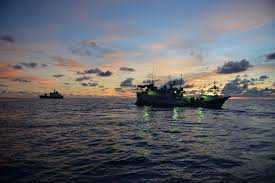
The objective of this consultancy is to identify: (1) main barriers a) for the participation of the private sector in sustainable fisheries and b) for the establishment of community private sector partnerships around sustainable fisheries; (2) advise on ways to address these barriers; and (3) present a concrete business case of return-seeking responsible investments in a specific target fishery, that incorporates the advice above, and thus informs understanding of fisheries investment risks and opportunities.
Jobs, Skills, and the Potential of AI in Kenya
One of the advantages of artificial intelligence (AI) is that it can help us carry out tasks  faster and with fewer errors than humans. I wanted to test this on analyzing labor market demand and skills gaps. So, earlier this year, I partnered with Headai, a Finnish company, to apply an AI-enabled labor market assessment tool in Kenya. We used the tool to analyze: (a) online job advertisements from select online job portals in Kenya and (b) computer science curricula from the University of Nairobi and Moi University to identify the gaps between what the labor market is looking for and what the university curriculum is providing.
World Bank blogs
eC2: Ghana Cocoa Forest REDD+ programme (GCFRP)
Deadline: 06-Feb-2020 at 11:59:59 PM (Eastern Time – Washington D.C.)
A reputable Ghanaian non-governmental organization (NGO)/firm, with significant experience and expertise working on community-based natural resource management (e.g. CREMA and HIA) and established presence in the GCFRP landscape will be contracted to work in direct collaboration to with the National REDD+ Secretariat to:
1) bring together the existing plans, knowledge, processes, structures and learning on the implementation of HIAs (including governance structures and consortiums); and then
2) use this information in 2 target HIAs to support the development of governance structures (e.g. CREMA, Sub-HIA, HIA, and Consortium), leading to the signing of Framework Agreements in partnership with the private sector and government.
Top 9 water blogs of 2019
As we wrap up 2019, we continue our end-of-year tradition of recapping the top pieces  from The Water Blog and creating this special list for you.
eC2: A landscape analysis and pre-feasibility study of Urban Nature Based Solutions to reduce flood risk and strengthen resilience in the City of Kigali, Rwanda
Deadline: 29-Jan-2020 at 11:59:59 PM (Eastern Time – Washington D.C.)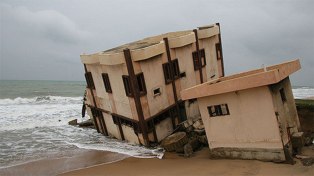
The World Bank is providing Technical Assistance (TA) to the Government of Rwanda under the Rwanda Urban Development Project II (RUDP II), to identify suitable typologies and sites for Nature-Based Solutions (NBS) to reduce flood risk reduction and strengthen resilience in the City of Kigali. The overall objective of the TA is to mitigate the impact of flooding in precarious urban neighborhoods and to create multiple benefits for livelihoods in Kigali through targeted green interventions in urban planning and flood risk management. This TA helps to identify the potential for city-wide NBS investments, and to support dialogue with the Government of Rwanda for specific works to be financed under RUDP II.
Data Collection in Fragile States
Highlights 
- Decision makers in fragile countries need quality data; obtaining such data is challenging.
- This book presents innovations, methodological as well as in data collection, to meet this challenge. The innovations presented in this book are relevant beyond fragile situations.
- With effort, quality data can be produced for many fragile situations, effectively eliminating the notion that data cannot be collected in certain difficult circumstances.
Does the impact of refugees on host communities pass down through generations?
Following decades of violent conflicts in Burundi, Rwanda, South Sudan and the  Democratic Republic of Congo (DRC), Tanzania became home to thousands of refugees seeking shelter. , making it one of the top four refugee-receiving countries in Sub Saharan Africa. The majority of these refugees settled in 13 main camps in the northwestern districts of Karagwe, Ngara, Kasulu, Kigoma and Kibondo. In some of these districts, refugees outnumbered Tanzanians five to one— making it perhaps the most pronounced forced displacement crisis. By the end of May 1994, the Benaco refugee camp in Ngara district had become the largest in the world.


You must be logged in to post a comment.