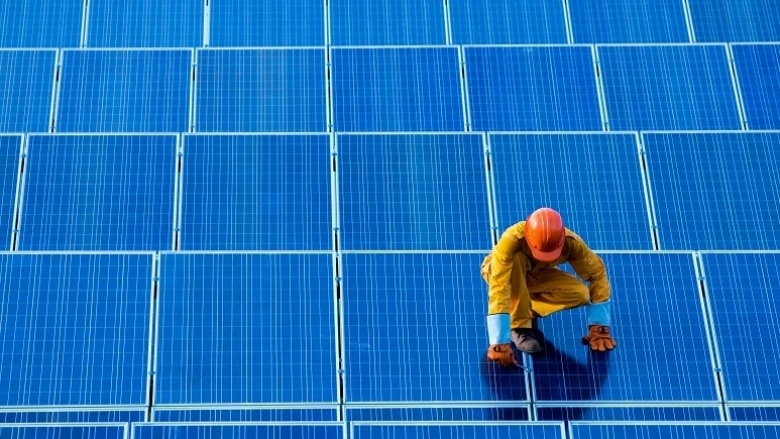
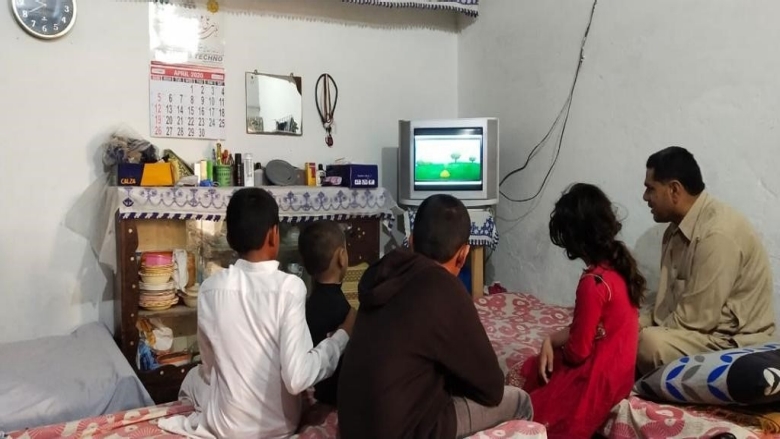
The Yemen Emergency Electricity Access Project has worked across several of the country’s governorates and villages. We heard directly from the people on the ground about how, exactly, this project has changed their lives. Supported by the World Bank’s International Development Association (IDA) and the United Nations Office for Project Services (UNOPS), we went to different areas and villages to listen to the people whose voices matter most for World Bank projects.
Tag Archives: World Bank Group
Urgent, Effective Action Required to Quell the Impact of COVID-19 on Education Worldwide
Sutil, who lives in a remote village in West Kalimantan, Indonesia (the world’s 4th most populous country), has found educating his child during COVID-19 to be a monumental challenge. As a farmer with a lack of electricity and no access to the internet or television, Sutil has found it difficult to help his child with his lessons. Once a week, teachers come to the children’s homes so they can help the children with their learning, however, in many cases, they have difficulties finding the children because they are out with their parents in the rice fields.
eC2: Impact of Clean Energy Transition on Job Creation Case Studies
Deadline: 02-Feb-2021 at 11:59:59 PM (Eastern Time – Washington D.C.) 
The Energy Sector Management Assistance Program (ESMAP) at the World Bank, is investigating how the energy transition the transition away from fossil fuels, encompassing the adoption of new technologies and models of service delivery in the sector can contribute to the generation of jobs and support economic activity while advancing the global decarbonization agenda. For a specified set of World Bank energy sector projects, the Consultant will prepare detailed case studies. As part of each case study, the Consultant will trace the set of activities undertaken as part of the project; develop a methodology for estimating jobs created by and as a result of the project, articulating a results chain in the process; and, applying the methodology, estimate the employment impact of the project (jobs numbers and various dimensions of job quality, earnings, etc.). Key findings from the case studies will be summarized in a note.
Continue reading
Middle East and North Africa: Two opportunities for rebuilding after COVID-19 in green and inclusive ways
What is the best path to building better and greener after the pandemic? Leaders around the
globe ask this question and come up with different answers. For example, the European Union puts the spotlight on nature as the strongest ally in green recovery after COVID-19. South Korea plans to invest in green cities and support new green industries and businesses, among others. The best recipe for success differs across countries and regions, but as made clear in this previous op-ed, the Middle East and North Africa (MENA) region will need to include green and sustainable practices for a more resilient and inclusive recovery.
eC2: Sudan Agriculture Value Chain Investment Roadmap
Deadline: 03-Feb-2021 at 11:59:59 PM (Eastern Time – Washington D.C.) 
Agriculture is the backbone of the Sudanese economy, generating one-third of GDP and having a labor share of more than 50 percent. Agriculture provides livelihood to approximately two-thirds of the population. Value chains in the agriculture sector, however, remain underdeveloped and fragmented and lack integration. Increased agro-processing and trade, supported by well-directed strategic public sector investments, can unlock much greater value from agriculture. Policy-induced private investment, backed up by public sector financing to facilitate value chain development can set in motion a virtuous cycle of increased productive investment that can in turn boost government revenues from tax collections on corporate profits.
The World Bank is seeking services of a consulting firm to prepare an investment roadmap for two agricultural value chains: Sorghum and Livestock (Small Ruminants).
World Bank Plans to Invest over $5 Billion in Drylands in Africa
PARIS/WASHINGTON, January 11, 2021— The World Bank plans to invest over $5 billion over the next five years to help restore degraded landscapes, improve agriculture productivity, and promote livelihoods across 11 African countries on a swathe of land stretching from Senegal to Djibouti.
Updated estimates of the impact of COVID-19 on global poverty: Looking back at 2020 and the outlook for 2021
As the new year brings some hope for the fight against COVID-19, we are looking back and taking stock of the effect of the pandemic on poverty in 2020. In October 2020, using the June vintage of growth forecasts from the Global Economic Prospects, we estimated that between 88 and 115 million people around the globe would be pushed into extreme poverty in 2020. Using the January 2021 forecasts from GEP, we now expect the COVID-19-induced new poor in 2020 to rise to between 119 and 124 million. This range of estimates is in line with other estimates based on alternative recent growth forecasts.
eC2: Private sector diagnostic in the waste sector in Morocco, Egypt and Jordan
Deadline: 10-Feb-2021 at 11:59:59 PM (Eastern Time – Washington D.C.) 
IFC is seeking a firm or a consortium of firms (‘the Consultant”) to identify and assess potential waste sector opportunities in both the near and medium-term for IFC and private sector financing in Morocco, Egypt and Jordan.
As such, the Consultant is expected to conduct:
(1) A review of the institutional and regulatory frameworks in Morocco, Egypt and Jordan for possible private sector involvement and subnational financing in the waste sector;
(2) A market assessment that includes a mapping of existing and future solid waste projects in Morocco, Egypt and Jordan; and
(3) A preliminary review (including technical and commercial criteria) of selected projects.
Subdued Global Economic Recovery
Although global economic output is recovering from the collapse triggered by COVID-19, it will
remain below pre-pandemic trends for a prolonged period. The pandemic has exacerbated the risks associated with a decade-long wave of global debt accumulation. It is also likely to steepen the long-expected slowdown in potential growth over the next decade. In his Foreword, World Bank Group President David Malpass notes that “Making the right investments now is vital both to support the recovery when it is urgently needed and foster resilience. Our response to the pandemic crisis today will shape our common future for years to come. We should seize the opportunity to lay the foundations for a durable, equitable, and sustainable global economy.”
How Asia Pacific can turn COVID crisis into an opportunity
Bold policies needed to boost economic recovery and improve social stability 
Like Hydra, the many-headed monster of Greek myth, COVID-19 is proving hard to suppress even a year after the first case was confirmed in Wuhan.
But the longer-term impact of COVID on the region will depend less on the virus than on policy decisions and how governments respond.
You must be logged in to post a comment.