
In Mozambique’s three largest cities (Maputo, Beira, and Nampula), informal  businesses—those operating outside formal licensing and registration procedures—outnumber formal firms by a factor of 9 to 1. The World Bank’s Enterprise Analysis Unit recently published surveys of informal businesses in Mozambique, conducted in collaboration with the country management unit and colleagues from the Finance, Competition, and Innovation Global Practice. These surveys were designed to mirror the standard World Bank Enterprise Surveys, which cover the formal sector, but were tailored to better understand the unique conditions in which informal firms operate. Thanks to recent methodological innovation in sampling techniques, these surveys now also provide an estimate of the total number of informal businesses.
Tag Archives: Wereldbank Groep
Paying for development – Governments are sitting on a ‘goldmine’
Four years have passed since the launch of the 2030 Agenda and its 17 Sustainable  Development Goals. Mobilizing the necessary resources remains central to its success.
 Investments in human, social, and physical capital are at the core of sustainable and inclusive growth – and represent an important share of national budgets.
At the World Bank Group we have been at the forefront of the so-called Financing for Development (FfD) agenda to leverage public, private, international, and domestic sources of capital to help reach the global goals. A short primer on our efforts–which builds on the 2015 Development Committee paper Billions to Trillions – Transforming Development Finance–can be found in the brochure entitled Financing for Development at the World Bank Group.
Spring Meeting Speakers
The 2019 Spring Meetings and related events will take place in Washington, D.C. from Monday, April 8, through Sunday, April 14.
Christine Lagarde the Managing Director of the International Monetary Fund, Kristalina Georgieva the Chief Executive Officer of the World Bank will be very active at different events as speakers but besides the high level persons you can imagine hundreds of speakers have been ask to give presentations on numerous interesting topics. Click to find out more about these speakers.
World Bank’s Executive Directors Select David Malpass 13th President of the World Bank Group
WASHINGTON, April 5, 2019 – The Executive Directors of the World Bank today  unanimously selected David R. Malpass as President of the World Bank Group for a five-year term beginning on Tuesday, April 9, 2019. The Board expressed its deep gratitude to Interim President Kristalina Georgieva for her dedication and leadership in recent months.
The Executive Directors followed the selection process agreed in 2011. The process included an open, transparent nomination where any national of the Bank’s membership could be proposed by any Executive Director or Governor through an Executive Director. This was then followed by thorough due diligence and a comprehensive interview of Mr. Malpass by the Executive Directors.
SM19 :Watch the events online
Watch online if you can’t be at the Meetings in person. 
World Bank Live has you covered, the World Bank’s digital platform for live-streaming and engaging with global audiences. Block out time now to watch our events live, and in case you miss it, you can still catch up with your favorite events on our events recap page or watch a replay.
Spring Meetings 2019 Program.
Image

3 ways to follow World Bank Group activities at the 2019 Spring Meetings
Our 2019 Spring Meetings is just around the corner and it’s time to get  organized. Main stage speakers include representatives from top-notch institutions and organizations such as the United Nations, National Geographic, World Trade Organization, Bloomberg, Massachusetts Institute of Technology, among others.
The Spring Meetings of the Boards of Governors of the World Bank Group and the International Monetary Fund (IMF) is an event that brings together central bankers, ministers of finance and development, private sector executives, representatives from civil society organizations and academics to discuss issues of global concern, including the world economic outlook, poverty eradication, economic development, and aid effectiveness.
This year’s events will take place in Washington, D.C., April 8-14, 2019.
eC2:Fiji Housing PPP – Technical Consultant
Deadline: 22-Apr-2019 at 11:59:59 PM (Eastern Time – Washington D.C.) 
The Government of Fiji has engaged IFC as transaction advisor to advise on the structuring of a Public Private Partnership to develop affordable and climate resilient housing. The project is proposed to be implemented as a mixed income housing development consisting of both single unit dwellings and units under a strata scheme across a number of sites on Viti Levu, the main island of Fiji. To support IFC’s advisory work on the project, IFC is looking to engage an experienced technical and engineering firm to carry out the following key tasks: (i) housing demand and affordability, (ii) development of technical specifications, (iii) project costing and (iv) technical support during the PPP design and bidding process.
What does the rise of the robots mean for trade?
Industrial robots, 3D printing, and artificial intelligence are rapidly changing the face of 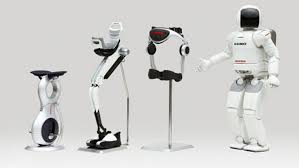 global production and trade. Global sales of industrial robots reached a new record of 387,000 units last year and robot adoption is projected to grow in the coming years. Techno-pessimists fear that developing countries might lose the opportunity to export themselves out of poverty by linking into Global Value Chains (GVCs), as firms in rich countries relocate robot-driven production closer to home.
eC2: Technical consultant – Electricity Markets
Deadline: 14-Apr-2019 at 11:59:59 PM (Eastern Time – Washington D.C.)

The International Finance Corporation (IFC part of the World Bank Group) is in preliminary discussions with the Government of Northern Macedonia, assess the bankability and support the development of a greenfield pumped-storage hydropower plant. Within the context of this potential engagement, IFC expects the need to perform a least-cost electricity generation and storage assessment of Northern Macedonia and neighboring countries, and economic analysis of the proposed project, and is seeking expressions of interest from experienced technical consultants (or consortia of consultants) with experience in electricity market design / assessment and renewable power generation.


You must be logged in to post a comment.