Wednesday May 10 at 15:30-17:00 CET, World Hydrogen Summit Rotterdam 
Join us at the World Hydrogen Summit for a seminar on Financing Green Hydrogen Projects in Developing Countries with the IFIs and Invest International.


Join us at the World Hydrogen Summit for a seminar on Financing Green Hydrogen Projects in Developing Countries with the IFIs and Invest International.
Nowhere is the impact of recent crises – the lingering economic consequences of COVID-19  and the global spillover effects of Russia’s war in Ukraine – being felt more acutely than in the developing world. People in poor countries are struggling to cope with higher food and fuel prices and unsustainable debt, while schoolchildren are still suffering from learning loss caused by the pandemic. In many places, economic growth has stalled.
Join us at the World Hydrogen Summit for a seminar on Financing Green Hydrogen Projects in Developing Countries with the IFIs and Invest International.
· World Bank Procurement in Investment Project Financing helps borrowers achieve sustainable development objectives through value-based, principled, and transparent procurement guidance and support.
· The World Bank Procurement Framework launched in 2016 promotes a strategic, fit-for-purpose approach to procurement that focuses on impact and overall value-for-money.
· In keeping with the value-focused approach, most World Bank-financed Procurement will require the use of Rated Criteria which will promote the inclusion of key quality and sustainability criteria rather than using just the lowest evaluated price for award decisions.
To meet climate and development goals, low- and middle-income countries need to transform their power sector infrastructure at a scale and pace that is unprecedented. The World Bank framework “Scaling Up to Phase Down” maps out steps to support developing countries, with the help of development partners, to scale up affordable, secure, and reliable clean energy and phase down coal-fired electricity generation.
Governments worldwide are facing overlapping crises, including COVID-19, debt, climate change, and conflict, which challenge their ability to provide essential public goods and services to their people, especially the most vulnerable. Fiscal constraints, climate-related disasters, wars, and lack of legitimacy often limit governments’ capacity to act effectively.
In his speech, “Growth and Stability During Crises,” World Bank Group President David Malpass discussed the challenges facing development policy, including the need for macroeconomic stability, the importance of private capital to international integration, and the increasing need to support global public goods. President Malpass emphasized the role of education in supporting growth and creating pathways out of fragility and extremism, which are both critical for Africa’s Sahel Region.
The live-streamed speech was hosted by the Abdou Moumouni University of Niamey, Niger.
We wrap up all the developments from the Meetings with Devex’s Raj Kumar. UN Deputy Secretary General Amina Mohammed joins The Zone to talk about how to get the SDGs back on track and the partnerships needed to tackle poverty. Amit Bouri outlines how private investment can increase development impact, and Dr. Ahmed Ogwell Ouma of the Africa CDC gives insight on preparing for the next pandemic.
At this year’s World Bank Group-IMF Spring Meetings, management and shareholders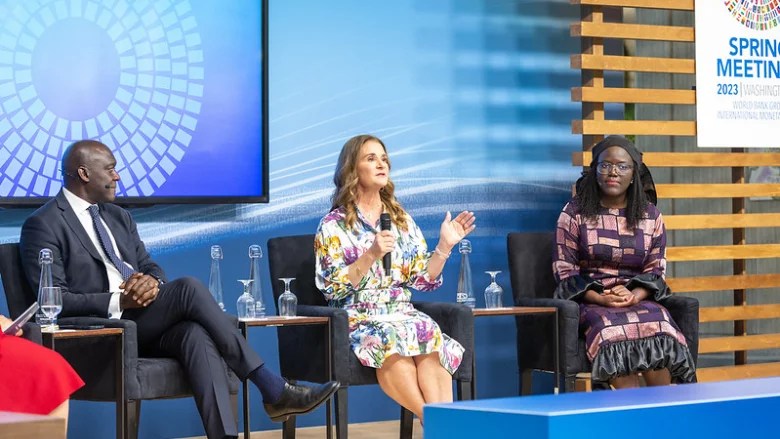 recommitted to the institution’s vision of a poverty-free world and pledged to explore new solutions to tackle an ever-present set of threats to development and the lives of the poor—from stress in the banking sector and persistent inflation to rising debt, Russia’s invasion of Ukraine, and the mounting dangers of climate change.
Join us at the World Hydrogen Summit for a seminar on Financing Green Hydrogen Projects in Developing Countries with the IFIs and Invest International.


You must be logged in to post a comment.