
 Deadline: 09-Jul-2018 at 11:59:59 PM (Eastern Time – Washington D.C.)
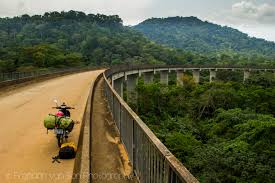
The objective of the technical assistance (TA) is to increase the capacity and knowledge of a selected LGU (1 province) in dealing with climate/disaster risks faced by local transport infrastructure and pilot an institutionalized coordination process with the national agencies to better inform local roads planning, using a learning-by-doing approach. Based on this activity, technical notes/guidelines will be prepared for the ongoing provincial roads program to benefit all participating LGUs. LGUs are the implementing units under the provincial roads program, and hence increasing their technical capacity in dealing with climate resilience for local roads will improve the performance and development impact of the provincial roads program.
 reduce waterborne disease, and lower the risk of stunting.
  Deadline: 05-Jul-2018 at 11:59:59 PM (Eastern Time – Washington D.C.)
 In many parts of the world, the sharing economy is ever-present for individuals, allowing them to use personal assets—for example, houses and cars—to their fullest potential. If you plan to be away for a period of time, why not rent your space for a few extra bucks?
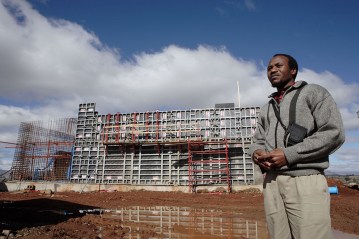 It is broadly understood that public-private partnerships (PPP) are a procurement tool that encompass design, financing, construction and long-term operation of a public infrastructure by the private sector. They can be cost-effective thanks to adequate risk transfer and performance criteria, and help bridge Africa’s large infrastructure gap in many sectors.
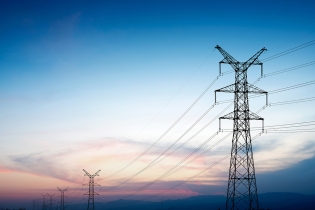
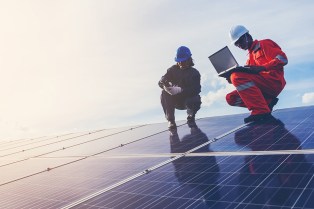 There are many drivers of climate change, but few would disagree that energy infrastructure built according to “business-as-usual” standards is a major one. Meeting the lofty goals set at the 2015 Paris Climate Accords requires powering our homes, businesses, and government agencies with a cleaner mix of energy that includes more renewable sources. It also requires promoting standards that encourage energy efficiency—for example, for appliances or building codes—as a low-cost and high-impact way to reduce greenhouse gas (GHG) emissions.
 Deadline: 24-May-2018 at 11:59:59 PM (Eastern Time – Washington D.C.)
 When it comes to infrastructure projects, “unsolicited proposals” (USPs) represent an alternative to the traditional project initiation method where the private sector, rather than the government, takes the leading role in identifying and developing a project. In practice, many public authorities across the world resort to USPs motivated by the perspective of solving the challenges brought by their lack of capacity to identify and develop projects. However, many projects that originate as USPs experience challenges, including diverting public resources away from the strategic plans of the government, providing poor value for money, and leading to patronage and lack of transparency, particularly in developing countries. To ensure governments can mobilize the strengths of the private sector while protecting the public interest, USPs, when accepted, should be managed and used with caution as an exception to the public procurement method.
 Netherlands for the World Bank
You must be logged in to post a comment.