
We are now less than a decade away from the goal of Zero Routine Flaring by 2030, an 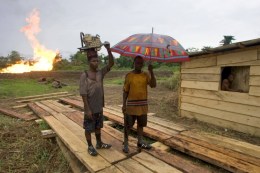 ambition that sits at the nexus of climate change mitigation and energy policy. Developed by the World Bank and launched in 2015 by the UN, World Bank and several governments, along with oil companies and development institutions, the Zero Routine Flaring initiative is designed to end an oil industry practice that has existed since oil production first began more than 150 years ago.
Tag Archives: Energy
eC2: PROBLUE Project Coordinator for Cabo Verde
Deadline: 08-Mar-2021 at 11:59:59 PM (Eastern Time – Washington D.C.) 
Task 1: Support the WBG team on the development and coordination of the PROBLUE project. The consultant should provide on-the-ground support, project coordination, and logistics for the WB team. This should cover elements related but not limited to organization of meetings, outreach, communication with stakeholders, as well as providing with local knowledge. Specifically, the consultant will: Serve as the WBG main focal point vis-à-vis the Ministry the Tourism and Transport and the private sector.
Act as a liaison to help set up meetings and ensure smooth conduct of meetings (
Ensure flow of information and documents between counterparts.
eC2: Impact of Clean Energy Transition on Job Creation Case Studies
Deadline: 02-Feb-2021 at 11:59:59 PM (Eastern Time – Washington D.C.) 
The Energy Sector Management Assistance Program (ESMAP) at the World Bank, is investigating how the energy transition the transition away from fossil fuels, encompassing the adoption of new technologies and models of service delivery in the sector can contribute to the generation of jobs and support economic activity while advancing the global decarbonization agenda. For a specified set of World Bank energy sector projects, the Consultant will prepare detailed case studies. As part of each case study, the Consultant will trace the set of activities undertaken as part of the project; develop a methodology for estimating jobs created by and as a result of the project, articulating a results chain in the process; and, applying the methodology, estimate the employment impact of the project (jobs numbers and various dimensions of job quality, earnings, etc.). Key findings from the case studies will be summarized in a note.
Continue reading
Lighting Up Africa: Bringing Renewable, Off-Grid Energy to Communities
ACCRA, August 13, 2020 – Adwoa Adezawa lives on the Cape Coast of Ghana near the Elmina fishing port on the Atlantic coast. Her husband is a fisherman, and each day he must travel farther to find fish. However, the most difficult part of their life as a family, she said, has been the complete absence of electricity. Until recently, her entire community lived without power.
With a strong push for solar energy from the World Bank and the International Finance Corporation, life for thousands of Ghanaians is beginning to change. The $220 million Ghana Energy and Development Access Project (GEDAP) is among the first Bank-financed programs to focus on inclusive access to renewable energy through off-grid solar services and products.
Global Gas Flaring Jumps to Levels Last Seen in 2009
WASHINGTON, July 21, 2020 — Estimates from satellite data show global gas flaring  increased to levels not seen in more than a decade, to 150 billion cubic meters (bcm), equivalent to the total annual gas consumption of Sub-Saharan Africa.
The 3% rise, from 145 billion cubic meters (bcm) in 2018 to 150 bcm in 2019, was mainly due to increases in three countries: the United States (up by 23%), Venezuela (up by 16%), and Russia (up by 9%). Gas flaring in fragile or conflict-affected countries increased from 2018 to 2019: in Syria by 35% and in Venezuela by 16%, despite oil production flattening in Syria and declining by 40% in Venezuela.
eC2: Offshore Wind Financing for Emerging Markets
Deadline: 03-Aug-2020 at 11:59:59 PM (Eastern Time – Washington D.C.)

The objective of this assignment is to assist IFC staff (primarily investment, credit and management) in understanding: 1) differences between offshore wind and onshore solar/wind/hydro projects in terms of risks, challenges, contractual structures, studies and financing structures, and; 2) potential project financing structures for offshore wind in emerging markets and how IFC can best mitigate any associated risks. Note that the analysis of current projects will focus on fixed foundation rather than floating or intertidal/nearshore projects. The analysis of future projects will consider floating, although to a lesser extent than fixed.
Climate Finance Drives Action on the Ground
STORY HIGHLIGHTS
- Climate finance, along with falling renewable energy prices, is enabling developing countries to expand and diversify their energy supply.
- A new report identifies eight ways policymakers can drive clean, resilient growth, including through innovation and climate intelligence products.
- An effort to create a new market for rooftop solar in India has mobilized $4.4 billion in commercial financing.
eC2: Key Factors for Successful Development of Offshore Wind in Emerging Markets
Deadline: 26-Mar-2020 at 11:59:59 PM (Eastern Time – Washington D.C.)

The scope of the assignment shall cover the major topics that need to be considered by policymakers and regulators when establishing a new market for offshore wind development. These shall include, but not be limited to, the following points:
eC2: Key Factors for Successful Development of Offshore Wind in Emerging Markets
Deadline: 19-Mar-2020 at 11:59:59 PM (Eastern Time – Washington D.C.)
The scope of the assignment shall cover the major topics that need to be considered by  policymakers and regulators when establishing a new market for offshore wind development. These shall include, but not be limited to, the following points:
1. Policy discussion on successful policy measures including drivers, targets;
2. Pre-development geospatial planning and technical studies, including zoning;
3. Stakeholder identification and consultation;
4. Legal key legislation to facilitate project development and delivery;
5. Environmental and social policies to ensure sustainable offshore wind development
6. Health & safety referencing best practice from Europe and related sectors (e.g. oil and gas);
7. Consenting roles and responsibilities between agencies and building public sector capacity;
8. Transmission models for development, financing and ownership of transmission;
9. Grid integration best practice in integration of offshore wind into grids
10. Tariff and bankability offtake mechanisms to ensure bankable revenue;
11. Project solicitation identification of sites, competitive methodologies for awarding rights;
12. Supply chain approaches to support and encourage local supply chain and infrastructure development (e.g. ports);
13. Financing project structures to minimize risk (both on public and private elements)
Full Terms of Reference (TOR) will be included in a future Request for Proposals (RFP) which will be issued to Consultants that are shortlisted from this REOI.
Off-Grid Solar Market Trends Report 2020
STORY HIGHLIGHTS
- The off-grid solar sector has expanded into a $1.75 billion annual market serving 420 million users over the past decade and continues to grow.
- As the sector matures and productive use of off-grid solar solutions such as solar water pumps, cold storage and other products servicing public institutions become natural expansion areas, companies are increasingly focused on its financial sustainability.
- To achieve universal access to electricity by 2030, the off-grid solar sector would need to serve as many as 132 million households, which in turn would require between $6.6 billion to $11 billion in additional financing.
 Netherlands for the World Bank
You must be logged in to post a comment.