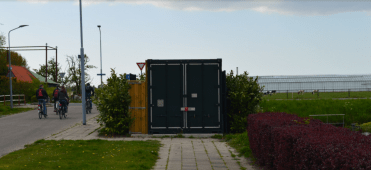
 Electric cars are so popular in the Netherlands that it would not be uncommon, say, for a
Tesla to roll up as a taxi outside Amsterdam’s Schiphol Airport. Though charging stations are not yet ubiquitous, it is not difficult to find them in Dutch communities, parking lots, and along the streets.
To reduce carbon emissions, national and local governments are taking various approaches—and, thus, electric cars, solar home systems, and energy-efficient solutions for buildings are booming in Europe. Cities like Amsterdam are front and center of this transformation. For instance, , making it an ideal venue for a Smart Cities Tour earlier this year, where a group of 26 representatives, including national and municipal officials and World Bank project teams, to learn from the Netherlands’ successful experience in energy sector transformation.
Continue reading →


 Authority (“PENRA”) in attracting private sector participation through a competitive tender for the construction and operation of 3-4 grid-connected solar PV plants (with a cumulative capacity of 15 to 25 MW) in the West Bank on an IPP basis (the “Project”). Accordingly, IFC is looking to appoint an international legal consultant (the Consultant) to (i) conduct full due diligence to identify and advice on any legal, regulatory, and policy issues that may affect the implementation of the Project; (ii) support in marketing the Project to investors and prepare tender documents as well as all required legal documentation to execute the Project; and (iii) assist in the negotiation as well as evaluation and selection of the winning bidder.


 Over the past 15 years, the World Bank Groups’ Community Development Carbon Fund (CDCF) has contributed to reducing over 4 million tons of carbon dioxide equivalent and created community co-benefits aligned with sustainable development goals (SDGs) for approximately 17.5 million people. Ecofys, a Navigant company and headquartered in Utrecht, The Netherlands, has supported the Bank’s efforts and recently presented a


You must be logged in to post a comment.