eC2: Open Cities Participatory Mapping in Saint-Louis, Senegal

Deadline: 02-Apr-2018 at 11:59:59 PM (Eastern Time – Washington D.C.)jhb

Objective: Open Cities Africa will be carried out in 8-10 cities in Sub-Saharan Africa, to engage local government, civil society, and the private sector to develop the information infrastructures necessary to meet 21st century urban resilience challenges. Each project will: 1) Create and release open spatial data about the built environment, critical infrastructure, and natural hazards; 2) Develop targeted products and/or tools to assist key stakeholders to utilize risk information towards addressing natural disaster risk in the selected city; 3) Enhance the local capacity and institutional development necessary to support the design and implementation of evidence-driven urban resilience interventions; and 4) Promote peer mentorship and build regional networks across cities.


Continue reading

eC2: Open Cities Participatory Mapping in Kinshasa

Deadline:  29-Mar-2018 at 11:59:59 PM (Eastern Time – Washington D.C.)jhb

Objective: Open Cities Africa will be carried out in 8-10 cities in Sub-Saharan Africa, to engage local government, civil society, and the private sector to develop the information infrastructures necessary to meet 21st century urban resilience challenges. Each project will: 1) Create and release open spatial data about the built environment, critical infrastructure, and natural hazards; 2) Develop targeted products and/or tools to assist key stakeholders to utilize risk information towards addressing natural disaster risk in the selected city; 3) Enhance the local capacity and institutional development necessary to support the design and implementation of evidence-driven urban resilience interventions; and  4) Promote peer mentorship and build regional networks across cities.

Continue reading

eC2: Formative research and social and behavioral change communication to promote improved water, sanitation and hygiene behaviors in rural

Deadline:  22-Mar-2018 at 11:59:59 PM (Eastern Time – Washington D.C.)

Objective:  The objective of the assignment is to assist the MRD and key stakeholders in the rural WASH sector to develop a SBCC package to promote improved WASH behaviors, with a focus on child-centered behaviors that have the potential to reduce child stunting. The WASH behaviors to be included in the SBCC package consist of (i) promoting latrine adoption among rural households, (ii) promoting Handwashing with Soap (HWWS) among caretakers and children, and (iii) promoting correct Household Water Treatment and Safe Storage (HWTS) for drinking and for preparing infant formula and food. To achieve the above objectives, the assignment requires completion of the following tasks: 1) conducting spot research on behavior related to HWWS of caretakers and children; and HWTS for drinking and for preparation of infant formula and weaning foods; 2) developing an overarching umbrella concept and brand to be used for all future WASH campaigns; and 3) developing a package of behavior-specific SBCC materials to promote latrine adoption, correct HWWS and HWTS.

Continue reading

eC2:Agriculture sector and crop value chains mapping and finance gap assessment in Sierra Leone and Senegal

pexels-photo-264537.jpegDeadline:  21-Mar-2018 at 11:59:59 PM (Eastern Time – Washington D.C.)

Objective: The IFCs FIG aims to reduce the agribusiness finance gap in emerging markets and achieve large-scale food-supply impact in Sierra Leone and Senegal, by providing financial institutions (FIs) with Investment and Advisory Services. FIG would like to hire a consulting firm to carry out a mapping exercise of the agricultural sector and some pre-selected crop value chains, aligned to the agricultural development policy and/ or strategy of the country. This will include a detailed analysis of the value chain actors and facilitators, the role and impact of FIs (banks, micro-finance institutions, savings and credit co-operatives) and an assessment of the existing and potential financial services delivery channels, especially agency banking and DFS, with respect to rural smallholder farmers.
Continue reading

eC2:Agriculture sector and crop value chains mapping and finance gap assessment in Mozambique and Malawi

Deadline: 21-Mar-2018 at 11:59:59 PM (Eastern Time – Washington D.C.) agriculture-youth

Objective: The IFCs FIG aims to reduce the agribusiness finance gap in emerging markets and achieve large-scale food-supply impact in Mozambique and Malawi, by providing financial institutions (FIs) with Investment and Advisory Services. FIG would like to hire a consulting firm to carry out a mapping exercise of the agricultural sector and some pre-selected crop value chains, aligned to the agricultural development policy and/ or strategy of each country. This will include a detailed analysis of the value chain actors and facilitators, the role and impact of FIs (banks, microfinance institutions, Savings and Credit Co-operatives) and an assessment of the existing and potential financial services delivery channels, especially agency banking and DFS, with respect to rural smallholder farmers.

Continue reading

eC2: Study of Health Financing in the Democratic Republic of Congo

Deadline: 19-Mar-2018 at 11:59:59 PM (Eastern Time – Washington D.C.) medical-appointment-doctor-healthcare-clinic-health-hospital-medicine[7]

Objective:  A la demande du Ministère de la Santé Publique et en coordination avec le Ministère des Finances, une étude sur le financement de la santé en RDC sera menée pour appuyer la mise en œuvre de la stratégie de financement. Cette étude vise à présenter les principaux défis et opportunités de la RDC en matière de mobilisation des ressources, de mise en commun et dachat de services pour la santé, dans une perspective de maximisation de lefficience et dune plus grande équité dans le financement, afin datteindre la couverture de santé universelle. Les résultats de cette étude devront apporter des éléments permettant dappuyer la prise de décision pour la réforme du système de financement de la santé, compte tenu des défis et opportunités identifiés et des perspectives à court et moyen termes.
Continue reading

eC2: Understanding and Benchmarking Trucking Sector Performance

Deadline: 19-Mar-2018 at 11:59:59 PM (Eastern Time – Washington D.C.) general-transport-mosaic-main

Objective:  The purpose of this assignment is to address the challenge of meaningfully comparing trucking sector performance at the national level: operational (and, by extension, economic/financial) and environmental performance across countries, including low-income, middle-income, high-income, and fragile states, and in so doing define (a) what constitutes “strong” relative to “poor” trucking sector performance in properly segmented trucking markets; (b) what factors influence performance, and through what mechanisms; (c) what kinds of prioritized interventions can shape performance; and (d) how trucking sector performance, and the nature of trucking sector operations, are likely to evolve in the face of potentially disruptive global trends, such as an impending shortage of truck drivers, an eventual transition to electric and/or autonomous commercial vehicles, big data-enabled integration of logistics service provision, more stringent environmental regulations, and more innovative ways for the public and private sectors to partner in the planning, funding, delivery, and regulation of logistics service provision in truck-based supply chains.

Continue reading

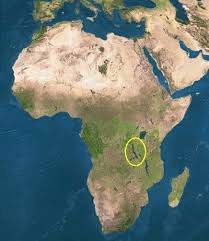
eC2: FEASIBILITY STUDY FOR LAKE TANGANYIKA PORT ACCESS AND SAFETY OF NAVIGATION IMPROVEMENTS UNDER VARYING LAKE LEVELS

Deadline:  15-Mar-2018 at 11:59:59 PM (Eastern Time – Washington D.C.) Website_LakeTanganyika-Locn

Objective:  The main objectives of this assignment are to: (i) Undertake the necessary data collection and charting including bathymetric, geotechnical and hydrodynamic studies, in the defined ports and entrance channels, (ii) Conduct a feasibility study to identify the optimal dredging level for the participating Lake Tanganyika ports and key shipping routes in light of, infrastructure condition, current and future traffic projections, and lake level fluctuations resulting from natural variability and future climatic changes. (iii) Identify the most appropriate dredging and disposal methodology. In addition, should the level of pollution in the material to be dredged represent a significant risk, the consultants should propose appropriate mitigation measures; and (iv) Prepare bid documents, review the draft SESIA and prepare an outline Environmental and Social Impact Assessment and Environmental and Social Management Plan for the dredging, and prepare a contracting strategy agreed with stakeholders for the dredging work to be undertaken.
Continue reading

eC2: PREPARE A STRATEGIC ENVIRONMENTAL AND SOCIAL IMPACT ASSESSMENT OF THE LAKE TANGANYIKA TRANSPORT AND SUSTAINABILITY PROGRAM

Deadline:  15-Mar-2018 at 11:59:59 PM (Eastern Time – Washington D.C.) untitled

Objective:  The assignment is intended to be undertaken by a very experienced and high-quality firm (or a consortia), familiar with undertaking assessments of this type, both in the region and internationally. The Consultant will be expected to provide approximately 10-person months of key staff inputs. The estimate of the key person requirements is only indicative and could be construed as skill mix requirements for these services. The contract for this assignment will be a lump sum contract, administered by the World Bank.

Continue reading

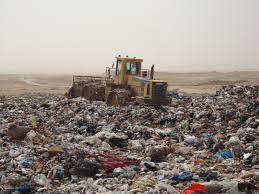
eC2: Improvement of seven solid waste disposal sites in Bosnia and Herzegovina Prefeasibility, Preliminary design and Preliminary environmental and social analysis

Deadline:    19-Mar-2018 at 11:59:59 PM (Eastern Time – Washington D.C.) solid waste

Objective:  The scope of this assignment includes study of seven (7) waste disposal sites in various locations in Bosnia and Herzegovina and provide recommendations on closure, rehabilitation, and upgrade to reduce/ minimize the environmental impact and/or establishment of new landfill capacity. The Consultant should be alert to the difference in the environmental characteristics of the study area in each case and their physical, biological, cultural property and socio-economic conditions.

Continue reading