eC2:Agricultural demand modeling for geospatial electrification planning in SSA

Deadline: 11-Sep-2018 at 11:59:59 PM (Eastern Time – Washington D.C.)Agrabusiness-Story-Banner

Assignment Description:

As outlined in ESMAPs Business Plan 2017-2020, Achieving universal access by 2030 will require a step change in the rate of new connections and in levels of investment, particularly in low access countries. Sector-wide programs in the electricity sector are showing better results than what can be achieved using a project-by-project approach. These programs are based on national electricity access roll out plans using geospatial planning and least-cost combinations of coordinated grid and off-grid electrification. The geospatially determined plan in turn anchors the sector investment financing prospectus.

Continue reading

eC2: Study on Solar Powered Agricultural Technologies in Rwanda

Deadline: 20-Aug-2018 at 11:59:59 PM (Eastern Time – Washington D.C.)

Agricultural technologies using solar power (drying, milling, milk chilling, cool storage, pexels-photo-264537.jpegetc.) are widely available globally, including in countries such as India, South Africa, and China. The World Bank is seeking expressions of interest from consulting firms or organizations (including consortiums) to undertake a study on how these technologies can be promoted in Rwanda.

The specific objectives of this consultancy are to: (1) conduct a market analysis (supply and demand) of potential agricultural utilizations of solar energy in Rwanda and globally; (2) estimate the potential demand for solar energy for targeted agricultural value chains in Rwanda; (3) conduct a stock taking/case studies of global experiences with agricultural utilizations of solar energy, including a review of some business models that have been successful in promoting plug and play solar products; and (4) conduct a stock taking of the potential constraints to mainstreaming solar energy in the value chains in Rwanda and ways to overcome them.
Continue reading

eC2: Diagnostic Assessment of Black Pepper Supply Chain in Vietnam

indexDeadline: 09-Jul-2018 at 11:59:59 PM (Eastern Time – Washington D.C.)

The overall aim of this assessment is to provide an objective reference point for IFC and its private sector client(s) to formulate development options or advisory services needed for Pepper supply chain in Vietnam in order to improve profitability of black pepper production and achieve pepper industry players’ target on 100% sustainable pepper by 2025.

This includes: 1)Prepare a list of existing practices of advisory services provided to black pepper smallholders; 2)Prepare a list of existing agronomy products/package of practices that have potential to improve smallholder practices and improve income; 3)Understand baseline condition of black pepper farming and markets & analyze potential opportunities for improvement 4)Understand supply-demand conditions of (a) pepper seedling business at commune level; (b) drip irrigation equipment, etc; 5)determine the major constraints & opportunities 6) Provide recommendation and strategies of project interventions

Continue reading

eC2: Endline survey for Impact Evaluation of Smallholder Agriculture Productivity Enhancement Project

_DSC0995Deadline: 05-Jul-2018 at 11:59:59 PM (Eastern Time – Washington D.C.)

The primary household survey will consist of a multi-module household survey instrument including modules on agricultural input use, modules on agricultural input use, agricultural production, sales and purchases of agricultural commodities, livestock holdings and animal products, consumption and food security, household demographics and income, and beliefs about returns to agricultural inputs. This survey is expected to take around 2 hours on average.

The selected firm will be expected to provide surveys for 1,100-1,500 households on the list provided by DIME, which are located in 100 communities across 12 counties in Liberia. Justification should be provided for households that are unavailable to be surveyed.

Continue reading

eC2: Mozambique SLWRMP midline data collection

MOZAMBIQUEDeadline: 05-Jul-2018 at 11:59:59 PM (Eastern Time – Washington D.C.)
Survey Firm for Agriculture Household Listing, Plot Mapping and Baseline Data Collection Sustainable Land and Water Resource Management Project (SLWMRP) Mozambique.

The Mozambique Sustainable Land and Water Resource Management Project (SLWRMP), financed by the African Development Bank (AfDB), aims to increase the resilience of communities towards the adverse impacts of climate change through the development of 56 small scale irrigation kits, covering either 5 or 10 ha, in the Southern province of Gaza. The Gaza province is one of the most adversely affected provinces in terms of climate change events with frequent occurrence of droughts in the northern parts and floods in the coastal areas of the province. The Project is being implemented in the four districts of Guija, Mabalane, Chicualacuala and Massengena. The data collection activities will feed into the rigorous evaluation of the project.

Continue reading

eC2: Large-Scale Dairy Farm Management Consultant

indexDeadline: 04-Jul-2018 at 11:59:59 PM (Eastern Time – Washington D.C.)
IFC is hiring a firm, which will support the Project on the design, testing and implementation of dairy farm reference models for large and medium sized dairy farms in Ukraine.

The Consultant will: 1) conduct the diagnostic of up to 10 dairy farms with an average size of between 300 and 2,000 dairy cows, 2) provide recommendations on improvement opportunities, 3) support the implementation of the recommended improvements 4) support IFC on developing 2 reference models for medium and large farms.
Continue reading

eC2: BASELINE SECONDARY DATA MINING AND ANALYSIS FOR VIETNAM AGRI FINANCE AND GOOD AGRICULTURE PRACTICES

Deadline: 21-Jun-2018 at 11:59:59 PM (Eastern Time – Washington D.C.) agriculture-youth
The objective of the assignment is to collect and analyze secondary quantitative data to establish the baseline situation of coffee and rice farmers based on indicators of the Vietnam Agri project. The consultant will implement the following main tasks: (1) collect data from secondary sources, including but not limited to project documents, client firms data provided by IFC, national data sets from the General Statistics Office of Vietnam, (2)conduct quantitative analysis of baseline values of key impact and outcome indicators of project result frameworks relating to coffee and rice farmers, particularly household income including income/sales revenue from coffee and rice, and income sources; (3) describe household demographic and socio-economic profile, coffee and rice farming and post harvest and storage practices to the extent that relevant data is available; and (4) provide gender disaggregated results to the extent that relevant data is available

Continue reading

eC2: Sustainable Lowland Agriculture in Indonesia

Deadline:  11-Jun-2018 at 11:59:59 PM (Eastern Time – Washington D.C.) indonesia

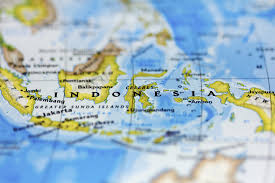
This study forms an important part of the World Bank’s Indonesia Landscapes Program. With many of the peatlands drained and in a state of degradation, rural livelihoods need to adapt to new threats and opportunities within the landscape. Given the government’s plans to restore currently drained and occupied lowland areas, an assessment is needed to identify potential alternative crops and sustainable production systems that are appropriate for smallholders in the affected lowlands. The outcomes of the analysis would inform an important policy discussion among the various government institutions, including the Ministries of Agriculture and Public Works and the Peatland Restoration Agency, to shape the business case for improved management of natural resources in Indonesia’s lowlands.

Continue reading

#AfricaCAN: A Lesotho farmer can now grow vegetables all year long

ls-a-day-in-the-life-of-a-vegetable-farmer-in-lesotho-780x439I met Thabo Lefatle on a cold winter day in Lesotho. We – a team from the World Bank Communications Department – had driven an hour and a half south of the capital Maseru to get to his farm. As we traveled through different parts of the small mountainous kingdom, we met several farmers to find out exactly how the Smallholder Agriculture Development Project (SADP) impacted their lives.

Continue reading

Indian agriculture at a crossroads: Smart solutions towards doubling farmers’ incomes

in-alamy-stock-photoA few weeks ago, I felt a sense of déjà vu.  I was at a roundtable on agriculture in Delhi, in the same conference hall where, ten years ago, I participated in the consultations on the Bank’s World Development Report 2008 on Agriculture for Development.

This time we were discussing how India can build a stronger agriculture sector without further harm to the environment or depletion of its natural resources.  The high-level dialogue was attended by senior representatives from India’s Niti Aayog, Ministry of Agriculture and Farmers’ Welfare, leaders of farmers’ associations from Punjab and Haryana, as well as by researchers, academics and donors. We focused on the ‘agriculture-water-energy’ nexus, achieving India’s second green revolution, making agriculture more climate resilient, as well as options to stop the burning of crop residue that is worsening air quality in much of northern India. It was heartening to see the torch bearers of India’s drive towards food security unhesitatingly debate a host of complex and sensitive issues.

Continue reading