Thank you, Prime Minister Madbouly, Dr. Shoukry for hosting this event on climate finance.
Developing countries are facing an economic crisis, heavy debt burdens, high inflation, and climate change. It is a crisis facing development itself.

Thank you, Prime Minister Madbouly, Dr. Shoukry for hosting this event on climate finance.
Developing countries are facing an economic crisis, heavy debt burdens, high inflation, and climate change. It is a crisis facing development itself.
Initiative will use solar off-grid, mini-grids and other means to promote universal access to electricity
Washington, Nov. 9, 2022—The World Bank Group announced today an innovative initiative to accelerate the pace of electrification in Africa to achieve universal access by 2030. The World Bank, the Multilateral Investment Guarantee Agency (MIGA), the International Finance Corporation (IFC), and other development agencies will promote private investment in distributed renewable energy (DRE) systems to electrify targeted areas quickly and efficiently. The Distributed Access through Renewable Energy Scale-Up Platform (DARES) calls for joint action by government, private investors, and development agencies to solve Africa’s immediate needs while developing DRE solutions that can be applied globally.
There is a saying in the Pacific that when it comes to climate change, ‘we are not drowning;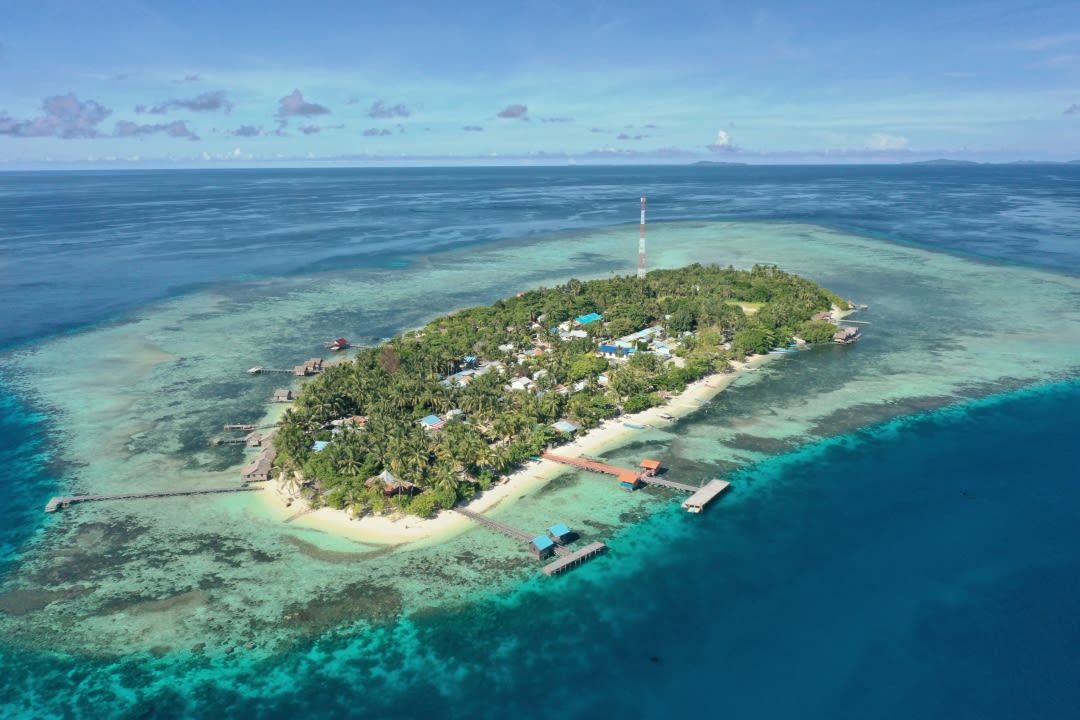 we are fighting’. This could also sum up the wider East Asia and Pacific region as a whole in the face of climate change; a region that, despite being exposed to some of the worst climate impacts in the world, is responding with innovation, strength and immense resilience.
The World Bank is standing with the countries in the region in these efforts. In East Asia and the Pacific, 46% of new World Bank commitments in fiscal year 2022 contributed to climate action. Three countries across the region – Indonesia, the Marshall Islands, and Vietnam – highlight how the Bank is supporting their fight to adapt to climate change while securing resources and safeguarding important conservation gains far into the future.
For Haliya Al-Jalal, a mother of six in Al-Adn, Yemen, walking long distances to collect drinking water was a daily chore she shared with her family. “Fetching water from the stream caused us great hardship,” she said. “Many children dropped out of school to devote themselves to this task every day.”
Interested in Doing Business with the World Bank Group? Please see selected opportunities below.
Procurement Framework and Regulations for Projects After July 1, 2016 (worldbank.org)
SHARM-EL-SHEIKH, November 8, 2022 — Today the World Bank announced a new multi-partner fund that will pool funding from the global community — including donor countries, the private sector and foundations — for scalable pathways to greenhouse gas emission reduction. The Scaling Climate Action by Lowering Emissions (SCALE) partnership will provide grants for verifiable emissions reductions and expand the funding sources for global public goods.
“Climate finance needs major new mechanisms that pool funding from the global community to accomplish actual reductions in greenhouse gas emissions across the developing world. SCALE offers a key non-fragmented avenue for the global community to take action on climate change,” said David Malpass, President of the World Bank Group. “The verifiable emission reductions created by SCALE and similar mechanisms will also be an important step toward building effective carbon credit markets.”
SCALE will deploy Results-Based Climate Finance where countries receive grant payments for achieving pre-agreed, verifiable results, drawing on twenty years of World Bank Group experience in this area.
SCALE will support countries to build a track record of generating emission reductions from impactful programs and policies that they can apply toward their national emission reduction targets. SCALE will also yield excess credits that can be offered in carbon markets with the potential to unlock additional private sector funding.
SCALE will pool public and private resources to (i) channel additional funding to middle and low-income countries’ emission reduction programs; (ii) help bridge the gap between the supply of and demand for high-quality emission reduction credits by supporting large-scale climate investments; and (iii) help countries develop high integrity credits and enhance their access to international carbon markets.
Social inclusion is embedded in the design of all SCALE programs. An associated fund within the SCALE umbrella – Enabling Access to Benefits while Lowering Emissions (EnABLE) – enhances the inclusion of marginalized communities and indigenous peoples in programs under the partnership through specially designed benefit sharing arrangements.
WASHINGTON/BERLIN, November 9, 2022 —The Global Alliance for Food Security (GAFS), jointly convened by the German Group of Seven (G7) Presidency and the World Bank Group, today launched the Global Food and Nutrition Security Dashboard as a key tool to fast-track a rapid response to the unfolding global food security crisis. Following a multi-stakeholder consultative process, the Dashboard is designed to consolidate and present up-to-date data on food crisis severity, track global food security financing, and make available global and country-level research and analysis to improve coordination of the policy and financial response to the crisis.
It will bring together disparate and vast information on food security into one place, to help reduce transaction costs, improve transparency, and strengthen analysis. It can also help speed up financing by highlighting funding needs and gaps. The goal is to inform a coordinated global food crisis response while also helping to advance medium to long-term food security interventions.
A global hunger crisis is being exacerbated largely by violent conflict, increasingly extreme weather events, and record high food prices. Quality data and transparent reporting have the potential to boost food and nutrition security – enhancing global cooperation and enabling the development of sound national policies.
“The development of the dashboard is an example for the strength and innovative power we can achieve when we join forces globally. It has become possible thanks to the excellent cooperation between many organizations and partner countries and the World Bank Group,” said Svenja Schulze, German Federal Minister for Economic Cooperation and Development, “The comprehensive data presented in the dashboard is key for a swift and coordinated political response to guarantee food security for countries and people. In order to get the food to where it is most needed, we need to get the necessary information to where they can be used most quickly and efficiently.”
The Dashboard will also help facilitate and disseminate forward-looking research and generate new knowledge on topics such as food security early warning analytics, soil fertility solutions for building resilience to fertilizer price and supply shocks, evaluating food security programming and policy response effectiveness, and strengthening national agricultural research and innovation systems.
“The food, energy and fertilizer crisis is taking a toll on developing countries. Creating resilient, sustainable food systems is vital for the planet and the economy to thrive,” said David Malpass, President of the World Bank Group, “The Global Food and Nutrition Security Dashboard is an important step to improve transparency in food and nutrition data and track financing by the international community to respond to the crisis. We appreciate the partnership with Germany’s G7 Presidency on this vital agenda.”
WashingtonMeriem Gray
(202) 294-9606
BerlinBMZ Press Office
+49 (0)30/18535-2451
Dear Partners,
On Wednesday, December 7 at 8:30am ET, we will host our FY 2023 First Quarter Business Forecast and Partner Update webinar. You can click here to register.
Submitting Business Forecast Questions
In advance of the event, we invite organizations to send questions specifically related to opportunities on the Business Forecast. Please see below instructions for submitting questions:
Please be sure to label each question with the project name as indicated on the Business Forecast, as well as the Country/Mission/Bureau/Operating Unit, as applicable.
Please send all questions to BusinessForecast@usaid.gov by no later than close of business on Tuesday, November 15, 2022.
Following the webinar, we will post responses to all of the Business Forecast-related questions on USAID.gov, along with a transcript and recording of the event.
If you have not participated in one of USAID’s Business Forecast calls, you can access previous recordings and transcripts here.
We look forward to answering your questions and speaking with you in a few weeks.
USAID Industry Liaison Team
Thank you, Prime Minister Madbouly, Dr. Shoukry for hosting this event on climate finance.
Developing countries are facing an economic crisis, heavy debt burdens, high inflation, and climate change. It is a crisis facing development itself.
Low- and middle-income countries can transition to low-carbon, resilient growth pathways if key conditions are met with international support
WASHINGTON, Nov. 3, 2022—Investing an average of 1.4% of GDP annually could reduce emissions in developing countries by as much as 70% by 2050 and boost resilience, according to a new report from the World Bank Group.


You must be logged in to post a comment.