Data: Make it convenient, make it credible

We’re living in a time of disruptive technologies evolving at an exponential pace. Today, 1_zcLRD1dCY-Wzg0I6PepeKA.jpgyou can enjoy an Impossible Burger (meat industry disrupted) delivered by Caviar (food delivery disrupted) to your AirBnB (hotel industry disrupted) while you’re on FaceTime (telecommunication industry disrupted) urging your teenager to get back to lessons on Khan Academy (education industry disrupted). And all the while, you’re leaving a trail of digital data points.

Continue reading

Sustainable Mobility for All: Changing the mindset, changing policies

The global conversation on transport and mobility has evolved significantly over the pastgreen-light-pedestrian-photoviriya-shutterstock five years. Take transport and climate, for instance: although data on the carbon footprint of major transport modes had been available for a long time, it was not until COP21 in 2015 that mobility became a central part of the climate agenda. The good news is that, during that same period, the space of solutions expanded as well.  For example, data sharing is now viewed as an obvious way to promote better integration between urban transport modes in cities.

Continue reading

The rising cost of nutritious food in South Asia

A malnourished child will face poorer outcomes as an adult.bangladesh-world-bank-cooperate-to-improve-child-nutrition-facebook-3

That’s why improving nutrition, especially in the early stages of life, is critical.

The path toward better nutrition includes adequate maternal and child care, access to better sanitation facilities, health services, and naturally, nutritious foods.

But whether an individual consumes—or not—nutritious food is contingent upon a myriad of factors, ranging from the availability of certain foods, how convenient they can be turned into meals, or simply, if they meet consumers’ tastes.

Continue reading

Investing in resource efficiency – the economics and politics of financing the resource transition

“Moving towards a more responsible and efficient use of natural resources is key, not only aerial-bay-business-1554646.jpgto address resource scarcity, wastage, and the associated environmental effects, but also for incentivising innovation and modernisation towards a circular economy. Resource efficiency essentially means doing more with less, as it allows us to create more value using fewer natural resources. This transition can contribute to sustainable economic growth that generates welfare, while limiting harmful impacts on the environment and hence future generations.” Ángel Gurría, Secretary General, OECD (from Preface, Flachenecker & Rentschler, 2018)

Continue reading

eC2: Market Assessment for Distributed Generation in the Commercial and Industrial Sectors in Southern Africa

Deadline: 18-Feb-2019 at 11:59:59 PM (Eastern Time – Washington D.C.)industry-sunrise-clouds-fog-39553.jpeg

With improvements in technology, particular solar photovoltaic (PV) and battery storage, there are increased opportunities to reduce energy costs and transition to a low carbon economy through distributed generation (DG) in emerging markets. However, there remain some critical obstacles to the scale up of distributed generation (embedded generation) in the commercial and industrial (C&I) space in the southern Africa region (multiple countries), stemming from regulatory barriers, a lack of appropriate incentives as well as information asymmetry related issues. 

Continue reading

eC2: INDIA: Market Assessment for Adoption of E-Mobility

Deadline: 12-Feb-2019 at 11:59:59 PM (Eastern Time – Washington D.C.)  untitled

Rapid urbanization and rising populations in cities has led to increasing number of fuel-based transport vehicles causing severe air and noise pollution. The Government of India (GoI) as well as different States in India are looking for innovating mechanisms to address urban mobility challenges including use of electric vehicles (EV). GoI’s Electric Mobility Mission Plan 2020 focuses on national energy security, addresses environmental impacts from road transport vehicles and supports domestic manufacturing capabilities for electric vehicles. The GoI has identified electric mobility as one of the key focus areas for development.

Continue reading

eC2: Technical advisor for renewable energy PPP options in small and mini grids in Haiti

Deadline:  05-Feb-2019 at 11:59:59 PM (Eastern Time – Washington D.C.) PPPs

The PPIAF-financed activity provides technical assistance and capacity building to the Government to successfully implement these priority actions. In this context, the World Bank is seeking a Technical Advisor to support Government in strategic and operational decisions related to the scale up of distributed renewable energy in Haiti, in particular through developing public-private partnerships (PPP) options for retrofitting of existing utility/municipal mini grids, and building incentives for investments in new mini grids. This will be done through the provision of capacity building, facilitation of lessons learned from similar country contexts and other similar technical advice.

Continue reading

eC2: Consultancy to Support the Ministry of Health to develop the Kenya Health and Research Observatory Web Portal for Tracking and Analysis of Health Data

Deadline: 11-Feb-2019 at 11:59:59 PM (Eastern Time – Washington D.C.) medical-appointment-doctor-healthcare-clinic-health-hospital-medicine[7]

The Consultancy firm will work closely with the MoH, WHO and World Bank focal point for the National Health Observatory in the development of the KHRO portal. The scope of work includes planning, documentation, development and installation of the KHRO web portal into the MoH data center, capacity building of the MOH team in the maintenance and management of the health observatory.

Continue reading

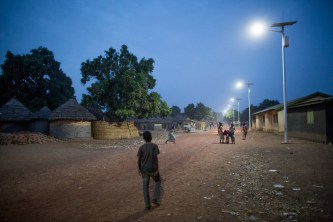
Across India, Solar Power Brings More than Light

DULU SARNA, India—Sarita Asur, a subsistence farmer and young mother of three, lives maxresdefault in one of India’s most remote tribal areas—a place so isolated that it’s not just off the power grid, it’s also absent from most maps. She and her community, the Asur tribe, are based in the eastern state of Jharkhand.  Nearly half of the people in this isolated territory lack access to electricity—the highest percentage of any state in India.

So when Azure Power, a private solar provider and longstanding IFC client, won a contract to bring power to 320 households in 11 mud-brick villages scattered across the state, the first item of business was to locate these communities. Engineers spent a week driving and trekking through waterlogged jungle to identify the coordinates of each village—including Sarita Asur’s. Next, Azure Power arranged to transport the equipment (including 450-pound batteries) on the narrow, unpaved roads of one of India’s poorest regions. Continue reading

Make it convenient, make it credible

We’re living in a time of disruptive technologies evolving at an exponential pace. Today, top_0you can enjoy an Impossible Burger (meat industry disrupted) delivered by Caviar (food delivery disrupted) to your AirBnB (hotel industry disrupted) while you’re on FaceTime (telecommunication industry disrupted) urging your teenager to get back to lessons on Khan Academy (education industry disrupted). And all the while, you’re leaving a trail of digital data points.

Continue reading