
Social media has flourished with increasing digital connectivity. Internet users in the  Philippines, Brazil, Mexico, Argentina and the United Arab Emirates spend more than 3 hours per day on social media. Global social media platforms such as YouTube and WhatsApp as well as local ones such as Mxit, an instant messaging application in South Africa, and Odnoklassniki, the Russian version of Facebook, are attracting people’s attention. The social interaction aspect of those communication initiatives redefines how individuals, business and government engage with each other.
eC2: MSME landscape and Market Research in West Africa
Deadline: 25-Feb-2019 at 11:59:59 PM (Eastern Time – Washington D.C.)
The firm will undertake market research of the financial sector in each country with specific focus on the market structure, key players, product offering to MSMEs.
The project timeline is around 2 months starting Mid March.
The final deliverable will be five detailed reports (both English and French):
Three reports (one for each of the three markets: Côte dIvoire, Senegal & Burkina Faso) summarizing the main findings and conclusions regarding the MSME sector and the financial needs of MSMEs in each country; and
One consolidated report summarizing key themes and findings across the region, based on the in-depth country reports, for the benefit of the Holding Company.
Short (~20-page) PowerPoint presentations (in both English and French) to summarize key findings and recommendations.
eC2: Study of Private Sector Development and Circular Economy
Deadline: 25-Feb-2019 at 11:59:59 PM (Eastern Time – Washington D.C.)
This firm consultancy will explore how inclusive and green growth can be supported  through strengthened value chains and circular economy (CE) approaches, specifically among poor people and communities and achieve outcomes that promote poverty reduction, enhanced welfare and create new and expanded employment opportunities, eg green jobs.
How crowdsourcing can improve food safety
Unsafe foods cost developing economies over $110 billion in lost productivity and 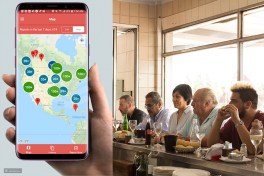 medical expenses each year
 , according to the World Bank’s own figures. And yet in many cases surveillance is limited, and there are few effective ways for a consumer to report a case of food poisoning.
eC2: Program Evaluation for the Environmental and Social Standards in Water Resources Development (Hydro E&S Advisory)
Deadline: 07-Mar-2019 at 11:59:59 PM (Eastern Time – Washington D.C.) 
IFC is seeking a consultant (s) from a firm with relevant monitoring and evaluation (M&E) expertise to undertake an end of program evaluation and to provide recommendations for future strategy and program design.
Purpose and use of the Evaluation
The purpose of the evaluation is threefold:
1. To assess and report on program results;
2. To identify lessons for IFC and its partners; and
3. To inform future strategy and program design.
eC2: CONSULTING FIRM – TO IMPLEMENT AN ENVIRONMENTAL AND SOCIAL MANAGEMENT SYSTEM, A FOOD SAFETY MANAGEMENT PROGRAM, AND GRAPHIC ARTIST (DESIGNER) SUPPORT FOR COMMUNICATION ENHANCEMENT
Deadline: 14-Mar-2019 at 11:59:59 PM (Eastern Time – Washington D.C.)
The project will support the IFC Client to assist in the development of ~3,000 grape-growing farmers by improving their productivity, efficiency, and profitability through enhanced land management, grape cultivation, harvesting and drying practices. The project will promote climate-smart and precision farming practices, thereby facilitating farmer access to export markets through the IFC Client. IFC is seeking to recruit a firm to assist IFC and it’s client in the following activities:
Section 1: Development of an environmental and social management system;
Section 2: Implementation of a food safety management system; and
Section 3: Graphic Artist to Support Management Systems Design and Enhance Communication
eC2: Program Evaluation for the Environmental and Social Standards in Water Resources Development (Hydro E&S Advisory)
Deadline: 07-Mar-2019 at 11:59:59 PM (Eastern Time – Washington D.C.)
The program seeks to improve hydropower governance through the uptake of environmental and social standards and transparency in decision-making through 4 objectives.
(i) Improve and ensure implementation of policy and regulatory frameworks for the hydro sector to promote implementation of best practice E&S standards in Lao PDR,
(ii) Enable capacity in practical E&S risk management for government agencies (i.e. river basin committees) and other basin stakeholders to anticipate, evaluate, and manage cumulative impacts of hydro investments in selected river basins in Lao PDR.
(iii) Enable adoption of best practice E&S standards by regional banks investing in hydropower development in the Mekong region, to influence the way they assess their hydro investments.
(iv) Enable adoption of best practice E&S standards by hydropower companies to develop and implement E&S management systems for their companies and hydropower projects in the Mekong region.
eC2: Design a disaster risk financing facility for NGOs
Deadline: 28-Feb-2019 at 11:59:59 PM (Eastern Time – Washington D.C.) 
Scope
To conduct an exploratory study to test and find ideas and structures for a financial mechanism that can help channel pre-arranged funds directly to front line humanitarian organizations. The purpose is not a feasibility study providing legal or technical advice.
eC2: Supply Chain Management Consultant
Deadline: 28-Feb-2019 at 11:59:59 PM (Eastern Time – Washington D.C.) 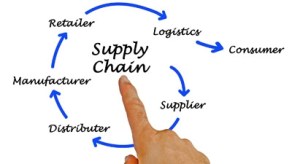
IFC is seeking to contract a firm which has expertise in improving the productivity of raisin production by farmers and in developing raisin supply chain. The consultant will be working with an IFC client company and grapes farmers to improve the productivity and efficiency of clients raisin supply chain and to set in place a strong supply chain management and development capacity in order to ensure the long-term and reliable availability of raisins from farmers at competitive prices, in sufficient quantities and with the high quality required by the client. The overall objective of the assignment is to improve the productivity and efficiency of the farmers producing and supplying grapes to the Client. The Consultant will also support IFC on collecting the data required for monitoring and evaluating the Projects impact on farmers and their livelihoods.
eC2: Technical Adviser on Electric Mobility
Deadline: 25-Feb-2019 at 11:59:59 PM (Eastern Time – Washington D.C.) 
The candidate will serve as technical adviser for the future e-mobility center of expertise to: (1) provide analytical and technical support to the operations teams and clients, develop and implement e-mobility projects;(2) support the development of knowledge products; (3) prepare briefing notes and dissemination material; (4) provide input for the conceptualization and development of the e-mobility center of expertise; and (5) support efforts to expand in-house knowledge.


You must be logged in to post a comment.