On April 16, 2019, Ethiopia’s Public-Private Partnerships Directorate General (PPP-DG) within the Ministry of Finance, formally initiated its Scaling Solar Round 2 tender by issuing a Request for Pre-Qualification (RFQ) for up to 500 MW of solar photovoltaic energy projects. Following this announcement, the PPP-DG expanded the RFQ from four to six projects with a total capacity of up to 750MW. In addition to the Weranso, Welenchiti, Humera, and Mekele sites announced on April 16, two more sites in Metema / Bahir Dar and Hurso were added.
For African cities to grow economically as they have grown in size, they must create productive environments to attract investments, increase economic efficiency, and create livable environments that prevent urban costs from rising with increased population densification. What are the central obstacles that prevent African cities and towns from becoming sustainable engines of economic growth and prosperity? Among the most critical factors that limit the growth and livability of urban areas are land markets, investments in public infrastructure and assets, and the institutions to enable both. To unleash the potential of African cities and towns for delivering services and employment in a livable and environmentally friendly environment, a sequenced approach is needed to reform institutions and policies and to target infrastructure investments. This book lays out three foundations that need fixing to guide cities and towns throughout Sub-Saharan Africa on their way to productivity and livability.
Across the developing world, financial institutions have leveraged digital technologies and innovative business models to expand access to digital financial services (DFS), such as digital transaction accounts and payment services, which serve as the gateway to financial inclusion. Providers are now diversifying their products offerings to newer DFS, such as credit, insurance, and savings. A recent World Bank Group report examines DFS products geared toward longer-term savings. Financial Inclusion Beyond Payments: Policy Considerations for Digital Savings, looks at how these digital savings products—though not yet mature–have the potential to advance an important element of digital financial inclusion.
Deadline: 21-May-2019 at 11:59:59 PM (Eastern Time – Washington D.C.)
The focus of this TOR is on the pharmaceuticals sector.
Scope of work
1. Development of sector strategy and action plan
The focus of this contract is on phase II of the project: the development of a pharmaceutical sector strategy and action plan. While the contractor for this assignment is expected to suggest their own methodology for developing the pharmaceutical sector strategy and action plan, below is an indicative outline of some key stages and related outputs that are expected to be covered.
In the summer of 1742, two typhoons swept across Japan in quick succession, bringing torrents of heavy rain and flooding major rivers. Records from a young monk who witnessed the floods describe a muddy wave destroying levees and sweeping through villages. As levees and rivers collapsed, floodwaters rose in Edo, Japan’s largest c
ity and political capital, abating o
nly days later, and
resulting in fatalities of a reported 6,000 in the city. Continue reading →
Deadline: 16-May-2019 at 11:59:59 PM (Eastern Time – Washington D.C.)
The objective of this study is to carry out an engineering pre-feasibility analysis of a Bus Rapid Transit (BRT) project in the “Foz do Rio Itajai” metropolitan area in the State of Santa Catarina, Brazil. The project consists in the implementation of a greenfield BRT system with a network of five BRT corridors and six priority bus lanes, which is expected to support a ridership of 525,000 passenger trips per day by 2030. The objective of this study is to: (i) review and validate existing pre-feasibility engineering studies, (ii) further develop the preliminary project design, (iii) estimate capital and operational costs; and (iv) provide technical recommendations for the subsequent phase.
The World Bank launched the Climate-Smart Mining Facility on May 1st, the first-ever fund dedicated to making mining for minerals climate-smart and sustainable. The Facility will support the sustainable extraction and processing of minerals and metals used in clean energy technologies, such as wind, solar power, and batteries for energy storage and electric vehicles. It focuses on helping resource-rich developing countries benefit from the increasing demand for minerals and metals, while ensuring the mining sector is managed in a way that minimizes the environmental and climate footprint.
Deadline: 15-May-2019 at 11:59:59 PM (Eastern Time – Washington D.C.)
The World Bank Group (WBG), with the support of the Global Infrastructure Facility (GIF), is selecting a legal firm (Consultant) to conduct a summary report and assessment on the regulatory and legal frameworks of Costa Rica, which may be relevant to a potential PPP for a greenfield Tramway project.
The Consultant will be entitled to develop a high-level report on the legal and regulatory framework in Costa Rica (national and municipal levels) relevant to structuring a potential PPP for the envisaged tramway project. The purpose of this activity is to support the WBGs decision on its potential involvement in the tramway project in the future.
The services include the following tasks:
1. Preliminary Due Diligence Report
2. Final Due Diligence Report
The assignment will be carried out over a period of 90 days.
Deadline: 30-May-2019 at 11:59:59 PM (Eastern Time – Washington D.C.)
The objective of the assignment is to conduct an analysis of the local and regional market opportunities for cocoa-based products in the cluster cocoa production countries (Ghana, Côte dIvoire, Nigeria and Togo), and Senegal and Cape Vert the two (2) West African countries having the highest GDP per capita. More specifically, the study aims to:
– Identify and analyze the current local and regional market and potential opportunities for increased downstream uses of and end-market consumption of cocoa-based products;
– Perform an accurate market-sizing exercise for each of the different markets (i.e. Ghana, Côte dIvoire, and West African as a region) in terms of volume and value;
– Perform an analysis to determine the level of investment and capacity-building needed to develop these opportunities.
Registration is now open until Monday June 3, 2019 at 11:59PM (EST).
The Annual Bank Conference on Development Economics (ABCDE), organized by the World Bank’s Development Economics (DEC) Vice Presidency, is one of the world’s best-known series of conferences for the presentation and discussion of new knowledge on development. The conference aims to promote the exchange of cutting-edge knowledge among researchers, policymakers, and development practitioners.
The next conference will take place on June 17–18, 2019 at World Bank Headquarters in Washington, D.C. The theme of the conference will be “Multilateralism: Past, Present, and Future”. The 2019 ABCDE conference will be part of a series of events scheduled to celebrate the 75th anniversary of the Bretton Woods conference

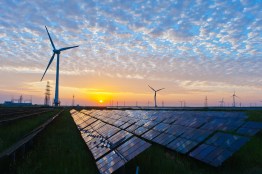 within the Ministry of Finance, formally initiated its Scaling Solar Round 2 tender by issuing a Request for Pre-Qualification (RFQ) for up to 500 MW of solar photovoltaic energy projects. Following this announcement, the PPP-DG expanded the RFQ from four to six projects with a total capacity of up to 750MW. In addition to the Weranso, Welenchiti, Humera, and Mekele sites announced on April 16, two more sites in Metema / Bahir Dar and Hurso were added.
 productive environments to attract investments, increase economic efficiency, and create livable environments that prevent urban costs from rising with increased population densification. What are the central obstacles that prevent African cities and towns from becoming sustainable engines of economic growth and prosperity? Among the most critical factors that limit the growth and livability of urban areas are land markets, investments in public infrastructure and assets, and the institutions to enable both. To unleash the potential of African cities and towns for delivering services and employment in a livable and environmentally friendly environment, a sequenced approach is needed to reform institutions and policies and to target infrastructure investments. This book lays out three foundations that need fixing to guide cities and towns throughout Sub-Saharan Africa on their way to productivity and livability.
 as digital transaction accounts and payment services, which serve as the gateway to financial inclusion. Providers are now diversifying their products offerings to newer DFS, such as credit, insurance, and savings. A recent World Bank Group report examines DFS products geared toward longer-term savings. Financial Inclusion Beyond Payments: Policy Considerations for Digital Savings, looks at how these digital savings products—though not yet mature–have the potential to advance an important element of digital financial inclusion.
 torrents of heavy rain and flooding major rivers. Records from a young monk who witnessed the floods describe a muddy wave destroying levees and sweeping through villages. As levees and rivers collapsed, floodwaters rose in Edo, Japan’s largest c
 Rapid Transit (BRT) project in the “Foz do Rio Itajai” metropolitan area in the State of Santa Catarina, Brazil. The project consists in the implementation of a greenfield BRT system with a network of five BRT corridors and six priority bus lanes, which is expected to support a ridership of 525,000 passenger trips per day by 2030. The objective of this study is to: (i) review and validate existing pre-feasibility engineering studies, (ii) further develop the preliminary project design, (iii) estimate capital and operational costs; and (iv) provide technical recommendations for the subsequent phase.


 (GIF), is selecting a legal firm (Consultant) to conduct a summary report and assessment on the regulatory and legal frameworks of Costa Rica, which may be relevant to a potential PPP for a greenfield Tramway project.



You must be logged in to post a comment.