
As of this month, over a million people have lost their lives to COVID-19. More than 35 million  are infected. In every part of the world, the poorest are suffering most, and the World Bank’s recently released Poverty and Shared Prosperity Report estimates that global extreme poverty will rise this year for the first time in a generation. Furthermore, the impact of COVID-19 is not just affecting the extreme poor, but lockdowns and sudden cessations of economic activity and mobility have had a broader impact than previous crises. The faces of the “new poor” are more likely to be urban and educated and to be engaged in informal services and manufacturing, rather than agriculture; and middle-income countries will be significantly affected. Women are also more impacted, as they are twice as likely to lose their jobs compared to men. They also bear the brunt of family care under lockdown, and many are “skipping meals” as a response to reduced incomes.
eC2: Analysis of Blue Economy Development in Pakistan and developing Blue Economy Development Roadmap
Deadline: 16-Nov-2020 at 11:59:59 PM (Eastern Time – Washington D.C.)
The objectives of the consultancy is (i) to analyze policy and institutional gaps; (ii) to conduct Blue Public Expenditure Review (PER); (iii) to assess monitoring risks to sustainability and ground evidence for decision-making; and (iv) based on these analysis and assessment, to develop Blue Economy (BE) development roadmap in Pakistan.
(1) Policy and institutional gap analysis and vision consultation in support of the blue economy:
Assessing existing policies and overarching institutional setup and identify the gaps for integrated Blue economy roadmap development. The consulting firm will also work closely and review consistency with another assessment of blue economy and coastal blue carbon for revised NDC.
eC2: Framework for Determining Appropriate Technology and Solutions for Plastic Waste on Small and Remote Islands
Deadline: 02-Nov-2020 at 11:59:59 PM (Eastern Time – Washington D.C.)
The main objective of this consultancy is to develop a framework or methodology for determining options for appropriate technology and solutions for plastic waste on small and remote islands, as well as developing communication, education and public awareness (CEPA) guidelines to empower communities to ensure sustainability of the solutions. The Consultant will work under supervision by the World Bank task team and in close collaboration with the Ministry of Environment and Water (KASA) This framework/methodology will be applied to two case study islands in Malaysia, in close consultation with KASA, but it will also be applicable to islands outside of Malaysia, such as in other countries in Southeast Asia or the Pacific.
Annual Meeting 2020: Defusing Debt
eC2: Accelerating Climate Investments in the Philippines
Deadline: 02-Nov-2020 at 11:59:59 PM (Eastern Time – Washington D.C.) 
The consultant will be an international organization. It will be selected through a competitive selection. This assignment is to develop an approach for prioritizing geographic areas for coastal resilience investments, identify priority geographic areas and investments for coastal protection, and develop cost and benefits analyses (CBAs) for these investments.
Doing business with the World Bank Group
The Dutch Embassy in Washington D.C. and the Netherlands Enterprise Agency have  organized a webinar series ‘Doing business with the World Bank’. The series started with a kick-off on 6 October. Koen Davidse, Executive Director at the Constituency Office at the World Bank Group, and Jan de Boer, Advisor to the Executive Director, gave presentations on the topic. Central theme of the first webinar was the World Bank COVID-19 response and its impact on its operations.
eC2: Consulting Service: Support the National Treasuries Cities Support Programme
Deadline: 29-Oct-2020 at 11:59:59 PM (Eastern Time – Washington D.C.)
South Africa has committed to increasing its renewable generation capacity to help fulfil its international climate change mitigation commitments to reduce greenhouse gas (GHG) emissions. Currently, the majority of electricity generated by the South African electricity utility, Eskom, and sold on to inter alia, municipalities is coal based. The electricity landscape in South Africa is, however, changing – moving away from the single buyer model to accommodate other generators and buyers. To date, municipalities have not fully participated in the energy transition especially around decarbonizing the electricity sector.
Annual Meeting 2020: Civil Society Townhall
eC2: Preparation studies for Environmental and Social Framework Documents for proposed World Bank financed Solid Waste and Plastic Management Improvement in Cambodia.
Deadline: 27-Oct-2020 at 11:59:59 PM (Eastern Time – Washington D.C.) 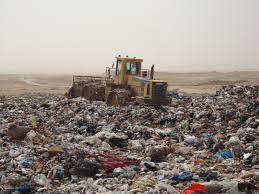
For preparation support for the proposed World Bank financed Solid Waste and Plastics Improvement Project, consultants will conduct:
(i) an Environmental and Social Management Framework -ESMF-;
(ii) an Environmental and Social Impact Assessment -ESIA- for proposed Solid Waste Investments, including landfill in Siem Reap and
(ii) ESIA for Solid Waste Investments for second secondary municipality in Cambodia and (iii) Stakeholder Engagement Plan for the entire Project.
The projects Environmental and Social Management Framework (ESMF), will include:
a. Labor Management Procedures (LMP) and Environment, Health and Safety Guidelines for the Waste Management Facilities,
b. Community Health and Safety Plan (CHSP),
c. Resettlement Policy Framework (RPF),
d. Livelihood Restoration Framework (LRF), and
e. Indigenous Peoples Development Framework (IPDF).


You must be logged in to post a comment.