Netherlands for the World Bank

Your guide to the World Bank Group

Netherlands for the World Bank

Coronavirus: Reflections of an epidemiologist and public health practitioner

Not a day passes without us being bombarded by the rapidly evolving medical literature 1107952389_b03648b09d_c(002)and media on the hitherto unknown COVID-19. Rightfully so, as we now have an outbreak with more than 100,000 cases confirmed globally.
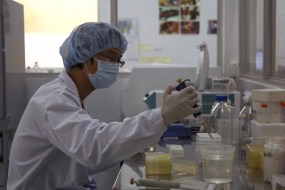
Yet, I cannot help but wonder how the general public is dealing with such an onslaught of information, if I, as a trained physician, epidemiologist and a global public health practitioner, find it too much to take in and digest. How do we expect a lay person to sift through it all, separate the chaff from the grain, avoid fear mongering  – No, you do not get COVID-19 if you receive a package from China, or eat in a Chinese restaurant –  and stick with the most relevant information and the essentials for behavioral change? This is ultimately what counts the most:, arming people with the right messaging and instructions for compliance with the science-based best practice. With local community transmission in about 20 countries across several regions of the globe, we must ask ourselves could we have done better? 

Continue reading

To achieve peace and prosperity in the Sahel needs long term international solidarity

I have recently traveled across the Sahel region from Mali to Burkina Faso to Niger and southern-mauritania-sahelfinally to Mauritania where I addressed the Sahel Alliance General Assembly and the G5 Sahel Leaders’ Summit. During my travels, I met mothers, fathers, engineers, economists, entrepreneurs and community groups. Before arriving in the Sahel, I was at the Munich Security Conference with diplomatic and military leaders.
Continue reading

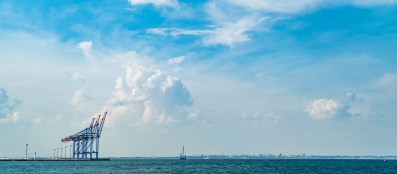
Call for Innovation: Impacts of Port Development on West Africa’s Coastal Areas

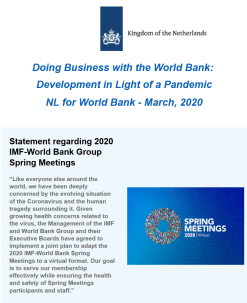
The World Bank Group is launching a Call for Innovation under the West Africa Coastal WACAAreas Management Program (WACA) to bridge the gap between innovators and port developers/owners to build sustainable and integrated coastal management. The call is part of the WACA Resilience Investment Project (WACA ResIP), a multi-country regional project that aims to support present assets and strengthen the resilience of coastal communities for Benin, Côte d’Ivoire, Mauritania, São Tomé and Príncipe, Senegal, and Togo. The project supported them develop multi-sectoral investment planning processes, culminating in WACA Multi Sector Investment Plans (MSIPs).
THE CHALLENGE
The challenge is to identify innovative and feasible solutions to fight coastal erosion and flooding issues associated with the ongoing development of large commercial ports and maritime operations in the six countries. In most cases, existing ports were built with limited if no zero planning and considerations of potential exacerbation of coastal erosion. The significant threat is that this shortcoming is also occurring in the
design and construction of new ports. The scope is to identify innovations that allow to avoid, mitigate, and remediate the geomorphological and ecological impacts associated with existing and planned commercial ports in West Africa.

Continue reading

Newsletter March 2020: Development in Light of a Pandemic

NL4WorldBank March edition of the newsletter is out!newletter

The newsletter ‘Development in Light of a Pandemic‘ headlines with the cancellation of the IMF and World Bank Group Spring Meetings. “Out of precaution World Bank Group events up to May have either been postponed or cancelled. We are still unclear on how the World Bank Group will proceed with events after May. In this blog post we selected the largest event messaging concerning COVID-19, The events include: 2020 IMF/World Bank Group Spring Meetings, Fragility Forum 2020, and the Land and Poverty conference.”

Continue reading

COVID19: Reflections of an epidemiologist and public health practitioner

Not a day passes without us being bombarded by the rapidly evolving medical literature041817_Tobacco Taxation_517_F and media on the hitherto unknown COVID-19. Rightfully so, as we now have an outbreak with more than 100,000 cases confirmed globally.
Yet, I cannot help but wonder how the general public is dealing with such an onslaught of information, if I, as a trained physician, epidemiologist and a global public health practitioner, find it too much to take in and digest. How do we expect a lay person to sift through it all, separate the chaff from the grain, avoid fear mongering  – No, you do not get COVID-19 if you receive a package from China, or eat in a Chinese restaurant –  and stick with the most relevant information and the essentials for behavioral change? This is ultimately what counts the most:, arming people with the right messaging and instructions for compliance with the science-based best practice. With local community transmission in about 20 countries across several regions of the globe, we must ask ourselves could we have done better?

Continue reading

Swift action can help developing countries limit economic harm of coronavirus

The novel coronavirus (COVID-19) outbreak has already exacted a high cost in human blog_leaderlife and has been recognized for what it is—a global health emergency. As the virus spreads around the globe, the question now is whether lives can be protected and economic harm can be contained.

We know from history that when the global economy faces a common threat, quick, coordinated, and decisive action makes all the difference. That is beginning to happen. Several countries have announced stimulus programs, many have cut interest rates, and both the World Bank Group and the International Monetary Fund have unveiled massive financial-support packages to help countries overcome the health crisis and limit the economic damage.

Continue reading

Statement by IMF Managing Director Kristalina Georgieva and World Bank Group President David Malpass on the 2020 IMF-World Bank Group Spring Meetings

Out of precaution World Bank Group events up to May have either been postponed or image2865094cancelled. We are still unclear on how the World Bank Group will proceed with events after May. In this blog post we selected the largest event messaging concerning COVID-19, The events include: 2020 IMF/World Bank Group Spring Meetings, Fragility Forum 2020, and the Land and Poverty conference.

Continue reading

Doing More with Less – Smarter Subsidies for Water Supply and Sanitation

New World Bank research shows that governments across the world are pouring money Subsidies-780-439--1-into water and sanitation subsidies but all too often that funding doesn’t flow to those who need it most. However, subsidies can be powerful and progressive tools in delivering water and sanitation when they are designed in smart and targeted ways and implemented effectively.

Continue reading

Legislating gender equality in the workplace through pay transparency

Author: Kathleen Beegle ;Lead Economist with the World Bank Gender Groupfinancial-inclusion-gender

A number of recent posts on Development Impact have focused on gaps in labor market outcomes for men and women. This includes some posts in the job market series in late 2019 and, in 2020, a look at the ‘dismal statistic’ on female-to-male labor force participation rates in India and Pakistan, changing the way women think about themselves and what they can do as a means to closing gaps, and a summary of the World Bank’s Research Group recruitment. The latter was underpinned by goal setting in the shortlisting process with respect to between men and women applicants. Fun fact: such quota setting with respect to the composition of candidates to interview is known in the U.S. as the Rooney Rule — established by the U.S. National Football League in 2003 and named after the former owner of the Pittsburgh Steelers (and intended not in regards to women hires but with regards to ethnic-minority candidates in coaching and senior league jobs, though it is now used more generally in the private sector).

Continue reading

Procurement Training Webinars

The Private Sector Liaisons are proud to present the first of four World Bank procurement i-love-procurement2training webinars.

World Bank contract bidding process webinar provides information about the bidding process for projects tendered by the client countries of the World Bank Group. The presenter is Nancy Bikondo-Omosa Senior Procurement Specialist.

We encourage you to view the recording of the webinar here: https://1930181.mediaspace.kaltura.com/media/1_bbk9429j

Continue reading