
 Transnational organized crime (TOC) is a widespread phenomenon that leaves no region untouched. Illegal trafficking—TOC’s most lucrative manifestation—has taken multiple forms, ranging from the most traditional trade in narcotics and weapons to smuggling counterfeited medicines and endangered wildlife. As these illicit flows cut across multiple national borders, they become interconnected with local security, political, social, and economic dynamics. At times, they are so embedded that the line between licit and illicit is significantly blurred. The same applies when TOC intersects with conflict situations.
Category Archives: WBG News & Reports
Is the world on track to deliver energy access for all?
 STORY HIGHLIGHTS
- Countries need to accelerate progress on access to electrification, clean cooking, renewables and energy efficiency to meet Sustainable Development Goal #7, according to a new report
- 674 million people, or 8% of the world’s population, will still be in the dark in 2030 if current trends of electrification continue
- An estimated 2.3 billion people will continue to cook by burning wood and coal in 2030, which poses major health risks
Divining the future of work
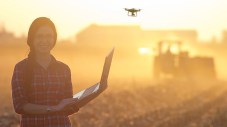 “I like work, it fascinates me,” said Jerome K Jerome. “I can sit and look at it for hours.” We concur with the author of “Three Men in a Boat’, a novel which so fascinated Late Victorian England that, within a year of publication, the number of vessels on the River Thames had doubled.
Building sustainable financing and resilient systems for health security in East Asia and the Pacific
 The East Asia and Pacific region is vital to global pandemic preparedness. The region has been the epicenter of emerging and re-emerging infectious diseases. China and Southeast Asia alone accounted for approximately 90 percent of SARS cases and two-thirds of the human cases of avian influenza in the world. These outbreaks are driven by several socio-economic, demographic, environmental, and ecological factors, including close contact between humans and animals, encroachment with wildlife, high population density, rapid urbanization, high growth rates, and climate change.
Aftershocks: Remodeling the Past for a Resilient Future
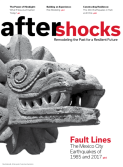 Aftershocks: Remodeling the Past for a Resilient Future aims to provide readers with an accessible look at what would happen today if we were to experience some of the iconic disasters of the past. The report explores how risk modeling can be used to analyze natural events that led to the major disasters of the past, and to understand how these events might impact today’s more populous and connected world.
Infrastructure sharing in energy and digital development: takeaways from cross-sectoral cooperation
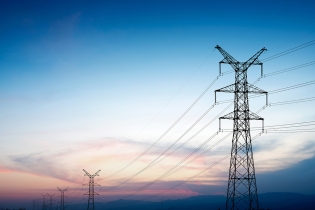 In many parts of the world, the sharing economy is ever-present for individuals, allowing them to use personal assets—for example, houses and cars—to their fullest potential. If you plan to be away for a period of time, why not rent your space for a few extra bucks?
Such a phenomenon exists in infrastructure economics, where the level of asset utilization matters for end-cost. As more consumers use the same infrastructure more frequently, the unit cost for all consumers goes down. Recent projects combining expertise from the World Bank’s digital development and energy teams demonstrate this.
Three criteria to better classify PPPs in Africa
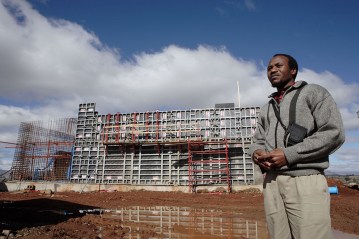 It is broadly understood that public-private partnerships (PPP) are a procurement tool that encompass design, financing, construction and long-term operation of a public infrastructure by the private sector. They can be cost-effective thanks to adequate risk transfer and performance criteria, and help bridge Africa’s large infrastructure gap in many sectors.
Fair Progress? Economic Mobility across Generations Around the World
If you are born into a low-income family, what are the chances that you will rise higher 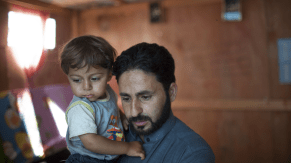 regardless of your background? The ability to move up the income ladder, both in one’s lifetime and with respect to one’s parents, matters for fighting poverty, reducing inequality, and even for boosting growth. Yet, mobility has stalled in recent years in large parts of the world, with the prospects of too many people across the world still too closely tied to their parents’ social status rather than their own potential, according to the findings of a new World Bank report launched today. Mobility is also much lower, on the average, in developing economies than in high-income economies. The developing world accounts for 46 of the bottom 50 economies in terms of mobility in education from the bottom to the top.
Leveraging technology to achieve the Sustainable Development Goals
Billions of people are connected by mobile devices, with unprecedented processing  power, storage capacity, and access to knowledge — foreshadowing stunning possibilities.
  This potential is multiplied by technologies such as artificial intelligence, robotics, big data processing, the internet of things, autonomous vehicles, 3-D printing, blockchain, etc.
Investing in waste management to create job opportunities for Malawi’s Youth
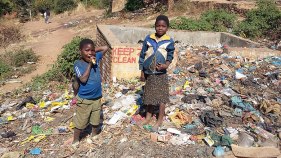 Malawi, a small country in Africa, has a population of over 18 million. According to World Bank estimates, Malawi had 52.2% of the total population between 15 and 64 years as of the beginning of 2017. However, Malawi has a high level of unemployment among the productive population which is largely composed of young people.
 Netherlands for the World Bank
You must be logged in to post a comment.