
Scientists are constantly getting better at knowing when the next hurricane, landslide, or  flood will happen. However, science communication about these disasters lags behind. As Leonardo da Vinci described, art has a unique power to communicate this type of knowledge to people everywhere.
Natural events and disasters of the past have influenced some of the most iconic art of our time. From Turner’s sunsets to Mary Shelley’s Frankenstein – both were composed in the shadow of the greatest volcanic eruption of our age, Mount Tambora in 1815. The Great Wave off Kanagawa by Japanese artist Hokusai (c. 1829–33) has been interpreted as a warning about tsunami risk. In an era of increasing natural hazards and climate change, art can also communicate the future risks we face.
 development work. Introduced in July 2016,
  March 2019 is now above 1,000, with damages
 find work, when they get better at what they do, and when they move from low-productivity work to better, higher-productivity jobs. Our newest report `
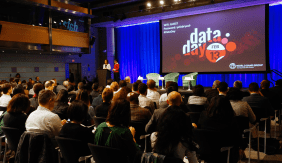 for data: more than 1,000 participants voted with their feet and their time to show their commitment for data—and that’s a commitment we share. Here’s what we learned from our first Data Day:
 businesses—those operating outside formal licensing and registration procedures—outnumber formal firms by a factor of 9 to 1. The World Bank’s Enterprise Analysis Unit recently published surveys of informal businesses in Mozambique, conducted in collaboration with the country management unit and colleagues from the Finance, Competition, and Innovation Global Practice. These surveys were designed to mirror the standard
  downside risks. Global trade growth has weakened, while investment prospects have softened; both of these remain important engines of growth, productivity, innovation, job creation and sustainable development. Debt vulnerabilities persist, and policy uncertainty is weighing on confidence. For developing countries, it is important to adopt growth-enhancing policies while containing risks and protecting the most vulnerable. The World Bank Group, in partnership with the International Monetary Fund, is able to help countries in addressing these concerns.
 Development Goals. Mobilizing the necessary resources remains central to its success.
 support developing countries’ efforts in mobilizing much-needed public domestic resources to achieve the Sustainable Development Goals, particularly in Africa and the Middle East.
 Netherlands for the World Bank
You must be logged in to post a comment.