Development work is getting more technologically sophisticated by the day. The World Bank’s Information and Technology Solutions (ITS) department recently started an Artificial Intelligence (AI) Initiative. At the launch event, we explored the role of AI in development and what it might mean for the work that we do here at the Bank. In short: AI is already here, international organizations have an important role to play, and we need to invest in our skills and expertise.
Author Archives: NL4WorldBank
eC2: Variable Renewable Energy Integration and Deployment
Deadline: 22-Feb-2018 at 11:59:59 PM (Eastern Time – Washington D.C.) 
Objective: The assignment has five objectives: (i) Analyze the technical and commercial constraints present in the dispatch system through discussions with NTDC and CPPA, and recommend specific improvements that could be implemented to increase the flexibility in the grid of the future generation and by adapting the current utilization of the installed generators; (ii) Analyze the actual and forecasted electricity demand and planned generation to provide technical inputs to the least-cost planning; (iii) Support and train the planning team (NTDC) in running a thorough least-cost planning tool that can integrate the variability of solar, wind and hydro as well as price ancillary services; (iv) Identify and propose specific changes to the energy market to increase flexibility in the system and price ancillary services looking at Energy Purchase Agreements (EPA), grid code requirements and ancillary service market; and (v) Build the capacity of the Client agencies to continue and further build on the analysis following the completion of this assignment.
Strong thirsts in fragile countries: walking the water scarce path of refugees
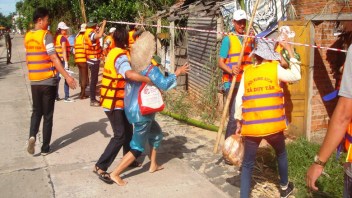
Imagine that you must flee home at once. You may be fleeing violence, social tensions, poor environmental conditions, or even persecution. You and your loved ones may walk for several days to find safety, and may even go for periods without food.
What would you need to survive?
The answer is clean water. Finding drinkable water is one of the first steps in your journey to a new home. If you instead consume contaminated water, you risk exposure to several diseases. Drinking water unfit for consumption may not only harm your health in the short run — drinking unclean water may cause life-long health problems. And of course, these problems multiply if entire communities, or even cities, face these health problems.
Why technology will disrupt and transform Africa’s agriculture sector—in a good way
. The sector is an engine of job creation: , while the share of jobs across the food system is potentially much larger. In Ethiopia, Malawi, Mozambique, Tanzania, Uganda, and Zambia, the food system is projected to add more jobs than the rest of the economy between 2010 and 2025. At the same time, Africa’s agriculture sector is facing mounting challenges.
Endline Survey for the Impact Evaluation of Overcoming Barriers to Adoption of Sanitation for the Poor Households in the Philippines
Deadline: 20-Feb-2018 at 11:59:59 PM (Eastern Time – Washington D.C.) 
Objective: The endline survey will be implemented in approximately 15 pre-selected households per barangay (village) across 272 barangays (total of 4,080 households) to collect post-intervention data from 17 selected municipalities in the 5 provinces of Negros Oriental, Cebu, Bohol (Region 7), Leyte and Eastern Samar (Region 8). The endline survey will focus on collecting basic information from households in order to test for balance between treatment and control groups and to understand financial behaviors and practices of participating households. Anticipated modules include: (i) household roster and demographics; (ii) assets, income and labor force participation; (iii) dwelling characteristics; (iv) water sources and drinking water; (v) latrine and sanitation facilities; (vi) program exposure and knowledge of sanitation practices; (vii) credit and savings; (viii) access to finance; (ix) children (under 5) health section and (x) risk aversion behavior. Other key stakeholders of the project will also be interviewed. This includes the participating local government units, regional DSWD staff, and partner MFI and masons.
Using technology to promote youth employment: How to develop digital solutions
How and when can we use technology to design and implement youth employment programs? We should ask ourselves whether investing in digital solutions is worth the time and money before deciding to include a digital component in our projects, because as much as technology can be transformative and help provide solutions, it is both expensive and time-consuming. Furthermore, we need to make sure we fully understand the problem that we are trying to solve.
eC2:Independent Evaluation of the TerrAfrica Global Partnership Program for Sustainable Land Management in Sub-Saharan Africa TerrAfrica Leveraging Fund (TLF)
Deadline: 15-Feb-2018 at 11:59:59 PM (Eastern Time – Washington D.C.) 
Objective: This third TerrAfrica evaluation is being undertaken following the decision of the November 2017 TAEC in Bonn, which called for a final evaluation of TerrAfrica and the TLF as necessary step before considering further action. The objective of this independent evaluation is to assess the contributions of TLF funded activities specifically, and the TerrAfrica Global Partnership Program in general, to the achievement of the partnerships objectives at the national and regional levels (see attached TORs).
Moving beyond GDP to look at the world through the lens of wealth
STORY HIGHLIGHTS 
- Global wealth grew significantly over the past two decades with middle-income countries catching up to high-income countries.
- New World Bank report includes estimates of human capital for the first time. Human capital is the largest component of global wealth, pointing to the need to invest in people.
- Natural capital makes up nearly half of the wealth in low income countries. More efficient, long-term management of natural resources is key to sustainable development.
eC2:Develop Early Warning System (EWS) Model for Financial Conglomeration
Deadline: 12-Feb-2018 at 11:59:59 PM (Eastern Time – Washington D.C.) 
Objective: Conduct diagnostic review of existing prerequisite in developing of an Early Warning System Model FCs Early Warning model and dashboard that incorporate the following: a. Non-financial entities (wider group) b. Identification of institutions and areas within institutions where problems occurs or are likely to emerge
Why investors must take a chance in the world’s most fragile countries
. And while poverty on the whole is declining, that’s not the case in countries affected by conflict. It is these countries plagued by near-constant political and economic instability that are often the ones most in need of private investment. Yet they are also the places few private investors are willing to go. The risks seem to outweigh the rewards.


You must be logged in to post a comment.