

 What is your role within the World Bank?
In 2016, I moved from the Netherlands to work as a consultant with the Information & Technology Solutions (ITS) Department, which delivers transformative information technologies to World Bank Group staff. I am a core team member of the newly launched Technology & Innovation Lab that experiments with innovative technologies that have the potential to improve the World Bank Group’s internal operations and operational work in client countries. We are developing use cases and proof of concepts for the use of blockchain technology and artificial intelligence (AI) in areas like health, cross-border payments, agriculture, and land administration, among others. I support the Innovation Leads by meeting with clients and performing business analysis for each use case, but I also lead some external partnerships with experienced leaders in this area, like the Dutch Blockchain Coalition. It has been an exciting journey and incredible experience to work with a close and diverse team in exploring these new technologies together with different units across the World Bank Group.
 Every year the Netherlands is represented by NGO’s , Universities , Government Institutions and the private sector at the Land and Poverty conference organized by the World Bank. The conference has become one of the largest international events on land governance, attracting over 1,300 participants in 2017 from governments, academics, civil society, and the private sector. The topic of land governance is an area the Dutch have been worldwide leaders, represented and leading the way at the conference are Kadaster and the University of Maastricht. The 2018 conference theme will be: Land Governance in an Interconnected World the aforementioned organizations will be presenting on the use of Block chain technology.
 Deadline: 21-Mar-2018 at 11:59:59 PM (Eastern Time – Washington D.C.)


 With more than 1.1 billion individuals without official proof of identity, a myriad of technologies is advancing at a faster speed than ever before and becoming more affordable, making it possible for nations to leapfrog paper based approaches of the past. Yet, it is becoming a challenge to understand and keep up with the various technologies and advancements that are especially relevant for digital identification systems.
 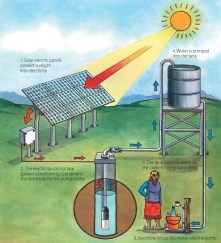 Access to a safe, sustainable water supply is a growing concern in every region of the world. In many communities, groundwater is being pumped by diesel fueled systems, which are both expensive and can be difficult to maintain. In communities where electricity is scarce, solar can be a part of the solution.
 Picture an island in Bangladesh that is so remote that there is no way the traditional electricity could reach it. Not now, and probably not anytime soon. That was the situation in Monpura just a few years ago – but not today.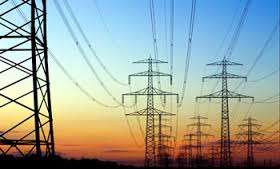


You must be logged in to post a comment.