
The COVID-19 pandemic presents a global health emergency and an unprecedented  economic crisis. key among which is the disruption in the provision of essential primary health, education, and community services.
Author Archives: NL4WorldBank

eC2: Urban Flood Resilience Diagnostics in 2 Indonesian Cities
Deadline: 24-Feb-2021 at 11:59:59 PM (Eastern Time – Washington D.C.) 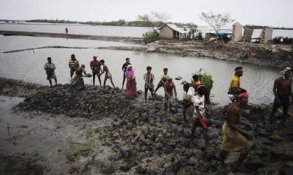
The objective of this consultancy assignment is to provide advisory services and technical inputs on urban flood resilience diagnostics and potential investment options for two Indonesian cities. The diagnostics will propose a multi-year program of prioritized structural and non-structural flood resilience investments. It will include: (i) a desktop review of current and planned flood resilience measures, and urban and disaster risk management policies and plans; (ii) development of flood hazard and risk information, based on future population growth and climate change scenarios; (iii) identification and rapid prioritization of potential interventions with an integrated flood risk engineering and risk-informed urban design approach; (iv) technical knowledge exchanges; and (v) opportunities for participatory planning.
Due to the ongoing pandemic, the consultant is expected to mobilize locally-based resources in the select cities. The diagnostics are expected by December 2021. Continue reading
The State of Economic Inclusion Report 2021: The Potential to Scale
Webinar: Global Economy: Reversing the Scars of COVID-19
World Bank Live Presents : The COVID-19 pandemic has caused major disruptions in the global economy that could have lasting adverse effects. If history is any guide, the global economy is heading for a decade of growth disappointments. Uncertainty about the post-pandemic economic landscape and policies has discouraged investment; disruptions to education have slowed human capital accumulation; concerns about the viability of global value chains and the course of the pandemic have weighed on trade and tourism.
Supporting a Green, Resilient and Inclusive Recovery on West Africa’s Coast
In Gbekon, Benin, summers come with flooding from the Mono River. Erosion of the nearby  coast, along with more unpredictable rainfall, have made these floods worse over time. Each flood cuts access to the only road connecting people to farms, jobs, and public health services and put thousands of lives and livelihoods at risk. In 2020, the World Bank-financed West Africa Coastal Areas Program (WACA) built dikes and instituted other measures to manage river flows and prevent flooding, with the result that more than 3,600 households were less exposed to coastal erosion and flooding.
What we’ve learned about supporting jobs in fragile and conflict-affected environments
The development community has begun paying more attention to supporting jobs in situations  of fragility, conflict, and violence (FCV). There are still many things we don’t know, but we have made progress: We can draw lessons from programs financed out of the US$14 billion investment in FCV through IDA18 and a number of new impact evaluations.
We summarized these lessons in our recent Jobs Note, “Supporting Jobs in Fragility, Conflict, and Violence (FCV) Situations.” Here are a few key takeaways.
World Bank Supports First COVID-19 Vaccine Rollout in Lebanon
US$34 million in emergency financing will provide access to vaccines for over 2 million people in Lebanon
BEIRUT, January 21, 2021 — The World Bank today approved a re-allocation of US$34 million under the existing Lebanon Health Resilience Project to support vaccines for Lebanon as it faces an unprecedented surge in COVID-19, with record-breaking numbers of around 5,500 daily confirmed cases since the beginning of the year. This is the first World Bank-financed operation to fund the procurement of COVID-19 vaccines. The financing will provide vaccines for over 2 million individuals. The vaccines are expected to arrive in Lebanon by early February 2021.
Living in the Dark No More: How Solar Power Helps Yemenis Resume their Lives
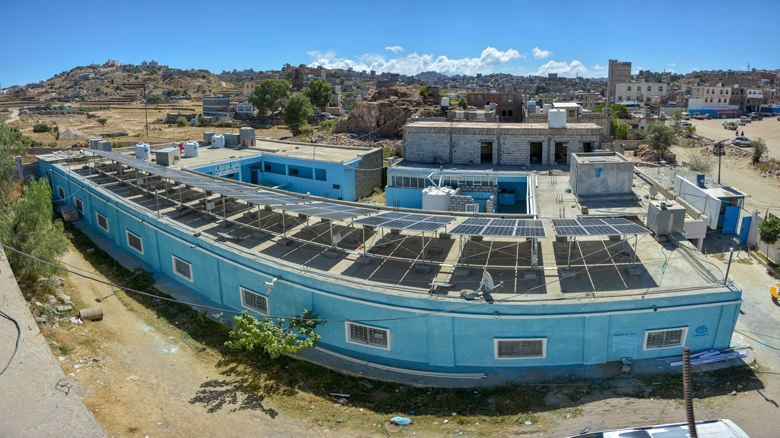
The Yemen Emergency Electricity Access Project has worked across several of the country’s governorates and villages. We heard directly from the people on the ground about how, exactly, this project has changed their lives. Supported by the World Bank’s International Development Association (IDA) and the United Nations Office for Project Services (UNOPS), we went to different areas and villages to listen to the people whose voices matter most for World Bank projects.
MULTIMEDIA
Urgent, Effective Action Required to Quell the Impact of COVID-19 on Education Worldwide
Sutil, who lives in a remote village in West Kalimantan, Indonesia (the world’s 4th most populous country), has found educating his child during COVID-19 to be a monumental challenge. As a farmer with a lack of electricity and no access to the internet or television, Sutil has found it difficult to help his child with his lessons. Once a week, teachers come to the children’s homes so they can help the children with their learning, however, in many cases, they have difficulties finding the children because they are out with their parents in the rice fields.
eC2: Impact of Clean Energy Transition on Job Creation Case Studies
Deadline: 02-Feb-2021 at 11:59:59 PM (Eastern Time – Washington D.C.) 
The Energy Sector Management Assistance Program (ESMAP) at the World Bank, is investigating how the energy transition the transition away from fossil fuels, encompassing the adoption of new technologies and models of service delivery in the sector can contribute to the generation of jobs and support economic activity while advancing the global decarbonization agenda. For a specified set of World Bank energy sector projects, the Consultant will prepare detailed case studies. As part of each case study, the Consultant will trace the set of activities undertaken as part of the project; develop a methodology for estimating jobs created by and as a result of the project, articulating a results chain in the process; and, applying the methodology, estimate the employment impact of the project (jobs numbers and various dimensions of job quality, earnings, etc.). Key findings from the case studies will be summarized in a note.
Continue reading
 Netherlands for the World Bank
You must be logged in to post a comment.