eC2: END-OF-PROGRAM EVALUATION OF ENTREPRENEURSHIP PROGRAM FOR INNOVATION IN THE CARIBBEAN (EPIC)

Deadline: 17-Sep-2018 at 11:59:59 PM (Eastern Time – Washington D.C.)

two person shaking each others hands

Assignment Description: infoDev is conducting an end-of-program evaluation of EPIC to assess the effectiveness, efficiency, relevance, and sustainability of the program, as well as to extract lessons that can recommend effective operational approaches for the future implementation of entrepreneurship development programs in the region. The main objective of the assignment is to carry out an independent end-of-program evaluation of the EPIC program, in compliance with Trust Fund agreement.

Continue reading

eC2: INVESTMENT POTENTIAL ANALYSIS FOR THE INDIA E-WASTE PROJECT, INDIA

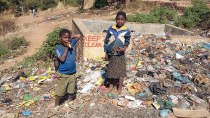
Deadline: 17-Sep-2018 at 11:59:59 PM (Eastern Time – Washington D.C.)mw-investing-in-waste-management-to-create-job-opportunities-for-malawis-youth-780x439

Assignment Description: This selection is being created to hire the services of consultants and agencies to conduct an in-depth Investment Potential Analysis to inform and guide prospective investors; and an awareness agency to carry out strategic and tactical communications.

Continue reading

eC2:Agricultural demand modeling for geospatial electrification planning in SSA

Deadline: 11-Sep-2018 at 11:59:59 PM (Eastern Time – Washington D.C.)Agrabusiness-Story-Banner

Assignment Description:

As outlined in ESMAPs Business Plan 2017-2020, Achieving universal access by 2030 will require a step change in the rate of new connections and in levels of investment, particularly in low access countries. Sector-wide programs in the electricity sector are showing better results than what can be achieved using a project-by-project approach. These programs are based on national electricity access roll out plans using geospatial planning and least-cost combinations of coordinated grid and off-grid electrification. The geospatially determined plan in turn anchors the sector investment financing prospectus.

Continue reading

A glimpse into the future of social protection

Your neighbor drives for a ride-sharing company. Your nephew just joined his third gentilini_figure_1__social_insurance_coveragestart-up.  Your daughter lands a job as a freelance journalist. Your street vendor who sells flowers down the street has been absent due to an illness.

The changing nature of work is upending traditional employment. But as the gig economy, part-time jobs, contracts and other diverse and fluid forms of employment grow, what happens to the protections the traditional job market offered to people and workers?

Continue reading

South Asia’s transport corridors can lead to prosperity

This blog is based on the report The Web of Transport Corridors in South Asia — jointly transport-corridors-blogproduced with the Asian Development Bank, the United Kingdom’s Department for International Development, and the Japan International Cooperation Agency

No doubt, South Asia’s prosperity was built along its trade routes.

One of the oldest, the Grand Trunk Road from the Mughal era still connects East and West and in the 17th century made Delhi, Kabul and Lahore wealthy cities with impressive civic buildings, monuments, and gardens.

Continue reading

Time to focus on water management in Arab world as source of growth and stability

In Gaza, the drinking water tastes like seawater. Years of neglect and poor management,pic_31_en.jpg due in large part to recurring conflicts, has led to the steady depletion of Gaza’s natural aquifer. The empty aquifer has been invaded by seawater and, alarming for public health, untreated sewage.

A series of droughts that struck Syria from 2006 onwards destroyed the livelihoods of millions of Syrians who relied on agriculture.  The United Nations (UN) estimated that between 2008 and 2011, the drought affected 1.3 million people, with 800 000 people “severely affected.” People were forced from their land, poverty levels rose, and part of the population was plunged into deep food insecurity.

Continue reading

eC2: Emission Reductions Program Document Assessment

Deadline: 17-Sep-2018 at 11:59:59 PM (Eastern Time – Washington D.C.)photo-power-plant

Assignment Description: For each of the Emission Reduction Programs in the ISFL:
Ensure the information provided in the ER Program Document Review is correct and complete (ie not leaving out information that might affect the opinion of the reader)
Conduct an independent assessment of the compliance against the approved ISFL ER Program Requirements and associated guidelines. Apply expert judgement to evaluate the feasibility of program design aspects and identify areas of improvement to inform the World Banks and Contributors review of the ISFL ER Program.

Continue reading

How Low Human Capital Can Limit Productivity Improvements. Examples from Turkey and Peru

Comparing two middle-income countries is not unusual, but two that are geographicallystudent1 far and are apparently different is less common. However, both Turkey and Peru have had the highest growth in their respective regions in recent years, aspire to become high-income economies in the next decade, depend on trade. Both countries face downside risks if structural changes—in the education and training system, and the economy more broadly—are not made to ensure that contributions to economic growth come from improvements in productivity. Both countries recognize there is a large gap between their productivity levels and the global productivity frontier, and both have growing populations that are not adequately equipped to meet labor market needs, with average productivity levels. Given these (similar) challenges, both countries have as their development goal, central to their development agenda, to improve productivity to continue growing in a sustainable manner.

Continue reading

eC2: Supervision and knowledge transfer for the development of a river basin-wide flood management plan

Deadline: 09-Sep-2018 at 11:59:59 PM (Eastern Time – Washington D.C.)water

Assignment Description: The main tasks of the firm to be selected through this procurement is to carry out supervision of activity (2) above, i.e. the development of the Integrated Flood Management Plan (IFMP) that will cover the three river basins, Ba, Cai Ninh Hoa and Cai Nha Trang. Three IFMP in three river basins will be developed. Upon request of VNDMA, it is necessary to scale up the experiences of, and lessons learnt from IFMP development in Vietnam. It is not the intention of this firm to be hired to develop the plan, but more to provide quality assurance during the management plan development process, and to ensure that adequate knowledge transfer is done to allow lessons learnt from other successful flood management plan development projects in Vietnam and other countries globally, are reflected through the development process and in the final plan. Integrated Flood Management Plans (IFMP) is a generic term that refers to flood risk management plans developed at the river basin level.

Continue reading

Identification as a centerpiece for development: What can other countries learn from Peru?

Peru has placed so much emphasis on the importance of identification that it has createdjuan_me7a9806.jpg a museum dedicated to it. The “Museum of Identification” in Lima demonstrates to visitors the significance of identity in the country’s narrative. In fact, the Incas, centuries before the Europeans arrived, kept track of the population by using “quipus”, an accounting tool based on strings, with each node denoting a village or community.

Peru has continued to prioritize identification, and the uniqueness of each person—long before the Sustainable Development Goals made “legal identity for all and free birth registrations” a global priority (SDG 16.9).

Continue reading