
Quality early childhood education (ECE) is one of the most important investments societies can make to help children build strong foundations that will support a lifetime of learning. This summer, we launched the World Bank’s new volume Quality Early Learning: Nurturing Children’s Potential, which makes the case for more and better investments in quality ECE to make the most of its enormous potential. The volume distills the evidence on the best ways to support a child’s early learning, bringing together insights from renown researchers and implementation experts across multiple disciplines—including neuroscience, psychology, education, and economics—on what it takes to deliver the critical elements of quality ECE at scale in low- and middle-income countries.
Tag Archives: World Bank Group
Annual Meetings Live Events
Join leaders, experts and activists to discuss how we can best respond to the multiple overlapping crises facing developing countries. How can we work together to navigate an uncertain world? Read more
October 10-16, 2022
Set reminders to join the live events and post questions for our development experts.
Check back for regular updates and event highlights.

WBG Procurement Opportunities
Interested in Doing Business with the World Bank Group? Please see selected opportunities below.
Procurement Framework and Regulations for Projects After July 1, 2016 (worldbank.org)
The Crisis Facing Development
WBG Procurement Opportunities
Interested in Doing Business with the World Bank Group? Please see selected opportunities below.
Procurement Framework and Regulations for Projects After July 1, 2016 (worldbank.org)
World Bank Group Climate Change Action Plan 2021–2025 : Supporting Green, Resilient, and Inclusive Development
The Climate Change Action Plan 2021–2025 aims to advance the climate change aspects of 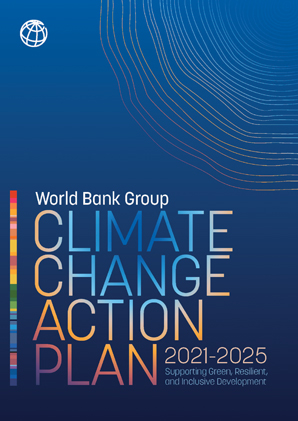 the WBG’s Green, Resilient, and Inclusive Development (GRID) approach, which pursues poverty eradication and shared prosperity with a sustainability lens. In the Action Plan, we will support countries and private sector clients to maximize the impact of climate finance, aiming for measurable improvements in adaptation and resilience and measurable reductions in GHG emissions. The Action Plan also considers the vital importance of natural capital, biodiversity, and ecosystems services and will increase support for nature-based solutions, given their importance for both mitigation and adaptation. As part of our effort to drive climate action, the WBG has a long-standing record of participating in key partnerships and high-level forums aimed at enhancing global efforts to address climate change. The new Action Plan represents a shift from efforts to “green” projects, to greening entire economies, and from focusing on inputs, to focusing on impacts. It focuses on (i) integrating climate and development; (ii) identifying and prioritizing action on the largest mitigation and adaptation opportunities; and (iii) using those to drive our climate finance and leverage private capital in ways that deliver the most results. That means helping the largest emitters flatten the emissions curve and accelerate the downward trend and ramping up financing on adaptation to help countries and private sector clients prepare for and adapt to climate change while pursuing broader development objectives through the GRID approach.
the WBG’s Green, Resilient, and Inclusive Development (GRID) approach, which pursues poverty eradication and shared prosperity with a sustainability lens. In the Action Plan, we will support countries and private sector clients to maximize the impact of climate finance, aiming for measurable improvements in adaptation and resilience and measurable reductions in GHG emissions. The Action Plan also considers the vital importance of natural capital, biodiversity, and ecosystems services and will increase support for nature-based solutions, given their importance for both mitigation and adaptation. As part of our effort to drive climate action, the WBG has a long-standing record of participating in key partnerships and high-level forums aimed at enhancing global efforts to address climate change. The new Action Plan represents a shift from efforts to “green” projects, to greening entire economies, and from focusing on inputs, to focusing on impacts. It focuses on (i) integrating climate and development; (ii) identifying and prioritizing action on the largest mitigation and adaptation opportunities; and (iii) using those to drive our climate finance and leverage private capital in ways that deliver the most results. That means helping the largest emitters flatten the emissions curve and accelerate the downward trend and ramping up financing on adaptation to help countries and private sector clients prepare for and adapt to climate change while pursuing broader development objectives through the GRID approach.Citation
“World Bank Group. 2021. World Bank Group Climate Change Action Plan 2021–2025 : Supporting Green, Resilient, and Inclusive Development. World Bank, Washington, DC. © World Bank. https://openknowledge.worldbank.org/handle/10986/35799 License: CC BY 3.0 IGO.”
World Bank Group Is Leading the Effort on Methane Emissions Reduction with Impactful Projects and Initiatives
Given the short-term potency of methane, cost-effective interventions to reduce  methane emissions should be an immediate priority for the sectors with the largest emissions. The agriculture, energy, sanitation and waste sectors are collectively responsible for 90-95% of global anthropogenic sources of methane:
- Agriculture accounts for ~41% of methane emissions from human activity, including from rice cultivation and agriculture waste burning, manure management, and gas from cows and sheep;
- Energy accounts for ~35%, including from oil and gas extraction, pumping, transport and coal mining;
- Sanitation and waste account for ~20%, including from landfills and wastewater treatment.
WBG Procurement Opportunities
Interested in Doing Business with the World Bank Group? Please see selected opportunities below.
Procurement Framework and Regulations for Projects After July 1, 2016 (worldbank.org)
The World Bank and UNGA 77
The 77th session of the UN General Assembly (UNGA 77) convened on September 13, 2022  and ran through September 26, 2022. As the world faces broad crises driven by the global slowdown, the war in Ukraine, shortages of energy, fertilizer and food, rising interest rates and debt levels, and climate change, the World Bank Group was proud to join leaders from around the globe to discuss these pressing development issues and work with our global partners to find solutions to these challenges.
WBG Procurement Opportunities
Interested in Doing Business with the World Bank Group? Please see selected opportunities below.
Procurement Framework and Regulations for Projects After July 1, 2016 (worldbank.org)


You must be logged in to post a comment.