Mapping and Valuing Ecosystems Services, and Prioritizing Investments in Select Watersheds in Nepal and Pakistan to support Sustainable Hydropower

Deadline: 20-Apr-2017 at 11:59:59 PM (Eastern Time – Washington D.C.) HYDRO

To help Nepal and Pakistan promote smart hydropower development through catchment area management in support of countries green growth strategies, the World Bank is initiating an activity whose main components are to: (i) create awareness and influence among policymakers across energy, water resources, and forestry ministries on the role of catchment area management and PES schemes in promoting sustainable hydropower and as a source of green and inclusive growth; (ii) generating know-how on how integrated catchment area management can promote smart hydropower development and green inclusive growth through (a) the application of ecosystem services-based modeling tools to map and value ecosystem services and to develop cost-effective catchment area management plans in selected catchments; and (iii) strengthen capacity of technical officers to apply catchment area management tools.

Continue reading →

Meeting Indonesia’s Urban Sanitation Needs

STORY HIGHLIGHTSscale-750x750.jpg
  • Indonesia’s rapid urbanization brings challenges to meeting sanitation needs of the urban population.
  • Access to improved sanitation facilities, with human excreta hygienically separated from human contact, has increased but 95% of fecal sludge is not treated and contaminates the environment.
  • Indonesia is taking a new approach to meet its target of universal sanitation access by 2019.

Continue reading →

Legislation and Laws – General and Sector Specific

PPP Concession Laws & Framework

The Legal Framework Assessment provides a summary of key areas of a host country’s existing laws that will need to be reviewed when a government embarks on an infrastructure project, particularly one involving the private sector.

Below are summaries and samples of legislation/ specific legislative provisions relevant to infrastructure PPP projects, together with links to legislation that has been enacted in different countries and different sectors to promote private sector involvement in infrastructure PPP projects. It is not an exhaustive set of samples. For further assistance, please contact ppp@worldbank.org .

Global Tracking Framework 2017 – Progress Toward Sustainable Energy

STORY HIGHLIGHTS pub-page-cover
  • Pace of progress on sustainable energy goals on energy access, renewable energy and energy efficiency fell short of what is needed to meet global objectives by 2030.
  • But in just about every area of sustainable energy, some countries are outperforming the world, indicating that greater policy focus could result in significant payoffs.
  • Progress on energy efficiency is gaining momentum, thanks to decreasing intensity of final energy consumption in industry, agriculture, services, and transport.

Continue reading →

Enabling the Business of Agriculture

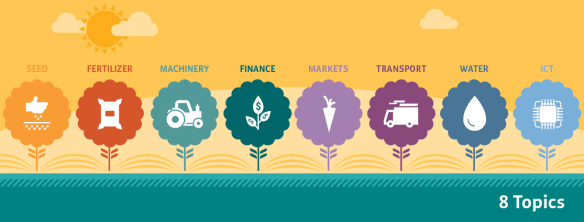
EBA-2017-infographics-1.pngEBA 2017 is the third report in the series, presenting data that measure legal barriers for businesses operating in agriculture in 62 countries and across 12 topic areas. It provides quantitative indicators on regulation for seed, fertilizer, machinery, finance, markets, transport, information and communication technology (ICT), and water. Two overarching themes—gender and environmental sustainability—continue to be included in the report analysis to ensure that the messages developed by EBA encourage inclusive and sustainable practices. This year scoring was piloted for the land topic for 38 countries in which data were collected. The data for the remaining 24 countries will be collected next year and the team will refine the methodology further. EBA also collected data on the livestock topic, focusing on veterinary medicinal products (VMPs).

Read the full report here.

eC2:Afghanistan Energy Study Activity2: Financial, Economic and Community Modality Assessment

Deadline: 04-May-2017 at 11:59:59 PM (Eastern Time – Washington D.C.) India Energy

The study would identify the relative merits of electrification options as measured against social, environmental, technical, financial, economic and operational factors and provide guidance on making electrification choices. The analysis will consider the following:
a. Economic cost-efficiency in delivering electricity using various technologies through a community driven development (CDD) approach;
b. Financial viability and long term sustainability;
c. Other attributes that affect sustainability of these schemes including, functionality and reliability, effectiveness in providing management and operations and maintenance (O&M), cost recovery, environmental (local and global) impacts, and social acceptance, among others;
d. It will characterize risks;
e. The assessment will consider community modalities necessary for electricity supply.
Continue reading →

In Senegal, food security and women’s empowerment go hand in hand

WBG Blog Louise Cord

Senegal’s nutrition policy is at a crossroads. Reaching a critical moment where the effects of malnutrition could have a detrimental effect on generations of young Senegalese to come, the Government of Senegal is striving to make efforts to address the root problems of malnutrition. However, if these actions are taken without a conscious effort bolster the key role of women in nutrition, the country may not succeed in stymieing stunting and malnutrition in the country.

Continue reading →

eC2:Niger Delivery of water treatment options and behavioral interventions

Deadline: 10-Apr-2017 at 11:59:59 PM (Eastern Time – Washington D.C.) Waste water plant

The World Bank is seeking to hire an experienced and qualified social marketing organization to (i) deliver chlorine inputs to about 150 selected rural villages in Dosso (22), Maradi (69), Zinder (41), Tillabéri (31) and Tahoua (35); (ii) adapt and implement behavioral supports for water treatment/ chlorine use designed in collaboration with the World Bank (iii); deliver training around sanitation behaviors in a sub-set of the villages where the intervention will be implemented. The intervention will take place in approximately 150 villages in and is expected to start in June 2017, at the end of the Ramadan. The assignment will be part of a WASH pilot intervention to augment the World Bank Niger Safety Nets project.

Continue reading →

Time is Money: Transforming Dar es Salaam’s Road Transport to Reduce Dense Traffic

STORY HIGHLIGHTSTransport

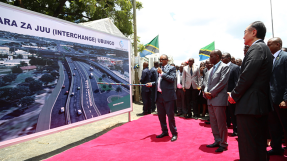
  • World Bank Group President Jim Yong Kim and Tanzanian President John Magufuli unveiled the foundation stone for the Ubongo Interchange, which will ease transportation bottlenecks and help businesses.
  • The interchange is supported by a $225 million concessional credit from the International Development Association (IDA), in addition to an IDA Scale-up Facility Credit of $200 million.
  • Under the first phase of the Bus Rapid Transit system, roundtrip travel time on the corridor was reduced by 90 minutes a day, saving commuters 16 days of sitting in traffic.

Continue reading →