
Out of precaution World Bank Group events up to May have either been postponed or  cancelled. We are still unclear on how the World Bank Group will proceed with events after May. In this blog post we selected the largest event messaging concerning COVID-19, The events include: 2020 IMF/World Bank Group Spring Meetings, Fragility Forum 2020, and the Land and Poverty conference.
Tag Archives: World Bank Group
Doing More with Less – Smarter Subsidies for Water Supply and Sanitation
New World Bank research shows that governments across the world are pouring money  into water and sanitation subsidies but all too often that funding doesn’t flow to those who need it most. However, subsidies can be powerful and progressive tools in delivering water and sanitation when they are designed in smart and targeted ways and implemented effectively.
into water and sanitation subsidies but all too often that funding doesn’t flow to those who need it most. However, subsidies can be powerful and progressive tools in delivering water and sanitation when they are designed in smart and targeted ways and implemented effectively.Continue reading
eC2: SRL-IFC Advisory-Sierra Leone Agricultural Initiative
Deadline: 23-Mar-2020 at 11:59:59 PM (Eastern Time – Washington D.C.) 
The objective of this assignment is to improve the livelihoods of at least 150 households through improved agriculture (technical and commercial) and household practices (i.e. use of assets, family budgeting, nutrition, gender equity, etc.) and develop access to improved technical know-how by building capacity of 40 lead farmers that will share knowledge of improved technical practices with their peers.
eC2: Natural Hazard Assessment for the Reconstruction of Critical Transport Infrastructure
Deadline: 23-Mar-2020 at 11:59:59 PM (Eastern Time – Washington D.C.)
The World Bank provides technical assistance to the Government of Myanmar to support  technical solutions for Chin State by hiring an international consulting firm to prepare a hazard and vulnerability assessment for road rehabilitation to inform planned investments under the Myanmar Floods and Landslides Emergency Recovery Project in Chin State in Myanmar. The overall objective of the assignment is to contribute to the increase of capacities of the relevant ministries and agencies of the Government of Myanmar in the adoption of appropriate natural hazard assessment approaches in designing transport and infrastructure. The activity will (i) help provide technical solutions on geohazards specifically for Kalay Hakha road, based on an assessment of hazards; (ii) draw out lessons along the above process, including data gaps and recommend technical and monitoring solutions for improvement; (iii) and provide capacity building for the Ministry of Construction on this practice. The assignment is expected to be completed within the period of an estimated six months upon mobilization.
Unleashing the economic power of women
By David Malpass, President World Bank Group
March 3, 2020
Girls are attending school in greater numbers than ever before, and women are 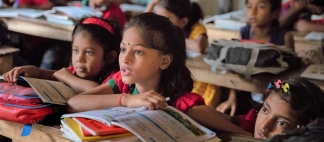 increasingly entering the labor force and leading businesses. Although we should celebrate this progress, much work remains in order for a girl born today to have the same opportunities as a boy.
Research from the World Bank and others shows that Moreover, it is the right thing to do. Fortunately, more countries recognize that economies can reach their full potential only with the full participation of both women and men.
The World Bank Group is supporting countries in achieving this goal in important areas, including the removal of discriminatory laws, investment to close gender gaps, broadening access to finance, and stepping up efforts to prevent gender-based violence.
World Bank Group Announces Up to $12 Billion Immediate Support for COVID-19 Country Response
As COVID-19 reaches more than 60 countries, the World Bank Group is making available  an initial package of up to $12 billion in immediate support to assist countries coping with the health and economic impacts of the global outbreak. This financing is designed to help member countries take effective action to respond to and, where possible, lessen the tragic impacts posed by the COVID-19 (coronavirus).
Through this new fast track package, the World Bank Group will help developing countries strengthen health systems, including better access to health services to safeguard people from the epidemic, strengthen disease surveillance, bolster public health interventions, and work with the private sector to reduce the impact on economies. The financial package, with financing drawn from across IDA, IBRD and IFC, will be globally coordinated to support country-based responses.
Fragility and Conflict: On the Front Lines of the Fight against Poverty
STORY HIGHLIGHTS
- A new report estimates that by 2030 up to two-thirds of the global extreme poor will
 be living in FCS, making it evident that without intensified action, the global poverty goals will not be met.
- The new report, “Fragility and Conflict: On the Front Lines of the Fight against Poverty” notes that the 43 countries in the world with the highest poverty rates are in FCS and/or Sub-Saharan Africa.
- The number of people living in proximity to conflict — defined as within 60 kilometers of at least 25 conflict-related deaths — has nearly doubled since 2007.
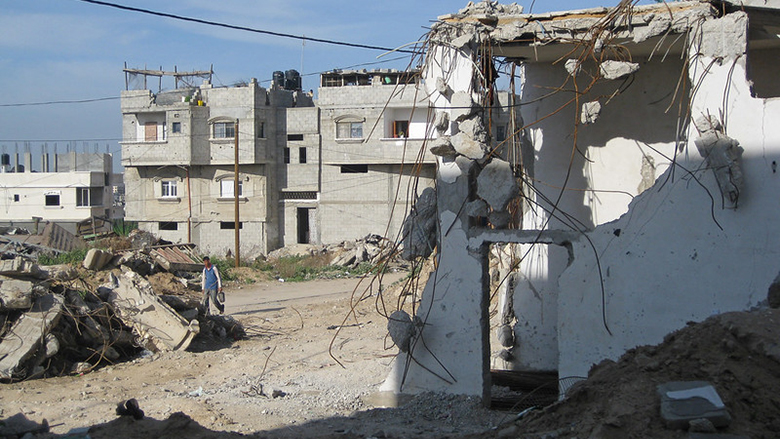
Globally, the prevalence of fragile and conflict-affected situations (FCS) continues to rise. The number of forcibly displaced people worldwide has more than doubled since 2012, exceeding 74 million in 2018. A new report estimates that by 2030 up to two-thirds of the global extreme poor may be living in FCS, making it evident that without intensified action, the global poverty goals will not be met.
The new report, “Fragility and Conflict: On the Front Lines of the Fight against Poverty,” notes that the 43 countries in the world with the highest poverty rates are in FCS and/or Sub-Saharan Africa. Economies facing chronic fragility and conflict have had poverty rates stuck at over 40 percent in the past decade, while countries that have escaped FCS have cut their poverty rates by more than half. Today, a person living in an economy facing chronic fragility and conflict is 10 times more likely to be poor than a person living in a country that hasn’t been in conflict or fragility in the past 20 years.
Legislating gender equality in the workplace through pay transparency
Author: Kathleen Beegle ;Lead Economist with the World Bank Gender Group
A number of recent posts on Development Impact have focused on gaps in labor market outcomes for men and women. This includes some posts in the job market series in late 2019 and, in 2020, a look at the ‘dismal statistic’ on female-to-male labor force participation rates in India and Pakistan, changing the way women think about themselves and what they can do as a means to closing gaps, and a summary of the World Bank’s Research Group recruitment. The latter was underpinned by goal setting in the shortlisting process with respect to between men and women applicants. Fun fact: such quota setting with respect to the composition of candidates to interview is known in the U.S. as the Rooney Rule — established by the U.S. National Football League in 2003 and named after the former owner of the Pittsburgh Steelers (and intended not in regards to women hires but with regards to ethnic-minority candidates in coaching and senior league jobs, though it is now used more generally in the private sector).
eC2: Cost/Benefit Analysis of Aquatic Animal Health Management
Deadline: 23-Mar-2020 at 11:59:59 PM (Eastern Time – Washington D.C.) 
This activity aims to lower the risk profile of aquaculture investments, thus attract private equity in a MFD (maximize finance for development) model, and will thus directly address the global knowledge objective of Developing sustainable aquaculture through improved Biosecurity. The activity will provide country-level technical assistance & capacity-building to the development and implementation of best aquatic animal (fish and shellfish) and plant (seaweeds) health management practices in the field. To achieve this reduction of risk, the activity will work directly with Banks operations -in preparation or in their early phase of implementation- to adopt, pilot and refine the Progressive Management Pathway (PMP) to improved health and performance of farmed aquatic species.
Procurement Training Webinars
The Private Sector Liaisons are proud to present the first of four World Bank procurement  training webinars.
World Bank contract bidding process webinar provides information about the bidding process for projects tendered by the client countries of the World Bank Group. The presenter is Nancy Bikondo-Omosa Senior Procurement Specialist.
We encourage you to view the recording of the webinar here: https://1930181.mediaspace.kaltura.com/media/1_bbk9429j


You must be logged in to post a comment.