I have recently traveled across the Sahel region from Mali to Burkina Faso to Niger and
finally to Mauritania where I addressed the Sahel Alliance General Assembly and the G5 Sahel Leaders’ Summit. During my travels, I met mothers, fathers, engineers, economists, entrepreneurs and community groups. Before arriving in the Sahel, I was at the Munich Security Conference with diplomatic and military leaders.
Tag Archives: World Bank Group
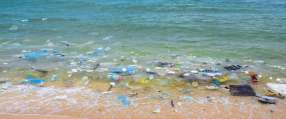
eC2: Strategic Assessment of Solid Waste Management Services and Systems with a focus on Plastic Waste and Marine Litter
Deadline: 26-Mar-2020 at 11:59:59 PM (Eastern Time – Washington D.C.) 
Objective of this assignment is to develop at a coherent state level strategy/roadmap for municipal waste/plastic waste comprising institutional,policy/regulatory & investment interventions required for improving solid waste management services in cities.Firm is expected to conduct a strategic assessment of SWM services,policies/regulations & institutional systems in partner state of Karnataka with a focus on plastic waste as part of municipal solid waste.The assessment will be carried out in two parts(i)an overall review of sector status of State across the entire value chain under National Missions,including institutional,policy & regulatory framework,financial resources & technical capacity,private sector engagement;(ii)in-depth diagnostics of twenty emerging cities(ten in each state)to assess service & infrastructure gaps,institutional arrangement,financial situation,to propose policy & institutional reforms as well as investments, interventions to address short&long term needs.
COVID19: Reflections of an epidemiologist and public health practitioner
Not a day passes without us being bombarded by the rapidly evolving medical literature
and media on the hitherto unknown COVID-19. Rightfully so, as we now have an outbreak with more than 100,000 cases confirmed globally.
Yet, I cannot help but wonder how the general public is dealing with such an onslaught of information, if I, as a trained physician, epidemiologist and a global public health practitioner, find it too much to take in and digest. How do we expect a lay person to sift through it all, separate the chaff from the grain, avoid fear mongering – No, you do not get COVID-19 if you receive a package from China, or eat in a Chinese restaurant – and stick with the most relevant information and the essentials for behavioral change? This is ultimately what counts the most:, arming people with the right messaging and instructions for compliance with the science-based best practice. With local community transmission in about 20 countries across several regions of the globe, we must ask ourselves could we have done better?
Swift action can help developing countries limit economic harm of coronavirus
The novel coronavirus (COVID-19) outbreak has already exacted a high cost in human
life and has been recognized for what it is—a global health emergency. As the virus spreads around the globe, the question now is whether lives can be protected and economic harm can be contained.
We know from history that when the global economy faces a common threat, quick, coordinated, and decisive action makes all the difference. That is beginning to happen. Several countries have announced stimulus programs, many have cut interest rates, and both the World Bank Group and the International Monetary Fund have unveiled massive financial-support packages to help countries overcome the health crisis and limit the economic damage.
Statement by IMF Managing Director Kristalina Georgieva and World Bank Group President David Malpass on the 2020 IMF-World Bank Group Spring Meetings
Out of precaution World Bank Group events up to May have either been postponed or
cancelled. We are still unclear on how the World Bank Group will proceed with events after May. In this blog post we selected the largest event messaging concerning COVID-19, The events include: 2020 IMF/World Bank Group Spring Meetings, Fragility Forum 2020, and the Land and Poverty conference.
Doing More with Less – Smarter Subsidies for Water Supply and Sanitation
into water and sanitation subsidies but all too often that funding doesn’t flow to those who need it most. However, subsidies can be powerful and progressive tools in delivering water and sanitation when they are designed in smart and targeted ways and implemented effectively.Continue reading
eC2: SRL-IFC Advisory-Sierra Leone Agricultural Initiative
Deadline: 23-Mar-2020 at 11:59:59 PM (Eastern Time – Washington D.C.) 
The objective of this assignment is to improve the livelihoods of at least 150 households through improved agriculture (technical and commercial) and household practices (i.e. use of assets, family budgeting, nutrition, gender equity, etc.) and develop access to improved technical know-how by building capacity of 40 lead farmers that will share knowledge of improved technical practices with their peers.
eC2: Natural Hazard Assessment for the Reconstruction of Critical Transport Infrastructure
Deadline: 23-Mar-2020 at 11:59:59 PM (Eastern Time – Washington D.C.)
The World Bank provides technical assistance to the Government of Myanmar to support
technical solutions for Chin State by hiring an international consulting firm to prepare a hazard and vulnerability assessment for road rehabilitation to inform planned investments under the Myanmar Floods and Landslides Emergency Recovery Project in Chin State in Myanmar. The overall objective of the assignment is to contribute to the increase of capacities of the relevant ministries and agencies of the Government of Myanmar in the adoption of appropriate natural hazard assessment approaches in designing transport and infrastructure. The activity will (i) help provide technical solutions on geohazards specifically for Kalay Hakha road, based on an assessment of hazards; (ii) draw out lessons along the above process, including data gaps and recommend technical and monitoring solutions for improvement; (iii) and provide capacity building for the Ministry of Construction on this practice. The assignment is expected to be completed within the period of an estimated six months upon mobilization.
Unleashing the economic power of women
By David Malpass, President World Bank Group
March 3, 2020
Girls are attending school in greater numbers than ever before, and women are
increasingly entering the labor force and leading businesses. Although we should celebrate this progress, much work remains in order for a girl born today to have the same opportunities as a boy.
Research from the World Bank and others shows that Moreover, it is the right thing to do. Fortunately, more countries recognize that economies can reach their full potential only with the full participation of both women and men.
The World Bank Group is supporting countries in achieving this goal in important areas, including the removal of discriminatory laws, investment to close gender gaps, broadening access to finance, and stepping up efforts to prevent gender-based violence.
World Bank Group Announces Up to $12 Billion Immediate Support for COVID-19 Country Response
As COVID-19 reaches more than 60 countries, the World Bank Group is making available
an initial package of up to $12 billion in immediate support to assist countries coping with the health and economic impacts of the global outbreak. This financing is designed to help member countries take effective action to respond to and, where possible, lessen the tragic impacts posed by the COVID-19 (coronavirus).
Through this new fast track package, the World Bank Group will help developing countries strengthen health systems, including better access to health services to safeguard people from the epidemic, strengthen disease surveillance, bolster public health interventions, and work with the private sector to reduce the impact on economies. The financial package, with financing drawn from across IDA, IBRD and IFC, will be globally coordinated to support country-based responses.
You must be logged in to post a comment.