eC2: Preparation of Flood Hazard and Flood Risk Maps (FHRM) and Flood Risk Management Plans (FRMP)

Deadline: 31-Aug-2020 at 11:59:59 PM (Eastern Time – Washington D.C.)floods

The assignment aims to develop flood hazard and flood risk maps (FHRM) and flood risk management plans (FRMP) for all twelve Units of Management of Romania, i.e. for 11 river basins and for the Danube River, in line with the EU Floods Directive. Furthermore, the assignment also aims to develop a plan for measures that are to be taken nationally.

Continue reading →

eC2: Guyana- Improving Urban Resilience of Coastal Cities in the Caribbean through Resilient Infrastructure and Urban Planning

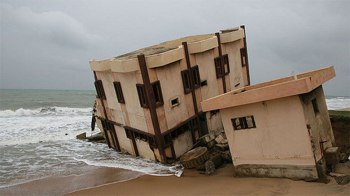
Deadline: 31-Aug-2020 at 11:59:59 PM (Eastern Time – Washington D.C.) blog-in-benin-can-resilient-investment-solutions-save-a-battered-coast-780x439

The consultancy primary objective is to provide professional expertise to develop a comprehensive urban resilience plan for the select coastal cities in Guyana, which aims to,
1.Study approaches for improving urban infrastructure planning to achieve resilience goals in coastal cities for the sustainable concurrence of the urban space with natural environment;
2.Help urban practitioners better understand the integration of green with existing grey infrastructure and contextually inform citiesplanning strategies; and
3.Forge an urban vision to identify infrastructure need and investment opportunities for the cities in the selected coastal areas.
Scope of Work
As part of the EU-GFDRR/WB Regional Resilience Program for LAC, the project will focus on carrying out diagnostic work related to urban resilience in selected coastal cities in Guyana. The main objective is to develop an integrated vision for building resilience and sustainability into infrastructure.

Continue reading →

eC2: Grenada – Improving Urban Resilience of Coastal Cities in the Caribbean through Resilient Infrastructure and Urban Planning

Deadline: 31-Aug-2020 at 11:59:59 PM (Eastern Time – Washington D.C.) water-pollution-cartoon

The consultancy objective is to provide professional expertise to develop a comprehensive urban resilience plan for the select coastal cities in Grenada which aims to,
1.Study approaches for improving urban infrastructure planning to achieve resilience goals in coastal cities for the sustainable concurrence of the urban space with natural environment;
2.Help urban practitioners better understand the integration of green with existing grey infrastructure and contextually inform cities planning strategies; and
3.Forge an urban vision to identify infrastructure need and investment opportunities for the cities in the selected coastal areas.
Scope of Work
As part of the EU-GFDRR/WB Regional Resilience Program for LAC, the project will focus on carrying out diagnostic work related to urban resilience in selected coastal cities for Grenada. The main objective is to develop an integrated vision for building resilience and sustainability into infrastructure.

Continue reading →

Automated transport could propel development forward. Can we turn the vision into reality?

The transport sector has always unleashed the creativity of engineers, inventors, and uae-dubai metro-laborant-shutterstockproblem solvers of all kinds. But even the greatest innovations don’t always come to life. After the early excitement of the public and investors, the vast majority (70% to 97%) of new ideas do not survive the “trough of disillusionment,” and only a lucky few end up being widely adopted.

Continue reading →

Djibouti’s Data Collection Efforts: How Information Helps Tackle Poverty

Four years ago, the Government of Djibouti launched Vision 2035, a target to improve Djibouti-farmersliving standards for the country’s people over the next two decades. A country in the Horn of Africa, Djibouti has a rocky, arid landscape that has driven the vast majority of people to cities. More than 35 percent of the country lives in poverty, and about 21 percent in extreme poverty, including nomadic Djiboutians and others who live in extreme rural poverty.

Continue reading →

Young people’s resilience is the boost we need right now

During this pandemic, the remarkable creativity and innovation of youth-led initiatives in sectors like health, jobs, and food security prove that young people are critical in driving forward ideas and actions on global issues. We launched an online campaign to provide a platform for youth to share their stories on hope and resilience. This is what they had to say.

Continue reading →

eC2: Malishi – Ag Tech

Deadline:  27-Aug-2020 at 11:59:59 PM (Eastern Time – Washington D.C.)
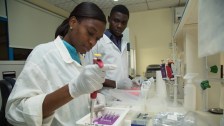
The West Africa Agricultural Productivity Program (WAAPP) - Ghan

Mali Shi is a new entrant in the global shea sector in Mali. Its founders opened the Bamako-headquartered company after gaining many years of experience in the industrial manufacturing sector, where they are leading experts in the manufacture and distribution of batteries. IFC Mali Shi Advisory Project is designed to enhance Mali Shis operational efficiencies through the introduction of digital tools (Ag Tech), thereby improving smallholder farmers (SHFs) productivity and income. By the end of the project, we expect 10,000 SHFs to be engaged with AgTech solutions. Malishi, with IFC support, is seeking for a Consulting firm to help introduce IT based system to help Malishi to procure shea nuts and strengthen its relationships with local farmers, assist farmers in managing their farm, provide traceability, improve efficiency in onsite data collection including crop forecasting, and strengthen sustainability of the project.

Continue reading →

In India, air quality has been improving despite the COVID-19 lockdown

India is home to some of the world’s most polluted cities. An unintended but welcomeshutterstock_761795974 consequence of the lockdown to contain the coronavirus has been improved air quality throughout the country.  Our assessment of India’s air quality trends has found another underlying and positive trend: air quality has been improving across the country since 2018, and this has nothing to do with the COVID-19 lockdown. 

Growing Threat of Air Pollution

Poor air quality has come to be recognized as a serious health risk and drag on economic development in India. Air quality has been deteriorating across the country since the 1990s, and in 2017 as much as 97 percent of the country’s population was estimated to be exposed to unhealthy levels of ambient PM2.5.  Though there are many types of air pollutants, these small particulates in the air, about one-thirtieth the width of a human hair, are the most harmful to human health.  They can penetrate deep into the lungs, enter the bloodstream and cause deadly illnesses such as lung cancer, stroke, and heart disease.

Continue reading →

7 ways to help understand the world’s challenges in 2020—and have hope for the future

Unprecedented, devastating, pervasive. No matter how you describe the COVID-19 KenyaLeaderpandemic, for billions around the world the virus has changed life as we knew it.  We are living through a remarkable period of history, one that will affect each of us for decades to come.

Continue reading →

eC2: Technical Assistance towards strengthening supply chain management of health products and technologies in selected counties

Deadline: 20-Aug-2020 at 11:59:59 PM (Eastern Time – Washington D.C.)medical-appointment-doctor-healthcare-clinic-health-hospital-medicine[7]

The Reproductive Maternal Newborn Child and Adolescent Health (RMNCAH) Multi-Donor trust fund (MDTF) aims to enhance effectiveness in achieving sustainable RMNCAH results by strengthening the health systems and support progress towards universal health coverage. The overall objective of the MDTF supply chain management Technical Assistance for Health Products and Technologies (HPTs) is to build/strengthen HPT supply chain systems, with an emphasis on RMNCAH commodities, into efficient, effective, responsive and sustainable systems through the provision of targeted technical assistance and mentorship in 12 counties

Continue reading →