
November 16, 2018—Policies to create jobs, promote entrepreneurship and growth are  key priorities for many emerging economies. Designing and implementing reforms is particularly challenging as policy makers attempt to strike a balance across sectors, firm size and incentives that can sustain growth in a rapidly changing global economy. High-growth firms (HGFs)–accounting for approximately 3-20 percent of the manufacturing and service industries—are of particular interest as a growth model considering their contribution to more than 50 percent of new jobs and sales in in these sectors. Analysis of high-growth firms in Brazil, Côte d’Ivoire, Ethiopia, Hungary, India, Indonesia, Mexico, South Africa, Thailand, Tunisia, and Turkey is offering evidence that challenges some of the conventional views defining HGFs and the sectors where they can prosper. Continue reading
Tag Archives: Wereldbank Groep
eC2: Merchant Acquisition and Management Firm
Deadline: 18-Dec-2018 at 11:59:59 PM (Eastern Time – Washington D.C.) 
A key objective of the project in Tanzania is to promote financial inclusion, by increasing access to mobile money and by digitizing payments to merchants. Although mobile money access has improved in Tanzania, levels of usage of digital financial services, including payments, in general remains low. To address this challenge and offer a mass market payment solution, IFC and its partner, a mobile network operator, are building on a merchant proposition to increase the number of merchants offering the product and increase customer usage of the product. This project will build capacity and improve performance of the MNO in creating a sustainable and vibrant mobile money ecosystem in Tanzania.
Culture – the “X Factor” for Building Back Better after Conflict and Disasters
STORY HIGHLIGHTS
- As the world continues to urbanize rapidly, cities are increasingly bearing the brunt of conflicts, crises, and disasters, which have a devastating effect on culture.
- A new World Bank-UNESCO Position Paper, Culture in City Reconstruction and Recovery (CURE), proposes an enhanced culture-based framework for city reconstruction and recovery.
- The CURE Framework marks an important milestone in the partnership between the World Bank and UNESCO on culture, urban development, and resilience.
Want successful urban transport mega-projects? Here are seven things you should keep in mind
In 2002, Sao Paulo’s embarked in one of the most transformative transport projects of  the decade: the construction of Metro Line 4. The new line had big ambitions: it was meant to significantly improve the commuting experience, better connect the south and western regions of the Sao Paulo Metropolitan Region (SPMR) to the center, change the metro system from a radial to a flexible network, and interconnect all transport modes, including buses, suburban trains (CPTM), bicycles, as well as existing and future metro lines.
Fighting corruption: the importance is crystal clear
My parents didn’t know that the name they chose for me meant “transparent” in  Spanish. But they did know the importance of transparency, honesty and integrity, and passed on to me these values when I was growing up in Bulgaria. I hold them dear in my work at the World Bank.
A lack of transparency fuels corruption, a corrosive force that hits the poor and the vulnerable the hardest. Its effects are very real. Corruption stops medicine and drugs from reaching the sick, stops schools from being built, leads to roads washing away in the rain, and empties the public coffers. In the most fragile corners of the world, corruption undermines work to bring stability or prevent violence and extremism from taking root.
International Debt Statistics 2019: External debt stocks at end-2017 stood at over $7 trillion
The 2019 edition of International Debt Statistics (IDS) has just been published.
International Debt Statistics 2019 presents statistics and analysis on the external debt and financial flows (debt and equity) for the world’s economies for 2015. This publication provides more than 200 time series indicators from 1970 to 2017 for most reporting countries. To access the report and related products you can:
- Download the full publication (PDF)
- Download or query the database
- Visit the IDS 2019 Products Page
- Access the statistical tables
- Visit the debt portal for a range of related content
- View the “about the data” section for a full description of the concepts and definitions in IDS.
Bangladesh’s success in public procurement: Sustained reform really pays off
A healthy mix of innovation, continuous engagement, and effective implementation can  bring about sustained transformation in public procurement. A more effective and transparent procurement system frees up public money for achieving more and better development outcomes and improving the delivery of public services.
Procurement makes up a substantial portion of government spending with significant impact on the delivery of public services such as water, health, education, and other infrastructure. Bangladesh spends about $16 billion or about one third of its annual budget on public procurement. Of this, $13 billion is spent on the public procurement of goods, works, and services for the implementation of development programs, constituting approximately 70% of the country’s development budget.
Helping poor women grow their businesses with mobile savings, training, and something more?
Growing a business is not easy, and for women firm owners the challenges can be acute, 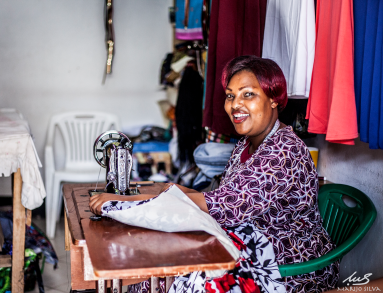 especially when they are poor and run subsistence level firms. In developing countries, 22 percent of women discontinue their established businesses due to a lack of funds, and women are more likely than men to report exiting their businesses over finance problems, according to the Global Entrepreneurship Monitor. Meanwhile, personal savings are a crucial source of entrepreneurial financing, and nearly 95 percent of entrepreneurs globally state that they used their own funds to start or scale up their businesses. Women, however, face unique constraints in accumulating savings to invest in growing their firms.
eC2: Abidjan BRT. GIF Project Definition Activity. PPP assessment.
Deadline: 03-Dec-2018 at 11:59:59 PM (Eastern Time – Washington D.C.) 
To tackle urban mobility challenge in the Greater Abidjan Agglomeration, the Ivorian authorities have chosen to promote mass transit systems and envisage a 20-km long Bus Rapid Transit (BRT) infrastructure on an east-west corridor. The capital investment in the required infrastructure might be partially-financed publicly however the system could be operated and maintained by private sector operators under a PPP modality.
The objective of the assignment is to assess the various PPP options for designing, financing, building, operating and maintaining the BRT system, and possibly mobilizing private sector financing in infrastructure, rolling-stock and supporting systems of the BRT/feeders, to recommend a preferred business model (using a robust options appraisal model), and to outline the main legal, regulatory, financial, technical and cost and risk sharing aspects of that preferred model, seek market input on the model and prepare an outline structure.
Tackling gender inequality through investments in health equity
Still today, in almost all societies around the world, women are less well-off than men.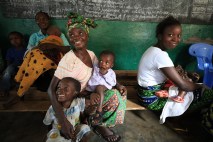 Women are still paid less than men; they are less represented in business, politics and decision-making. Their life chances remain overwhelmingly less promising than those of men.
This inequality hurts us all. The world would be 20% better off if women were paid the same as men. Delaying early marriage in the developing world by just a few years would add more than $500 billion to annual global economic output by 2030.


You must be logged in to post a comment.