WASHINGTON, January 8, 2026 – The World Bank today approved a $13.30 million concessional financing through the International Development Association (IDA) for Cabo Verde’s renewable Energy and Improved Utility Performance Project (REIUP). The operation is co-financed by a $1.2 million concessional loan and $0.41 million grant from the Canada Clean Energy and Forest Climate Facility (CCEFCF), as well as a $0.4 million reimbursable grant from the Global Infrastructure Facility (GIF).
The financing will support Cabo Verde to accelerate its clean energy transition and achieve universal access to electricity.
Cabo Verde has made significant progress in energy access, achieving 98% coverage and bringing reliable electricity to nearly the entire population. The country has also advanced its energy transition efforts, aiming for 100% renewable electricity by 2040, supported by ongoing sector reforms. Meeting the country’s targets will require further investment in clean power, improved grid stability, and continued reforms following the demerger of the vertically integrated utility ELECTRA. The approved financing supports these national priorities and is expected to leverage substantial private capital for large-scale renewable energy deployment.
“The scaling up of REIUP reinforces Cabo Verde’s ambition to become a leader in achieving universal access to electricity in Africa. By mobilizing private capital to accelerate the energy transition and strengthening the sector’s institutional foundations, the project will help ensure a sustainable, financially viable, and climate-resilient energy sector”, said Kwawu Mensan Gaba, World Bank Energy Global Practice Manager for Western and Central Africa.
The operation will:
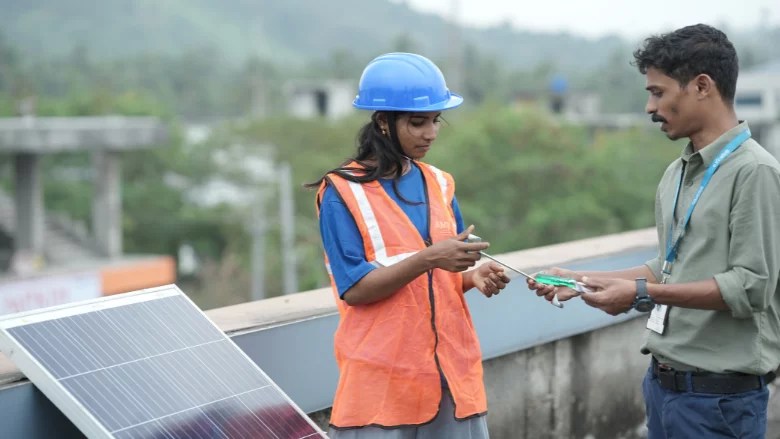
- Increase renewable energy generation capacity by supporting the development of 68 MW of new solar PV and wind generation and 12 MWh of battery storage, through a combination of public investments on smaller islands and private sector participation.
- Enable the operationalization of a newly established, Government-backed Risk Mitigation Facility, expected to mobilize US$108 million in private capital.
- Advance Cabo Verde’s efforts to achieve universal access to electricity through 1,800 additional household connections and last mile electrification.
- Strengthen and consolidate ongoing energy sector reforms and institutional capacity, particularly for newly created entities resulting from the separation of water and power utilities, to improve financial performance, operational efficiency, and reduce commercial losses.
“With this new operation, we are investing in a cleaner, more affordable energy future for Cabo Verde—one that reduces dependence on imported fossil fuels, shields the economy from the volatility of global price shocks, and strengthens competitiveness. At the same time, it will drive job creation in the energy transition, with a strong focus on closing the gender gap in the sector.” saidIndira Campos, World Bank Group Resident Representative for Cabo Verde.
REIUP aligns with Cabo Verde’s Master Plan for the Power Sector and complements all other development partners’ efforts in the sector.
PRESS RELEASE NO: 2026/044/AFW
Contacts
In Cabo Verde:Marco António Medina Silva,
+238 9511616
mmedinasilva@worldbank.org
“Credit: World Bank Group. All rights reserved”






 Netherlands for the World Bank
You must be logged in to post a comment.