
Welcome back from vacation! We have been gearing up for a busy next couple of months  with the Annual Meetings just around the corner as well as a couple of World Bank Group & Netherlands collaboration mission/events on the way. We understand that getting back into the swing of things after a vacation filled August can be tough…that is why we have compiled all the events relevant to and with involvement of the Netherlands below. Contact us if you are interested or plan on attending any of the events.
Tag Archives: Wereldbank Groep
eC2: Technical Consultant (individual) to support the WBG/IFC project on Sustainable Energy Financing of India MSMEs
Deadline: 06-Sep-2017 at 11:59:59 PM (Eastern Time – Washington D.C.) 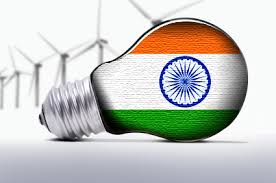
The overall objective will be to support the EcoCities Project SME EE Finance component, to facilitate EE/RE financing for MSMEs by working with financial institutions and other key stakeholders, in the identified cities, resulting in an increase in EE loans to MSMEs.
eC2: CGAP business models for scaling digital financial services (DFS) in agricultural value chains
Deadline: 05-Sep-2017 at 11:59:59 PM (Eastern Time – Washington D.C.) 
CGAP is seeking a firm to assess the provision of digital financial services (DFS) in the cocoa, coffee, cashew, rubber and cotton value chains in Cote d’Ivoire and Ghana. The objective of this assessment is to:
1. Estimate the costs and benefits of utilizing DFS along agricultural value chains;
2. Identify pain points in the delivery and use of DFS;
3. Propose business models that would improve the value proposition of DFS for smallholders, agribusinesses, and financial service providers
World Bank Group, ITU and CPMI launch ‘Financial Inclusion Global Initiative’
Connection of millions of unbanked people to formal financial systems accelerated
27 July 2017, Geneva – A new global program to advance research in digital finance and accelerate digital financial inclusion in developing countries, the Financial Inclusion Global Initiative, has been launched by the World Bank Group, the International Telecommunication Union (ITU) and the Committee on Payments and Market Infrastructures (CPMI), with support from the Bill & Melinda Gates Foundation.
The three-year program focuses on three different “model” developing countries – China, Egypt and Mexico – and consists of two complementary operational and knowledge work streams.
In Benin, Can Resilient Investment Solutions Save a Battered Coast?
I was raised in a small town called Hornsea on England’s east coast, a magnificent 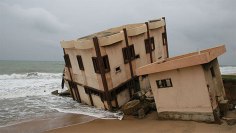 placethat attracts tourists but is eroding faster than the rest of Europe. Some of the impressive, clay cliffs are literally crumbling. Local roads and the old settlement and have fallen into the sea. More than once, forward-planning residents have demolished and rebuilt their houses from salvaged materials as their coast recedes.
eC2: Consulting firm for Resource Efficiency and Clean energy Advisory to Textile-Footwear Industries.
Deadline: 28-Aug-2017 at 11:59:59 PM (Eastern Time – Washington D.C.)

Firms responding to this EOI should have practical experience working with the textile/apparel/footwear sector in Vietnam and/or other countries in Asia-Pacific and demonstrated expertise in developing cost-effective projects to save water, energy, and chemicals and reduce variable operating costs. Interested consultants must have a broad range of capabilities in the areas of firm-level REF scoping/detailed assessments, wastewater treatment and recycle projects, and sector-level capacity building, awareness raising, and employee training. In addition, interested consultant must have experience in developing captive renewable energy projects. Relevant experience working with manufacturing supply chains will be a plus. Development of high-quality reports and other deliverables in both English and Vietnamese in a timely manner will be required. The consultant team must have a local partner who work in related field. IFC reserves the right to modify the scope and/or cancel this EOI depending on available funding.
Community-Driven Projects Reduce Poverty and Empower Youth in Nigeria
STORY HIGHLIGHTS
- To combat poverty, the Commercial Agriculture Development Project for Nigeria involves beneficiaries as key players and partners.
- The project supports the strengthening of skills and capacity of Local Government Authorities and sectoral public agencies to provide support to communities.
- The community-driven, development approach has resulted in 3,435 micro-projects, of which more than 50 percent are completed and in use.
eC2: Ethiopia Malt Barley Supply Chain – Cooperative and Lead Farmer Business Management Training
Deadline: 04-Sep-2017 at 11:59:59 PM (Eastern Time – Washington D.C.) 
IFC plans to assist a large domestic buyer to increase the quantity of malt barley procured from local smallholder farmers by aggregators such as cooperatives or “lead farmers”. Part of the project includes improving the professionalism of approximately 80 aggregators so that they can function more effectively as businesses and provide better services to their members and/or smallholder farmer clients.
eC2: SE4All Least-Cost Electrification Global Platform
Deadline: 07-Sep-2017 at 11:59:59 PM (Eastern Time – Washington D.C.)
Specifically, the objectives of this assignment are threefold:
1. Develop a set of industry compatible data standards for electrification models data inputs and modelling outputs, primarily to facilitate data inputs reuse and comparability of outputs across models and countries;
2. Develop a scenario-based global model of least-cost electrification planning for universal access for all countries with electrification rate below 90% (as per World Bank Global Tracking Framework 2017)
3. Develop a web mapping application that demonstrates the global models results, and allows users to adjust certain parameters that affect least cost electrification planning, such as but not limited to:
a. Technology costs
b. Cost of diesel
c. Electrification level targeted
d. Timeline considered for universal access
The web mapping platform will need to ensure compatibility leveraging data standards specified as part of this assignment, notably to allow users to visualize other or future modelling results.
eC2: Benefit Sharing in Hydropower
Deadline: 28-Aug-2017 at 11:59:59 PM (Eastern Time – Washington D.C.) 
Social license to operate is a critical issue for renewable energy projects, particularly in the hydropower sector which can pose significant environmental and social impacts. Numerous cases in developing and developed countries demonstrated that stakeholder support for hydropower projects is often closely interwoven with the perceived balance of impacts and benefits to the host communities. Perceived absence of benefit sharing can cause objection to the development and lead to stagnation of projects and loss of social license to operate. The objective of the study is to highlight benefit sharing frameworks and document lessons from global experiences. This will help the private sector understand the different models of benefit sharing and how its implementation can support gaining social license to operate for hydropower projects.


You must be logged in to post a comment.