
As we wrap up 2019, we continue our end-of-year tradition of recapping the top pieces  from The Water Blog and creating this special list for you.
Tag Archives: water
Year in Review: 2019 in 14 Charts
As this decade comes to an end, the world has seen progress on many fronts. The poorest countries have greater access to water, electricity, and sanitation (i.e., a toilet). Poverty and child mortality have fallen. Technology has spread far and wide so that there are now more mobile phones than people. But we’ve also broken some of the wrong kinds of records. In 2019, more people were forcibly displaced than any other time in history. Carbon dioxide in the atmosphere hit an all-time high and biodiversity is declining at an accelerating rate. These charts highlight some remarkable achievements and the serious challenges that remain as we head into 2020.
eC2: Disaster Risk and Resilience Analysis in Watersheds in Lao PDR
Deadline: 16-Jan-2020 at 11:59:59 PM (Eastern Time – Washington D.C.)
Assignment objective: Disaster risks need to be understood and mapped in more detail in specific watersheds within large interconnected production and conservation forest landscapes, inhabited by thousands of communities, to be able to better develop, target and converge investments from a number of sectors and stakeholders.
eC2: Validation of the typology and classification system in Bulgaria for assessment the ecological status of surface water bodies of categories “river”, “lake and “transitional waters
Deadline: 08-Jan-2020 at 11:59:59 PM (Eastern Time – Washington D.C.) 
The assignment covers the following tasks:
1 Validation and biological confirmation of the updated typology of the surface waters
2 Validation of the classification system for the assessment of the ecological status/ecological potential of specific for Bulgaria types rivers and development of the classification system for transitional waters of river type R16;
3 Validation of the classification system for the assessment of the ecological status/potential for the types of lakes, reservoirs and development the classification system for transitional waters of lake types L7, L8, L9, and L10.
4 Identification and assessment of the interrelation: anthropogenic pressure-impact-biotic response.
5 Determination of the capacity of water bodies to assimilate nutrient pollution.
6 Finalizing and validation of the classification system for assessment of the ecological status/ecological potential of all national types of surface water bodies.
7 Design and development of a project geodatabase
eC2: Development of the Urban Nature-Based Solutions Rapid Assessment Tool
Deadline: 19-Dec-2019 at 11:59:59 PM (Eastern Time – Washington D.C.)
The Urban NBS Rapid Assessment will facilitate World Bank task teams in these challenges. The tool or assessment methodology will increase understanding of the performance of urban NBS and helps to identify potential investments in NBS in cities. The tool can be used in the early (pre-feasibility) stage of a project, to support dialogue with client countries and during community consultations, rather than as a design tool. The main audience of the tool will be city governments, project leaders and development partners, who will be investing in urban development interventions.
eC2: Consultancy Services for Assessment of Energy Efficiency, Load Management and Renewable Energy Options for the Cutzamala Water Supply and Treatment System, Mexico.
Deadline: 18-Dec-2019 at 11:59:59 PM (Eastern Time – Washington D.C.) 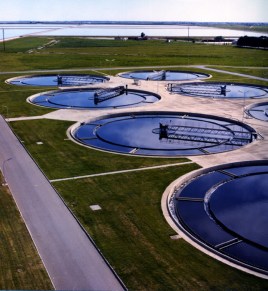
To ascertain the potential energy savings and cost reductions, the World Bank will engage a consultant to conduct a detailed energy and water audit of the Cutzamala system to identify, assess and recommend opportunities for improving energy efficiency and load management.
The assignment is expected to be conducted in three Phases:
Inception Phase Preliminary Assessment
Phase I Assessment of energy efficiency, load management & renewable energy opportunities
Phase II Identification and assessment of new technologies and financing options
Dutch expertise welcome for West Africa coastal management
Coastal erosion and flooding in West Africa severely threaten communities, livelihoods,  safety and investment. There is an urgent need for international partners to mobilise financing through coordinated regional action. The World Bank and Netherlands Water Partnership (NWP) are on their way to formalising their partnership to exchange knowledge, expertise and information, and to increase business opportunities for the Dutch water sector. Last week, NWP’s Josephine Damstra attended the first Finance Marketplace in Ivory Coast, which was organised as part of the World Bank’s West Africa Coastal Areas Management Program.
safety and investment. There is an urgent need for international partners to mobilise financing through coordinated regional action. The World Bank and Netherlands Water Partnership (NWP) are on their way to formalising their partnership to exchange knowledge, expertise and information, and to increase business opportunities for the Dutch water sector. Last week, NWP’s Josephine Damstra attended the first Finance Marketplace in Ivory Coast, which was organised as part of the World Bank’s West Africa Coastal Areas Management Program.Study tour to the Netherlands offers new insights on nature-based solutions
Last week, government officials and specialists from Albania, Georgia, Ghana, Liberia  and Romania came to the Netherlands for a World Bank study tour on nature-based solutions organized by the Netherlands Water Partnership. One of the participants was Ivane Vashakmadze, Tourism Expert and World Bank Consultant from Georgia. In his blog, he shares his experiences and his lessons learnt on nature-based solutions.
and Romania came to the Netherlands for a World Bank study tour on nature-based solutions organized by the Netherlands Water Partnership. One of the participants was Ivane Vashakmadze, Tourism Expert and World Bank Consultant from Georgia. In his blog, he shares his experiences and his lessons learnt on nature-based solutions.eC2: SWPN Water Stewardship Project Pipeline
Deadline: 30-Sep-2019 at 11:59:59 PM (Eastern Time – Washington D.C.)
The selected firm will be expected to constitute a multi-disciplinary team to undertake the following key tasks as agreed during a clarification session:
Preparation of a report giving an overview of global water stewardship practices that drive collective action partnerships. Review the publicly available information on corporate water stewardship and other initiatives that are currently being implemented in South Africa or have been implemented over the past 10 years.
Arrange and facilitate a multi-stakeholder process to develop a comprehensive list of corporate water stewardship activities and initiatives relevant to the South African water sector. From the list of projects select a minimum of 10 unique/ novel corporate water stewardship responses applicable to closing the water gap in South Africa.
eC2: National groundwater quality survey and abstraction estimate
Deadline: 24-Sep-2019 at 11:59:59 PM (Eastern Time – Washington D.C.)

The specific objective of this assignment is to support the elaboration of the next River Basin Management Plans with the implementation of a series of field works over the groundwater bodies not being in good quantitative or chemical status and the groundwater bodies at risk not being in good status. The said field work is aiming at: 1) estimating the number of boreholes tapping each groundwater body and estimating the average pumping yields per usage, both data being necessary for estimating the total pumped yield per groundwater body; and 2) providing a series of groundwater quality analysis be used as a first countrywide groundwater sampling which might be used, in complement with every existing groundwater quantity results, to support the implementation of a state of the art quality monitoring network.
 Netherlands for the World Bank
You must be logged in to post a comment.