For over 140 years, Elsevier has supported more than 1,000,000 global scientific and  academic communities in their pursuit for new and verified scientific knowledge through access to peer-reviewed content, strategic research management tools, and capacity-building activities that promote and celebrate world-class science.
Over the last 12 years, Elsevier has closely collaborated with partners such as the World Bank, the Inter-American Development Bank, and the Dutch Organization for Internationalization in Education (NUFFIC) to support activities in emerging economies to enhance higher education and research, develop better science and technology, and improve local competitiveness. These efforts have allowed Elsevier and, specifically, the World Bank, to co-launch several regional and country initiatives and research metrics and evidence to contribute to promotion of discussions on research investment and collaboration.
Continue reading →

 million people (1 in 5) in Sub-Saharan Africa (SSA) who are critically undernourished. And the numbers are growing. Escalating weather volatility due to climate change further exacerbate food and nutrition insecurity. Frequent droughts and floods are triggering a food crisis in at least one or more countries every year, demanding emergency responses.
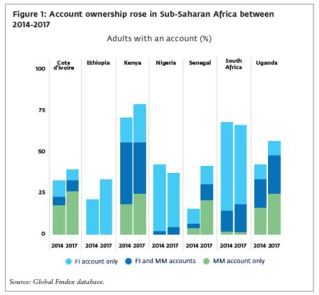 Finance Corporation and Mastercard Foundation Partnership for Financial Inclusion outlining Sub-Saharan Africa’s successes and challenges in building digital financial inclusion. The notes—all of which are available for download at
  productive environments to attract investments, increase economic efficiency, and create livable environments that prevent urban costs from rising with increased population densification. What are the central obstacles that prevent African cities and towns from becoming sustainable engines of economic growth and prosperity? Among the most critical factors that limit the growth and livability of urban areas are land markets, investments in public infrastructure and assets, and the institutions to enable both. To unleash the potential of African cities and towns for delivering services and employment in a livable and environmentally friendly environment, a sequenced approach is needed to reform institutions and policies and to target infrastructure investments. This book lays out three foundations that need fixing to guide cities and towns throughout Sub-Saharan Africa on their way to productivity and livability.
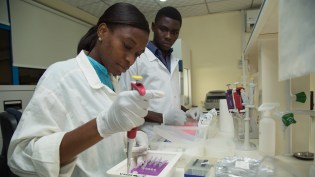 world’s poorest countries.
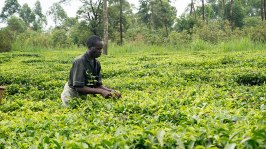 hazards. The past few months alone have seen drought in the Horn of Africa, floods in Mali and Rwanda, and landslides in Ethiopia and Uganda. Between 2005 and 2015, the region experienced an average of 157 disasters per year, claiming the lives of roughly 10,000 people annually.
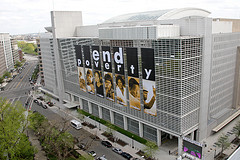 introduces improved ways to monitor our progress toward ending it.
 Safety nets protect vulnerable households from impacts of economic shocks, natural disasters, and other crises
 Netherlands for the World Bank
You must be logged in to post a comment.