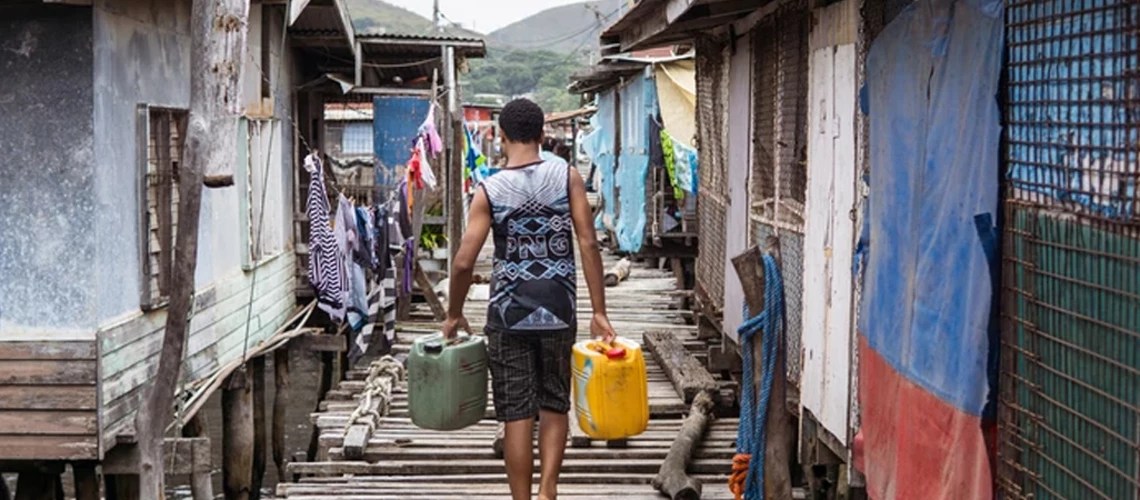
As the world approaches the midpoint of the United Nation’s Second Decade of Action for Road Safety (2021-2030), the urgency to meet the goal of halving road traffic fatalities and serious injuries by 2030 is ramping up. This target, embedded within the UN’s Sustainable Development Goals (SDG 3.6), reflects a global commitment to addressing one of the most preventable yet persistent public health crises of our time. Road crashes claim nearly 1.2 million lives each year—around 3,300 every day—with children and young people disproportionately affected.
Continue readingTag Archives: SDG
Five alarming statistics on global hunger
As we welcome 2025 and close the first quarter of the 21st century, it is a moment for reflection. We find ourselves at a pivotal midpoint—five years since the onset of the COVID-19 pandemic and five years away from the 2030 deadline for the Sustainable Development Goals (SDGs). Yet, food and nutrition insecurity remain pressing global challenges. Many countries continue to grapple with recurring crises fueled by climate change, high food prices, and conflict, all of which undermine access to the healthy, nutritious food that people need to thrive.
Getting back on track to meet the first Sustainable Development Goal
ATLAS of Sustainable Development Goals 2023
The Atlas draws from the World Bank’s World Development Indicators database, as well as from a wide variety of relevant data sources, including international organizations, scientists, and other researchers worldwide.
We hope readers will find this fourth edition in the Atlas series engaging and informative, and will be inspired to discover, understand, and visualize progress towards achieving the SDGs, adopted by all member states of the United Nations in 2015.
Check out this video introducing the 2023 SDG Atlas. Tell us what you think on Twitter or at data@worldbank.org.
More Information
Small Island Developing States on a Path to Renewable Energy and Resilience: A Story from Maldives
Small Island Developing States (SIDS), which are home to 65 million people and bastions of
biodiversity, face unique challenges. Because they are small, their economies are not diversified and hence particularly vulnerable to external shocks, such as the collapse of tourism during COVID 19 or sky-rocketing energy and food prices in the wake of Russia’s invasion of Ukraine. They are also extremely vulnerable to the rising sea levels and extreme weather brought on by climate change.
Rethinking Development in an Age of Crisis
People in poor countries are struggling to cope with higher food and fuel prices and unsustainable debt, while schoolchildren are still suffering from learning loss caused by the pandemic. In many places, economic growth has stalled.
Scaling Up to Phase Down: Financing Energy Transitions in the Power Sector
To meet climate and development goals, low- and middle-income countries need to transform their power sector infrastructure at a scale and pace that is unprecedented. The World Bank framework “Scaling Up to Phase Down” maps out steps to support developing countries, with the help of development partners, to scale up affordable, secure, and reliable clean energy and phase down coal-fired electricity generation.
Wrap-up. Sustainable Development Goals (SDGs) and Partnerships
We wrap up all the developments from the Meetings with Devex’s Raj Kumar. UN Deputy Secretary General Amina Mohammed joins The Zone to talk about how to get the SDGs back on track and the partnerships needed to tackle poverty. Amit Bouri outlines how private investment can increase development impact, and Dr. Ahmed Ogwell Ouma of the Africa CDC gives insight on preparing for the next pandemic.
The Case for Designing Inclusive Platforms in Emerging Markets – the $300 billion opportunity – June 16, 2021 | 8:00am ET
The rapid digital transformation underway in many emerging markets has the potential to have an equally transformative impact for entrepreneurs. However, critical gaps in access to the internet and mobile phones can limit the ability to work in tech-enabled jobs or to compete as entrepreneurs. This event draws on recent IFC (International Finance Corporation) research on rise of e-commerce in Africa and Southeast Asia and opportunities for further growth by exploring more inclusive practices. It will cover two key topics:
Improving transport and connectivity in Africa: Can drones be part of the solution?
Transport and logistics links in Africa remain costly and unreliable, especially for reaching
remote communities. In rural areas, only about a third of Africans live within 2 kilometers of an all-weather road, and the current infrastructure investment gaps in road transport infrastructure in the region amount to billions of dollars annually. The national road density in the region remains less than a quarter of the global average. The intensifying effects of climate change and, in parts of the region, conflict and violence, further hinder the ability of governments and businesses to efficiently and reliably ensure the delivery of goods and services. These gaps also present enormous challenges to meeting the Sustainable Development Goals, from health to agricultural productivity to food security.


(SDGs), 17 targets for the global community to achieve by 2030 to ensure peace and prosperity for current and future generations. The first of these goals, SDG 1, calls for an end to poverty in all its forms everywhere.
and the global spillover effects of Russia’s war in Ukraine – being felt more acutely than in the developing world.
You must be logged in to post a comment.