eC2:Geodata and data Wrangling Workshops and Assessment

Deadline: 16-Jan-2017 at 11:59:59 PM (Eastern Time – Washington D.C.) index

The objective of this consultancy is to design and conduct a workshops in both mainland Tanzania and Zanzibar that will improve fluency with geospatial data across government in order to support and improve geospatial capacity in Tanzania and in particular understanding of open geospatial data. This will provide skills development for data collection and management, help participants improve the content and quality of geospatial datasets and strengthen the knowledge of open geospatial principles and standards.

Continue reading

Event Nov8 :Policies for SME Growth: What Works, What Doesn’t?

Small and medium enterprises (SMEs) employ about half of the workforce in developing countries. SME growth may thus raise incomes for many low-income households. But SMEs often face significant constraints to growth relative to large firms ranging from excessive red tape to limited access to finance.

In this talk, Miriam Bruhn will discuss empirical evidence on commonly used policies for SME growth. Miriam will cover policies that work and policies that don’t in the areas of regulation, access to finance, and business practices. Encouragingly, evidence from Mexico, Georgia, Peru, and elsewhere shows that there are a number of programs that governments can implement to support SME growth. She will also highlight implementation challenges and caveats for some of these policies.

How to join! 12:30 – 2:00 PM, November 8, 2016

Continue reading

Building Urban Resilience by Empowering Communities

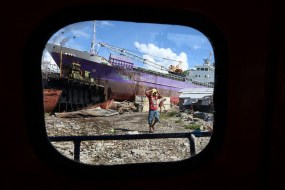
STORY HIGHLIGHTStyphoon_haiyan
  • In a rapidly urbanizing world, cities are increasingly prone to natural hazards and climate shocks.
  • The Habitat III conference is an opportunity for national and city leaders to discuss ways to make cities and communities more resilient to these hazards and shocks.
  • One way that the World Bank has helped is through community-driven development (CDD), an approach that gives control over planning decisions and investment resources to community groups and local governments.

Continue reading

Ahead of the next Habitat conference, the urban world we want

tweet-postcard-1.png

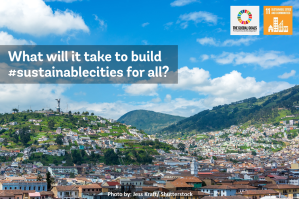
There is no better way to mark this year’s World Cities Day than reflecting on the adoption of the New Urban Agenda at the recent Habitat III conference in Quito. The agenda reaffirms the political commitment to sustainable urbanization and provides a framework to guide global urban development over the next 20 years, based on a shared vision of cities that are inclusive, safe, resilient and sustainable.

Continue reading

OUT NOW! Flagship Report: Doing Business

Doing Business 2017: Equal Opportunity for All, db17-reporta World Bank Group flagship publication, is the 14th in a series of annual reports measuring the regulations that enhance business activity and those that constrain it. Doing Business presents quantitative indicators on business regulations and the protection of property rights that can be compared across 190 economies—from Afghanistan to Zimbabwe—and over time.

Continue reading

Published by RVO “In the Loop” Newsletter

Today an article was published about the NL-4-WorldBank website in theuntitled Netherlands Enterprise Agency newsletter, which is geared towards dutch embassies World Wide.

Below an excerpt of the article, to read the rest click here.click here.

Stay up-to-date! NL-4-WorldBank Website

Are you working with the World Bank? Do you want more information on tenders, developments or the procurement framework? The website NL4Worldbank can be useful to you!


eC2:Undertaking Optima HIV studies and capacity building

Deadline: 07-Nov-2016 at 11:59:59 PM (Eastern Time – Washington D.C.)medical-appointment-doctor-healthcare-clinic-health-hospital-medicine[7]

Consultant firms will be required to:
a) complete, under leadership of the World bank Task Team Leader, 12 Optima HIV modelling studies using both the allocative efficiency and cascade modelling approaches
b) Support the World Bank and country team in disseminating results of country analyses through academic publication, policy briefs and in-country dialogues
c) Follow up to assess actual changes in allocations
d) Undertake capacity building in Optima HIV

Jointly, these case studies will contribute economic, health impact and epidemiological evidence to the overarching question of improving the effectiveness and cost-effectiveness of HIV responses in these countries and building the global evidence base for better allocative efficiency.

Continue reading